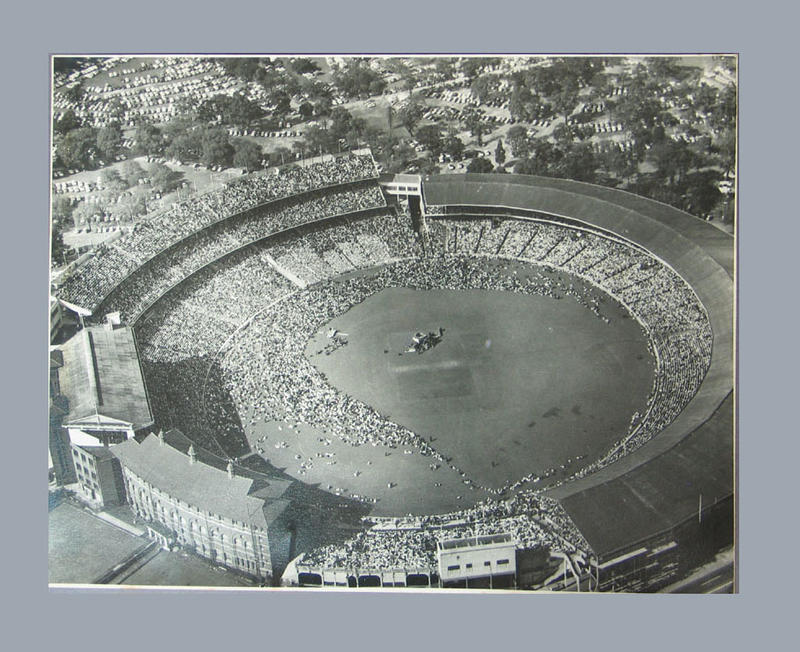

One autumn evening in 1959, ten young men walked into the Melbourne Cricket Ground armed with homemade weapons and a burning hatred that had festered for years. Their intention was assassination. What unfolded instead was a profound personal transformation that still prompts reflection: Was this a miracle—one heart changed in real time, drawing nine others along—or the culmination of human emotion meeting a message perfectly timed to pierce even the hardest armor.
Melbourne, Australia – March 15, 1959. George Palmer and his gang of ten gathered outside the stadium gates as the fading autumn light cast long shadows across the Yarra River precinct. Palmer, the leader, had spent days at his work lathe carefully machining ten crude zip guns—single-shot, homemade firearms cobbled together from pipes, springs, and scavenged parts. Each was concealed beneath a jacket or shirt, ready for the signal. The plan, born of deep-seated rage against God and everything Christian, was straightforward and ruthless: blend into the massive crowd, spread out near the platform, wait for the altar call when emotions ran high and security was distracted, then fire in unison to silence Billy Graham forever. To Palmer and his crew, Graham embodied the faith they despised—a symbol of weakness, authority, and the God who, in Palmer’s mind, had stolen his father.1
As they pushed through the turnstiles amid the surging thousands, the gang was immediately struck by the atmosphere. Families had arrived early, spreading blankets across the vast oval to claim spots on the grass. Children darted between groups, laughing and playing. Factory workers in their weekend clothes, housewives with picnic baskets, office clerks still in ties—all ordinary Australians filled the stands and spilled onto the field. That night, a record 143,750 people packed the Melbourne Cricket Ground, surpassing any previous event in the stadium’s history and marking it as the largest gathering ever recorded there.2 To the gang, this sea of humanity was ideal camouflage: no one would notice ten more young men slipping in; no one would suspect their intent amid the expectant faces turned toward the platform. They fanned out across the grass, positioning themselves within range, hearts pounding not from excitement for the message but from anticipation of violence.3
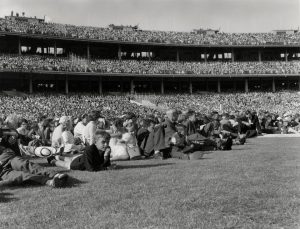 Why had so many—nearly 144,000—turned out for an American preacher on what might have been an ordinary Sunday evening? Post-war Australia was a nation still healing from World War II’s scars and now facing the chilling uncertainties of the Cold War. Nuclear threats loomed, communism advanced in Asia, and rapid industrialization disrupted traditional ways of life. Many felt spiritually adrift, questioning meaning amid material progress that left inner voids unfilled. Billy Graham’s crusades had emerged as a global response to this hunger, drawing unprecedented crowds by offering straightforward biblical answers: sin separates humanity from God, Christ’s cross provides redemption, and personal faith brings transformation.4
Graham’s 1959 Australian tour was his most ambitious yet—sixteen weeks across the continent and New Zealand, with total attendance exceeding three million people, roughly one-third of the nation’s population at the time. Church leaders from multiple denominations had extended urgent invitations years earlier, recognizing the spiritual need. In Melbourne, the four-week series alone drew 720,000 attendees across twenty-six meetings, with 26,440 recorded “decisions for Christ”—including an estimated 4,100 on that final night at the MCG.5 Graham’s method was simple yet powerful: direct preaching rooted in Scripture, delivered with conviction and urgency, often culminating in an altar call that invited immediate response. This approach, honed through earlier international tours, created an electric atmosphere of expectation and openness, capable of reaching across social divides—even to those who arrived with murderous intent.
As the program progressed and Graham ascended the platform, his voice—amplified across the vast arena—began to address the crowd on humanity’s universal brokenness, the reality of sin, Christ’s sacrificial death on the cross, and the offer of forgiveness available to anyone who would receive it. For George Palmer, standing amid the throng with his weapon concealed, the words landed like physical blows. Since age seven, when he witnessed his father’s sudden death from a heart attack after a day planting one hundred cherry trees, Palmer had nurtured a furious hatred toward God. That loss shattered his childhood faith; church became associated with empty platitudes, and life turned toward rebellion, violence, and gang leadership as a way to reclaim control and respect. Now, every scriptural point Graham made seemed targeted at him personally—exposing guilt long suppressed, stirring emotions he had buried under layers of anger. His pulse quickened; sweat beaded despite the cool evening air.6
Midway through the sermon, amid the preacher’s steady cadence, a distinct inner voice broke through the surrounding noise: “What are you doing here, George?” Startled, he looked around—no one nearby addressed him. The voice persisted, gentle yet piercing: “I didn’t take your dad to hurt you.” For the first time in years, tears welled and spilled down his cheeks. Conviction overwhelmed him; the zip gun felt heavy, foreign. His hand trembled as he let it slip from his grasp, clattering softly onto the grass. In that instant, resistance crumbled—he could no longer sustain the hatred that had defined him.7
 But to understand why a young working-class Australian harbored such murderous rage toward an evangelist requires examining the broader social currents that shaped men like Palmer. Post-war Australia created fertile soil for youth rebellion, particularly among working-class teenagers. Economic shifts left many without stable paths to traditional manhood—jobs were scarce or dead-end, old British-influenced norms felt stifling, and American rock ‘n’ roll flooded in through films, records, and radio, promising excitement and freedom. From this clash emerged the bodgie and widgie subculture: young men in leather jackets, tight pegged pants, crepe-soled “brothel creepers,” ducktail haircuts; young women in pencil skirts or jeans, bold makeup, and defiant attitudes. Bodgies formed tight gangs not just for fashion but to assert toughness and gain respect in a society that offered few legitimate avenues.8
Media and middle-class observers fueled an intense “moral panic” over juvenile delinquency, sensationalizing bodgie behavior as a threat to order—blaming everything from rock music to absent parents for rising vandalism, fights, and perceived moral decay. In this alienated bubble, Christianity often appeared as part of the repressive establishment: churches aligned with authority figures, preaching submission when young men craved autonomy and power. For Palmer, personal trauma fused with this subcultural worldview—his father’s death left a wound that rebellion masked, and gang life channeled pain into violence. Targeting a high-profile evangelist like Graham felt like a defiant act against the system that had failed them.9
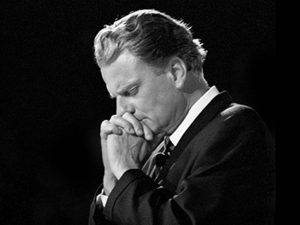 When Graham issued the altar call—“Come forward and give your life to Christ”—Palmer rose. Legs unsteady, tears unchecked, he pushed through the crowd and ran to the front, dropping to his knees in surrender. Eight of his nine gang brothers witnessed it; one by one, they too let their weapons fall to the grass and followed, joining the thousands streaming forward that night. Nine out of ten would-be assassins committed their lives to Christ amid the record crowd.10
The evening that began with plans for murder closed with mass conversion. George Palmer went on to become a commissioned officer in the Salvation Army, serving in ministry for over thirty years and sharing his testimony globally until his later years.11
This event at the Melbourne Cricket Ground represents a micro-level miracle: one man’s heart transformed in real time, catalyzing nine others in a single pivotal moment. Yet it only becomes intelligible against the macro forces at play—Billy Graham’s worldwide evangelical surge, which filled stadiums with spiritually hungry crowds during Cold War anxieties, and the bodgie youth culture, which channeled post-war alienation into rebellion and anti-religious sentiment. Violent hatred collided with grace, and grace prevailed.
I have reflected deeply on this story throughout this project. It fuels my own commitment to righteousness. No heart is too hardened for a timely, powerful message to interrupt. Redemption is not abstract history—it is interruptive, real, and possible even amid our darkest intentions. The 1959 MCG night remains vivid proof: weapons abandoned on the grass, tears falling onto the evening grass, new lives beginning under stadium lights. If one sermon could rewrite ten trajectories forever, it reminds us that grace can still win today.
- George Palmer, “From Hatred to Love: How God Transformed a Brutal Australian Gang Leader,” Decision Magazine, February 2019, Billy Graham Evangelistic Association. ↵
- George Palmer, “From Hatred to Love: How God Transformed a Brutal Australian Gang Leader,” Decision Magazine, February 2019, Billy Graham Evangelistic Association. ↵
- “Extraordinary True Stories From the 1959 Billy Graham Crusade in Australia,” BillyGraham.org, April 10, 2024. ↵
- “Extraordinary True Stories From the 1959 Billy Graham Crusade in Australia,” BillyGraham.org, April 10, 2024. ↵
- Billy Graham, Just As I Am: The Autobiography of Billy Graham (New York: HarperOne, 2007); Grant Wacker, “Billy Graham’s 1950s Crusades: Global Evangelicalism in the Cold War Era,” Church History 80, no. 3 (2011): 649–672; Stuart Piggin, Evangelical Christianity in Australia: Spirit, Word and World (Melbourne: Oxford University Press, 1996). ↵
- Billy Graham, Just As I Am: The Autobiography of Billy Graham (New York: HarperOne, 2007); Grant Wacker, “Billy Graham’s 1950s Crusades: Global Evangelicalism in the Cold War Era,” Church History 80, no. 3 (2011): 649–672; Stuart Piggin, Evangelical Christianity in Australia: Spirit, Word and World (Melbourne: Oxford University Press, 1996). ↵
- George Palmer, “From Hatred to Love: How God Transformed a Brutal Australian Gang Leader,” Decision Magazine, February 2019, Billy Graham Evangelistic Association. ↵
- John Stratton, “Bodgies, Widgies and Moral Panic in 1950s Australia,” Journal of Australian Studies 15, no. 29 (1991): 19–32; Keith Moore, “Bodgies, Widgies and Rock and Roll – Teenage Rebellion and Moral Panic in Australia 1956-1959” (QUT ePrints, 2004). ↵
- John Stratton, “Bodgies, Widgies and Moral Panic in 1950s Australia,” Journal of Australian Studies 15, no. 29 (1991): 19–32; Keith Moore, “Bodgies, Widgies and Rock and Roll – Teenage Rebellion and Moral Panic in Australia 1956-1959” (QUT ePrints, 2004). ↵
- John Stratton, “Bodgies, Widgies and Moral Panic in 1950s Australia,” Journal of Australian Studies 15, no. 29 (1991): 19–32; Keith Moore, “Bodgies, Widgies and Rock and Roll – Teenage Rebellion and Moral Panic in Australia 1956-1959” (QUT ePrints, 2004). ↵
- George Palmer, “From Hatred to Love: How God Transformed a Brutal Australian Gang Leader,” Decision Magazine, February 2019, Billy Graham Evangelistic Association. ↵

2 comments
Cielo Jerusalem Vargas
Hi Sinjin,
I agree with Emma (the previous comment), that your narrative was engaging. Your article provides such a powerful testimony. What I found to be most compelling was “Violent hatred collided with grace, and grace prevailed.” It is truly amazing the power of God has on those who was lost due to grief and anger. I really enjoyed reading your article and I applaud you for covering such a powerful story. Great job Sinjin!
Emma Jimenez
This is a really gripping narrative. I like how you frame the event almost like a turning point between violence and transformation, rather than just a historical gathering. It makes the story feel immediate and emotionally charged instead of distant. The historical detail about Billy Graham’s crusade is also strong because it grounds the story in scale. It helps show why this wasn’t just a small event, but something that drew massive attention and emotional intensity.