


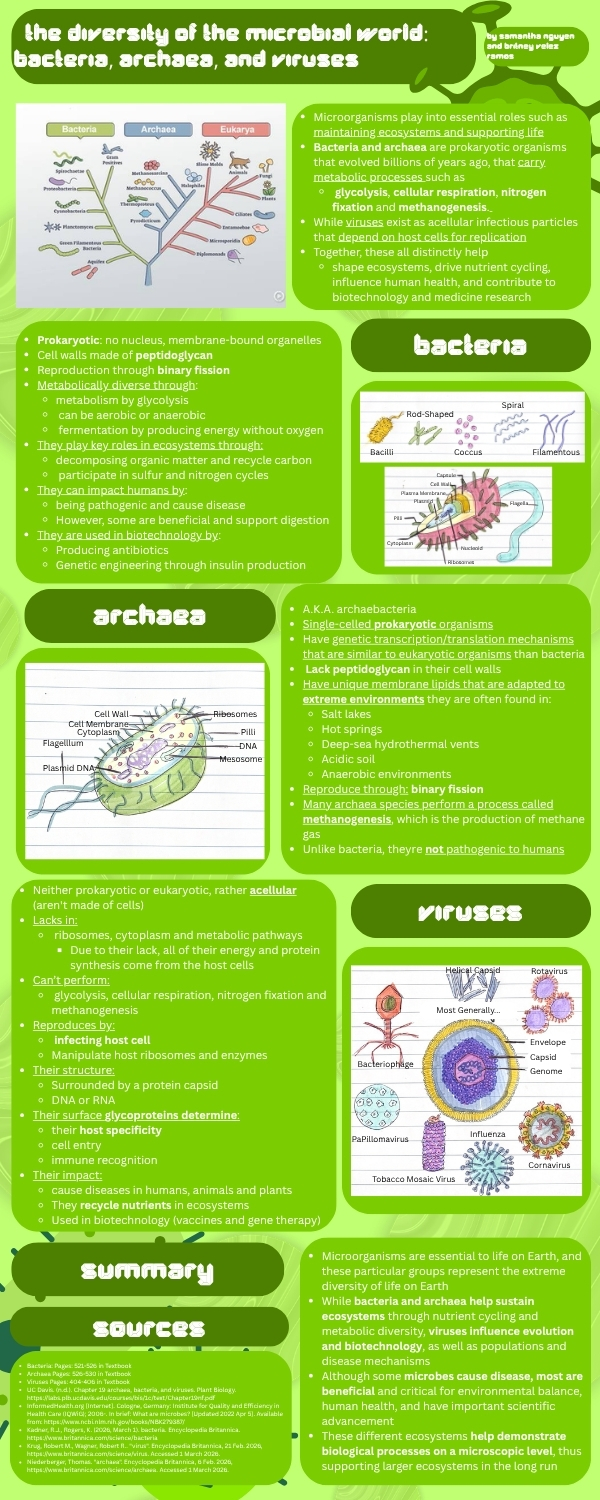
Microorganisms such as bacteria, archaea, and viruses play a vital role in sustaining life on Earth. Prokaryotic cells, including bacteria and archaea, share many similarities, such as the presence of ribosomes, cell membranes, and nucleotides that allow transcription and translation to occur within the cell. These organisms are essential to ecosystems because their metabolic processes drive major biochemical cycles. Pathways such as glycolysis and cellular respiration provide energy, while nitrogen fixation converts atmospheric nitrogen into usable forms for plants and other organisms. Archaea also perform specialized processes like methanogenesis, which contributes to the global carbon cycle. In contrast, viruses lack cellular organelles and cannot carry out metabolism on their own. As a result, they must infect host cells to replicate, relying on the host’s ribosomes and enzymes to produce viral proteins and assemble new capsids. Together, microorganisms form complex networks that influence health, disease, nutrient cycling, and biotechnology applications, highlighting their fundamental importance to both cellular and environmental systems.

1 comment
Maurissio Gonzalez
Hi Samantha and Britney! As your infographic highlights microorganisms are very important to our environment and us, they are everywhere! It is good to know the differences between bacteria, archaea, and viruses, I believe that your infographic does a great job of telling these differences without getting too much into the technicalities, it is straight to the point without getting lost in the weeds. Thank you.