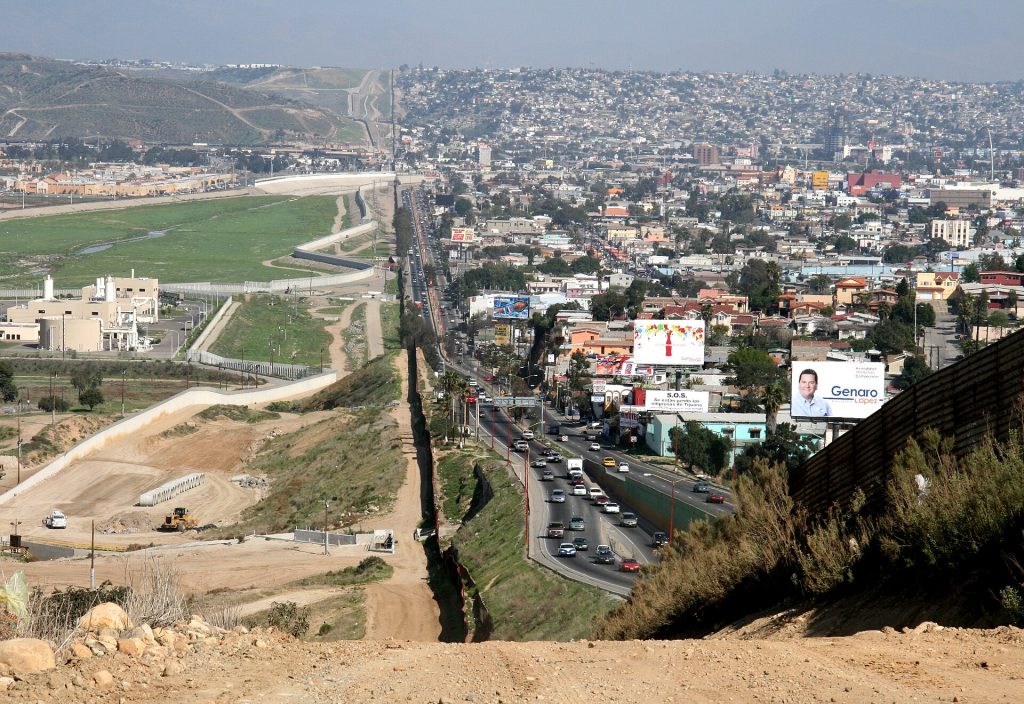




Policy Brief Prepared for U.S. National Security Council
Executive Summary
Migration to and from the U.S.-Mexico border is often narrowly framed as a question of enforcement and territorial control. However, such an approach overlooks the fundamentally human and binational nature of migration governance. Rather than viewing migration solely as a threat of national security, this policy brief reframes border security as an issue of human security—for both populations affected—, institutional capacity, and shared responsibility between the United States and Mexico. Between 2020 and 2023, border encounters rose significantly while asylum backlogs reached record levels, reflecting growing strain on institutional capacity (Office of Homeland Security Statistics; Government Accountability Office, 2023). These trends reflect the deeper structural challenges impacting both countries’ migration systems.

Mexico’s role is central to understanding and managing migration flows. As both a transit country and an increasingly active enforcement partner, Mexico shapes outcomes through its National Guard deployments, asylum policies, and cooperation with U.S. authorities under bilateral frameworks (U.S. Department of State, 2023; Migration Policy Institute, 2025). Therefore, migration cannot be effectively addressed through unilateral U.S. policies alone. Instead, it must be understood as a binational system, in which decisions made on either side of the border directly influence migration patterns, humanitarian conditions, and institutional strain.
This policy brief evaluates three primary approaches: expanded border enforcement, comprehensive asylum and immigration system reform, and regional cooperation paired with development investment. While enforcement strategies may produce short-term reductions in crossings, they often displace migration routes and exacerbate humanitarian risks (Migration Policy Institute, 2023; Human Rights Watch, 2024). System reforms improve efficiency and fairness but face political and institutional barriers, particularly without corresponding investments in Mexico’s processing capacity (Government Accountability Office, 2023). Regional development strategies offer long-term solutions by addressing root causes, yet require sustained coordination and time to yield measurable outcomes (World Bank, 2023).
To address these limitations, this brief recommends a binational, phased strategy that integrates targeted enforcement, coordinated asylum processing, and institutionalized regional cooperation. Specifically, it proposes the creation of a joint U.S.-Mexico enforcement task forces in high-traffic corridors, the expansion of co-managed asylum pre-screening hubs in Mexican border cities, and the formal integration of Mexico into a Northern Triangle Compact (Guatemala, Honduras, and El Salvador) framework linking development aid to migration outcomes. This approach prioritizes the disruption of trafficking networks, reduces pressure on U.S. immigration courts, and creates safe, more accessible pathways for asylum seekers.
By shifting from a deterrence-focused model to a human-centered, binational framework, the United States can achieve more sustainable reductions in irregular migration while upholding humanitarian obligations and supporting economic stability. This reframing recognizes that border security is not solely about controlling movement, but about managing migration systems in ways that are effective, equitable, and responsive to the realities of an interconnected region.
Background and Context
Migration at the southern border is best understood as a binational and regional system, rather than a purely domestic policy challenge. While structural drivers such as economic collapse, gang violence, and climate-related displacement in the Northern triangle continue to push individuals northward (World Bank, 2023), the pathways migrants take and the outcomes they experience are heavily shaped by policies implemented in both the United States and Mexico.
As mentioned, Mexico’s role has evolved significantly over the past decade. Once primarily a transit country, Mexico has increasingly become an active enforcement partner. Through cooperation agreements and enforcement initiatives, Mexico has increased its capacity to intercept migrants before they reach the U.S. border, effectively extending the functional border southward (Migration Policy Institute, 2025). This shift highlights the extent to which U.S. migration outcomes are shaped by Mexican policy decisions.
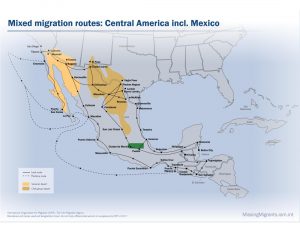
This interdependence is particularly evident in high-traffic corridors such as Tijuana–San Diego, where the U.S.’ San Diego sector has become one of the busiest migration entry points in recent years, and where migration pressures simultaneously strain reception systems on both sides of the border, underscoring the deeply interconnected nature of U.S. and Mexican migration governance (Baker Institute, 2024). Additionally, changes in enforcement priorities or coordination between U.S. and Mexican authorities have been shown to directly influence migration flows and processing capacity (Migration Policy Institute, 2023). When coordination strengthens, irregular crossings tend to decrease. In contrast, when coordination weakens, enforcement priorities diverge, migration flows tend to increase, underscoring the need for sustained binational alignment.
At the same time, U.S. immigration institutions remain under significant strain. Immigration courts face a growing backlog of cases, limiting the system’s ability to process claims efficiently and fairly (Government Accountability Office, 2023; Transactional Records Access Clearinghouse). These delays can weaken deterrence and contribute to prolonged uncertainty for migrants.
Humanitarian and economic dimensions only further complicate the issue. Enforcement-focused policies have been associated with increasing migrant deaths and disappearances as individuals are pushed into more dangerous routes (Human Rights Watch, 2024). Meanwhile, migrants continue to fill essential workforce roles in the U.S. economy, particularly in sectors experiencing labor shortages (Migration Policy Institute, 2023, April 11). Together, these dynamics highlight the need for policies that integrate both national and human security, humanitarian protection, and economic realities within a coordinated, cross-border framework.
Policy Options
The first policy option focuses on expanding border enforcement and surveillance within the United States. This includes expanding on present physical barriers, deploying advanced technologies such as drones and sensor systems, and expanding qualified Border Patrol staffing. While this approach may produce short-term results in unauthorized crossings, evidence suggests that its effectiveness diminishes over time as migration routes adapt (Migration Policy Institute, 2023). Without corresponding enforcement efforts in Mexico, this strategy risks displacing migration flows rather than reducing them. Moreover, intensified enforcement has been linked to increased humanitarian risks, including higher rates of migrant mortality (Human Rights Watch, 2024).
The second policy option centers on reforming the U.S. asylum and immigration system to improve efficiency and expand legal migration pathways. This includes increasing judicial capacity, streamlining case processing, and expanding visa programs. Evidence suggests that improving institutional capacity can help reduce backlogs and improve system credibility (Government Accountability Office, 2023). However, this approach remains largely domestic in scope and does not address processing bottlenecks in Mexico, where many migrants wait in precarious conditions. Without parallel investments in Mexican processing capacity, the overall impact of these reforms may be limited.
The third policy option emphasizes regional cooperation and development, particularly through investment in Central America to address the root causes of migration. Research indicates that factors such as economic instability, violence, and environmental stress contribute significantly to migration pressures (World Bank, 2023). While this approach offers long-term benefits, it requires sustained investment and coordination, and outcomes may take years to materialize. Additionally, its success depends on Mexico’s role as a partner in managing migration flows and implementing regional strategies. Without clearly defined roles for Mexican authorities, regional strategies risk fragmentation and delayed impact.
Risks and Trade-Offs
Each policy option presents important trade-offs that must be considered within a binational framework. Expanding enforcement may deliver immediate, visible results but carries significant financial costs and risks, increasing humanitarian harm and failing to address root causes (Human Rights Watch, 2024). Without coordination with Mexico, such measures may simply redirect migration routes while increasing danger for migrants.

System reform offers meaningful improvements in efficiency and fairness but depends decisively on political feasibility, especially in terms of administration. Legislative gridlock could delay implementation, allowing backlogs to balloon further. Moreover, without addressing certain conditions in Mexico, improvements within the U.S. system alone may not significantly reduce migration pressures.
Regional development strategies provide the most sustainable long-term solution but are vulnerable to delays, governance challenges, and shifting political priorities. Aid effectiveness depends on transparency and accountability, and outcomes may take years to materialize. Furthermore, reliance on Mexico introduces additional uncertainty, as changes in Mexican policy could significantly affect migration management outcomes.
These trade-offs demonstrate that migration alone cannot be effectively managed through isolated policies. Instead, a coordinated approach that integrates short-term enforcement, institutional reform, and long-term development is necessary to achieve durable results.
Final Recommendation
The United States National Security Council should adopt a human-centered, binational migration governance strategy over the remainder of 2026 through 2028, aligning immediate operational priorities with longer-term institutional reforms that reframe border security as a system of shared responsibility, protection, and coordinated management. This approach recognizes that border security is not solely about deterrence, but about managing migration systems in a way that is effective, coordinated, and responsive to human vulnerability across both the United States and Mexico.

Beginning in mid-2026, the U.S. should implement a phased strategy that integrates enforcement, institutional reform, and regional cooperation. As such, the US should prioritize rapid operational coordination with Mexico to stabilize high-traffic migration corridors. This includes establishing joint U.S.-Mexico enforcement task forces in Tijuana-San Diego, El Paso-Ciudad Juárez, and McAllen-Reynosa. These task forces should focus specifically on dismantling human smuggling and trafficking networks, rather than broadly targeting migrants themselves. Real-time intelligence sharing, coordinated patrol zones, and integrated surveillance systems should be implemented within the first six to nine months. Importantly, this phase should include humanitarian safeguards, such as coordinated search-and-rescue protocols and monitored safe transit zones, to reduce migrant mortality during enforcement operations.
Once immediate pressures are stabilized, the U.S. should shift toward expanding binational processing capacity throughout 2027. This includes co-developing a permanent asylum pre-screening hub in Tijuana, jointly administered by U.S. asylum officers and Mexican immigration authorities. Parallel investments should be made in Mexico’s reception infrastructure, including shelters, legal aid access, and case management systems, ensuring that migrants waiting in Mexico are not exposed to unsafe or exploitative conditions.
At the same time, the United States should expand domestic adjudication capacity by increasing the number of immigration judges and asylum officers. This dual investment—on both sides of the border—ensures that efficiency gains in the U.S. system are not undermined by bottlenecks in Mexico. Progress should be measured through reduced asylum processing times, lower backlog levels, and increased use of legal migration pathways.
By late 2027 and into 2028, the U.S. should consolidate these efforts into a broader binational and regional governance framework. This includes formalizing Mexico’s role within a Northern Triangle Compact implementation structure, linking U.S. development aid to measurable improvements in migration management outcomes. Funding should prioritize community-level economic development, climate resilience, and anti-corruption initiatives in Guatemala, Honduras, and El Salvador, while also strengthening Mexico’s institutional capacity as a transit and processing partner.
Crucially, this phase should establish clear accountability mechanisms, including joint U.S.-Mexico oversight committees and performance benchmarks tied to reductions in irregular migration, improved processing timelines, and enhanced migrant protections. By embedding Mexico as a central operational partner rather than a peripheral actor, this framework ensures long-term policy coherence and sustainability.
Across the 2026-2028 period, this phased approach transitions border policy from reactive enforcement toward proactive, system-based governance. In the short term, it stabilizes migration flows and reduces humanitarian risk. In the medium term, it improves institutional efficiency and expands lawful pathways. In the long term, it addresses structural drivers of migration through coordinated regional investment.
By centering human security alongside national security, this strategy reframes border governance as a shared responsibility—one that prioritizes dignity, efficiency, and stability across borders rather than relying solely on deterrence.
AI-Use Disclaimer
The structure of this policy brief was drafted with the assistance of an artificial‑intelligence language model (ChatGPT). The author reviewed, edited, and verified all content for accuracy, relevance, and compliance with academic standards. No AI‑generated text appears in the final policy brief.
References
Baker Institute for Public Policy. (2024). Navigating the border: San Diego’s and Tijuana’s migrant reception efforts. Rice University.
https://www.bakerinstitute.org/research/navigating-border-san-diegos-and-tijuanas-migrant-reception-efforts
Government Accountability Office. (2023). Immigration courts: Actions needed to address workforce planning and data gaps (GAO-23-105431).
https://www.gao.gov/assets/gao-23-105431.pdf
Government Accountability Office. (2023, October 19). U.S. immigration courts see a significant and growing backlog.
https://www.gao.gov/blog/u.s.-immigration-courts-see-significant-and-growing-backlog
Human Rights Watch. (2024, June 26). US: Border deterrence leads to deaths, disappearances.
https://www.hrw.org/news/2024/06/26/us-border-deterrence-leads-deaths-disappearances
Human Rights Watch. (2024). “Nothing but bones”: 30 years of deadly deterrence at the US-Mexico border.
https://www.hrw.org/content/388364
Migration Policy Institute. (2023). Shifting realities at the U.S.-Mexico border.
https://www.migrationpolicy.org/research/shifting-realities-us-mexico-border
Migration Policy Institute. (2023, April 11). What role can immigration play in addressing current and future labor shortages?
https://www.migrationpolicy.org/research/immigration-addressing-labor-shortages
Migration Policy Institute. (2025). Facing new migration realities: U.S.-Mexico relations and border enforcement in flux.
https://www.migrationpolicy.org/research/us-mexico-relations-interests
Office of Homeland Security Statistics. (n.d.). CBP encounters. U.S. Department of Homeland Security.
https://ohss.dhs.gov/khsm/cbp-encounters
U.S. Department of State. (2023, October 13). Joint statement: U.S.-Mexico high level security dialogue 2023.
https://2021-2025.state.gov/joint-statement-u-s-mexico-high-level-security-dialogue-2023/
U.S. Department of State. (2024, January 11). U.S. migration policy overview.
https://2021-2025.state.gov/briefings-foreign-press-centers/us-migration-policy-overview/
World Bank. (2023). World development report 2023: Migrants, refugees, and societies.
https://www.worldbank.org/en/publication/wdr2023
World Bank. (2023). Understanding migration in North Central America countries.
https://documents1.worldbank.org/curated/en/099062223110539421/pdf/P178344152de73c21007a1412919fe71d87c5dc97bb7.pdf
Transactional Records Access Clearinghouse. (n.d.). Immigration court backlog tool.
https://trac.syr.edu/immigration/


4 comments
Alfonsina Aldama
Hi Savannah, I found your policy brief really engaging, especially in how you approach border security from a broader perspective. Instead of focusing only on enforcement, you highlight the importance of coordination and shared responsibility, which made your argument feel more comprehensive. Your explanation of the different policy options was clear and easy to follow, and I liked how you acknowledged both their strengths and limitations. That balance made your final recommendation feel more credible. This was a thoughtful and well-structured brief that brings a more nuanced understanding to a complex issue. Great job!
David Tullius
Savannah,
I totally agree with you there is limited understanding of the border based on shaping the issue as solely a U.S security issue. Without a bilateral approach we are ignoring the assets, insights, and expertise of our Mexican partners. A broader human security approach would serve the people and professionals who work and live on either side of the line. Great insights!
Elizabeth Vazquez
Hello Savannah,
I agree that migration control should be a shared responsibility between both nations, emphasizing the importance of a binational approach. During the migrant caravans originating from Honduras—and based on statements made during his presidency and campaign—Donald Trump frequently threatened to take strong measures against Central American countries, primarily those in the Northern Triangle (Guatemala, Honduras, and El Salvador), if they did not cooperate in limiting the flow of migrants to the United States. I am interested in understanding what political strategies these countries might pursue to address this issue, ideally in a manner that upholds human rights, in contrast to the situation in the United States, where detention centers have been associated with fatalities and human rights violations.
Greitin Rodriguez
Hi! I find your policy brief quite strong in its reframing of migration as both a binational and a human security concern as opposed to simply being an enforcement issue. The way you have framed migration, and therefore your position relative to enforcement, is much more aligned with the complexities of modern-day migration. Additionally, I found your evaluation of various possible policies for addressing immigration to be clear and particularly interesting was your assertion that while enforcement efforts could result in shifting of migration patterns versus actual reductions.
As such, one potential additional piece of information you could include is a discussion of the political feasibility of your recommended course of action. While your phased, cooperative plan appears thoughtful and comprehensive, it will likely depend upon the nature of the relationship between the United States and Mexico at any given time, as well as the current domestic priorities of each country.
Overall, I feel your policy brief has been organized effectively and persuasively. Do you believe that even if the level of cooperation between the U.S. and Mexico were reduced for whatever reason, your suggested approach would remain viable, or do you feel that it would require some form of adjustment?