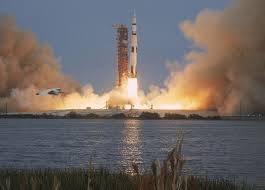

The United States viewed the Apollo 13 mission to the Moon as another mission in their ongoing Moon exploration efforts, which began when they launched the mission on April 11, 1970. NASA continued its Moon exploration efforts through its astronaut missions, which followed Apollo 11’s historic Moon landing nine months before. The Apollo 13 mission deployed Jim Lovell, Jack Swigert and Fred Haise to the Fra Mauro region of the Moon. They would conduct geological research there, which scientists planned to use for studying Moon formation. The Apollo 13 mission exists as one of space exploration’s most remarkable survival accounts because an onboard explosion rendered the spacecraft inoperable. The astronauts, together with engineers, developed emergency solutions that ensured their safe return to Earth.1
Apollo 13 was the mission that was launched from Kennedy Space Center in Florida using the Saturn V rocket, which was then the most powerful rocket ever constructed by human beings. The spacecraft consisted of three main parts: the Command Module Odyssey, which transported astronauts to Earth, and the Service Module, which supplied oxygen and electrical power, and the Lunar Module Aquarius, which allowed two astronauts to land on the Moon. The first two days of the mission showed operational success through successful spacecraft operations, which resulted in the spacecraft reaching its Moon destination from Earth orbit.2
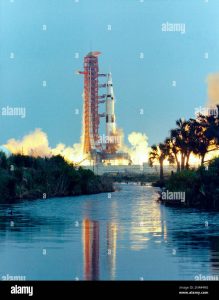
The Apollo missions served two purposes: they conducted scientific research, and they participated in the wider political conflict between the United States and Soviet Union as the Space Race. The space exploration accomplishments of the United States and the Soviet Union during the Cold War demonstrated their technological rivalry. The United States needed to increase its space program activities because the Soviet Union had reached two major space achievements through its first satellite launch and first human orbital flight. The Apollo program provided a major American technological demonstration that established United States technological power and international dominance during a time of global competition.3
The successful landing of Apollo 11 on the Moon in July 1969 already demonstrated the American supremacy in space technology. The United States wanted to maintain its space leadership through Apollo 13 and other missions that aimed to conduct scientific research. Engineers dedicated multiple years of work while billions of dollars were spent to complete each mission. Because of this, it was a successful completion of these missions that established the United States as a nation that could accomplish exceptional technological achievements.4
This Apollo mission experienced a complete change in direction just two days after its launch. At 8:13pm on April 13, 1970, Astronaut Jack Swigert executed a standard procedure from Mission Control that required him to stir the oxygen tanks inside the spacecraft’s Service Module. A powerful explosion struck the spacecraft that triggered warning lights to activate on the control panels. Swigert transmitted his historic message to Mission Control, which became famous throughout spaceflight history, when he said, “Houston we’ve had a problem.” The crew discovered that an oxygen tank had exploded, which resulted in severe destruction of the Service Module and subsequent failures of essential systems.5
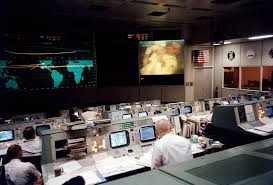
An explosion ocurred that destroyed an oxygen tank on the spacecraft which resulted in the complete loss of electrical power from its fuel cell system. The Command Module lost all its capabilities to support astronauts during their extended return mission because both of these systems became inoperable. This lunar landing mission was called off because the space mission had to shift from exploration work to survival efforts. So these astronauts attempted to stabilize their damaged spacecraft while Mission Control engineers started their investigation of the situation.6
These astronauts deactivated most systems of the Command Module to preserve its remaining power, which they needed to operate the Lunar Module Aquarius. That Lunar Module had been designed to support two astronauts for about two days on the Moon’s surface. So the spacecraft needed to support three astronauts for almost four days while it orbited the Moon and returned to Earth. Such spacecraft had never been intended to operate in this way, which forced engineers to create solutions for unexpected problems that had not been planned during mission design.7
Yet another perilous situation began brewing right inside the Lunar Module. As the astronauts breathed, the ever-rising carbon dioxide inside the tiny spacecraft was suffocating them. The air contained high carbon dioxide levels, which created an immediate danger to human life. The Lunar Module contained filters which could remove carbon dioxide but these filters proved insufficient for extended space missions. Also, the Command Module contained extra filters that existed in a square shape whereas the Lunar Module functioned with round openings.8
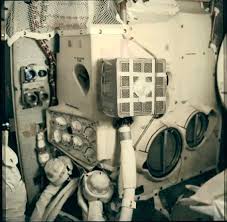
Mission Control engineers received their task to develop a solution that required them to use only existing spacecraft materials. That team built an emergency adapter from cardboard plastic bags and duct tape and hoses. Those astronauts built the device according to instructions that they received from Earth. This adapter enabled the Command Module square lithium hydroxide canisters to operate with the Lunar Module’s round filter system, which successfully removed carbon dioxide from the cabin air.9
This innovative solution demonstrated NASA’s engineering values that valued training procedures and backup systems and thorough emergency response planning. The team conducted emergency training exercises before every space mission to teach engineers and astronauts how to handle unplanned developments. Engineers studied Apollo 13 training exercises to learn problem-solving techniques, which involved peaceful assessment methods because no real simulations existed. These astronauts survived the emergency because they could solve difficult challenges while working under tight time limits.10
Apollo 13 engineers calculated all necessary maneuvers for the spacecraft’s return to Earth during their lunar mission, which took them to the Moon’s far side. The astronauts used the Lunar Module’s descent engine for their mid-course correction, which established the correct flight path for their mission. The astronauts used Earth as a visual reference point to manually align the spacecraft because multiple navigation systems had been disabled for power saving purposes. This spacecraft required extreme precision for this maneuver because even minor mistakes would result in mission failure.11
The team encountered their second challenge, which required them to restore electrical power to the Command Module before the spacecraft could begin its entry into Earth’s atmosphere. Engineers developed a new method to power up the spacecraft systems because they needed to preserve their existing battery power. Those same astronauts used Mission Control’s instructions to prepare the spacecraft for its final journey phase.12
Apollo 13 completed its Earth descent after three dangerous incidents that occurred between April 21 and 22. The spacecraft reentry process caused temporary communication breakdowns because intense heat interrupted astronaut contact with Mission Control.13
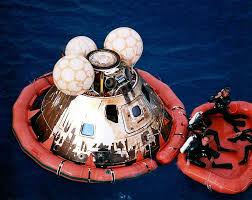
The Command Module made a secure landing in the Pacific Ocean, which recovery teams used to bring back the astronauts. Apollo 13 did not complete its initial mission to land on the Moon, yet the operation became one of history’s most outstanding demonstrations of collaborative work and technical achievement. So, these astronauts, together with their engineering team, successfully converted a disastrous event into a successful rescue operation.14
Apollo 13 is often recognized as a successful failure mission: a mission that failed to complete its scientific goals yet demonstrated how humans invent solutions to stay alive in dangerous situations. Those astronauts and Mission Control worked together to show that their preparation methods and their innovative solutions and their teamwork could solve all major technical problems. What started as a lunar exploration mission turned into a demonstration of how engineering expertise and determination could lead to safe homecoming for three astronauts from deep space.15
- Jim Lovell and Jeffrey Kluger, Lost Moon: The Perilous Voyage of Apollo 13 (Boston: Houghton Mifflin, 1994), 1-6; Henry S. F. Cooper Jr., Thirteen: The Flight That Failed (New York: Dial Press, 1973), 3-9. ↵
- Charles Murray and Catherine Bly Cox, Apollo: The Race to the Moon (New York: Simon & Schuster, 1989), 390-392. ↵
- Walter A. McDougall, The Heavens and the Earth: A political History of the Space Age (New York: Basic Books, 1985), 395-401, Jhon Logsdon, “The Space Race and U.S. Space Policy,” Journal of Cold War Studies 12, no. 2 (2010): 4-8. ↵
- “Space Race,” Gale Encyclopedia of U.S. History, 3rd ed.; Walter A. McDougall, The Heavens and the Earth, 402-404. ↵
- Jim Lovell and Jeffrey Kluger, Lost Moon: The Perilous Voyage of Apollo 13 (Boston: Houghton Mifflin, 1994), 85-90; Henry S. F. Cooper Jr., Thirteen: The Flight That Failed (New York: Dial Press, 1973), 74-82. ↵
- Henry S. F. Cooper Jr., Thirteen: The Flight That Failed (New York: Dial Press, 1973), 90-96; “Apollo 13,” Encyclopedia Britannica, last modified 2023. ↵
- Charles Murray and Catherine Bly Cox, Apollo: The Race to the Moon (New York: Simon & Schuster, 1989), 394-398. ↵
- Jim Lovell and Jeffrey Kluger, Lost Moon, 150-155; Henry S. F. Cooper Jr., Thirteen: The Flight That Failed, 110-115. ↵
- Henry S. F. Cooper Jr., Thirteen: The Flight That Failed (New York: Dial Press, 1973), 115-118. ↵
- Stephen B. Johnson, “NASA and the Culture of Engineering,” Technology and Culture 43, no. 3 (2002): 458-463. ↵
- Charles Murray and Catherine Bly Cox, Apollo: The Race to the Moon (New York: Simon & Schuster, 1989), 400-403. ↵
- Jim Lovell and Jeffrey Kluger, Lost Moon, 220-230. ↵
- “Apollo 13,” Encyclopaedia Britannica, last modified 2023. ↵
- Charles Murray and the Catherine Bly Cox, Apollo: The Race to the Moon, 410-412. ↵
- Jim Lovell and Jeffrey Kluger, Lost Moon, 300-305; Henry S. F. Cooper Jr., Thirteen: The Flight That Failed, 200-205. ↵