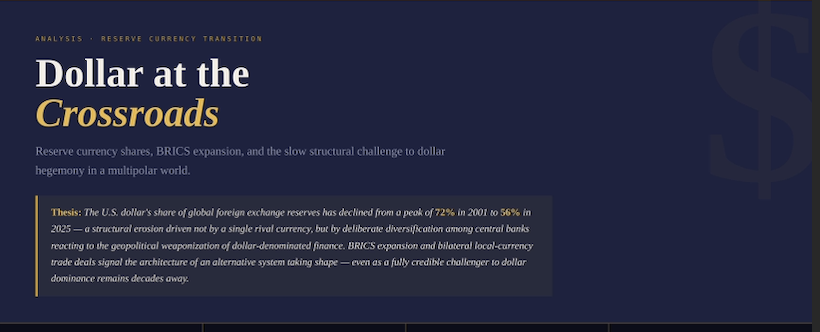

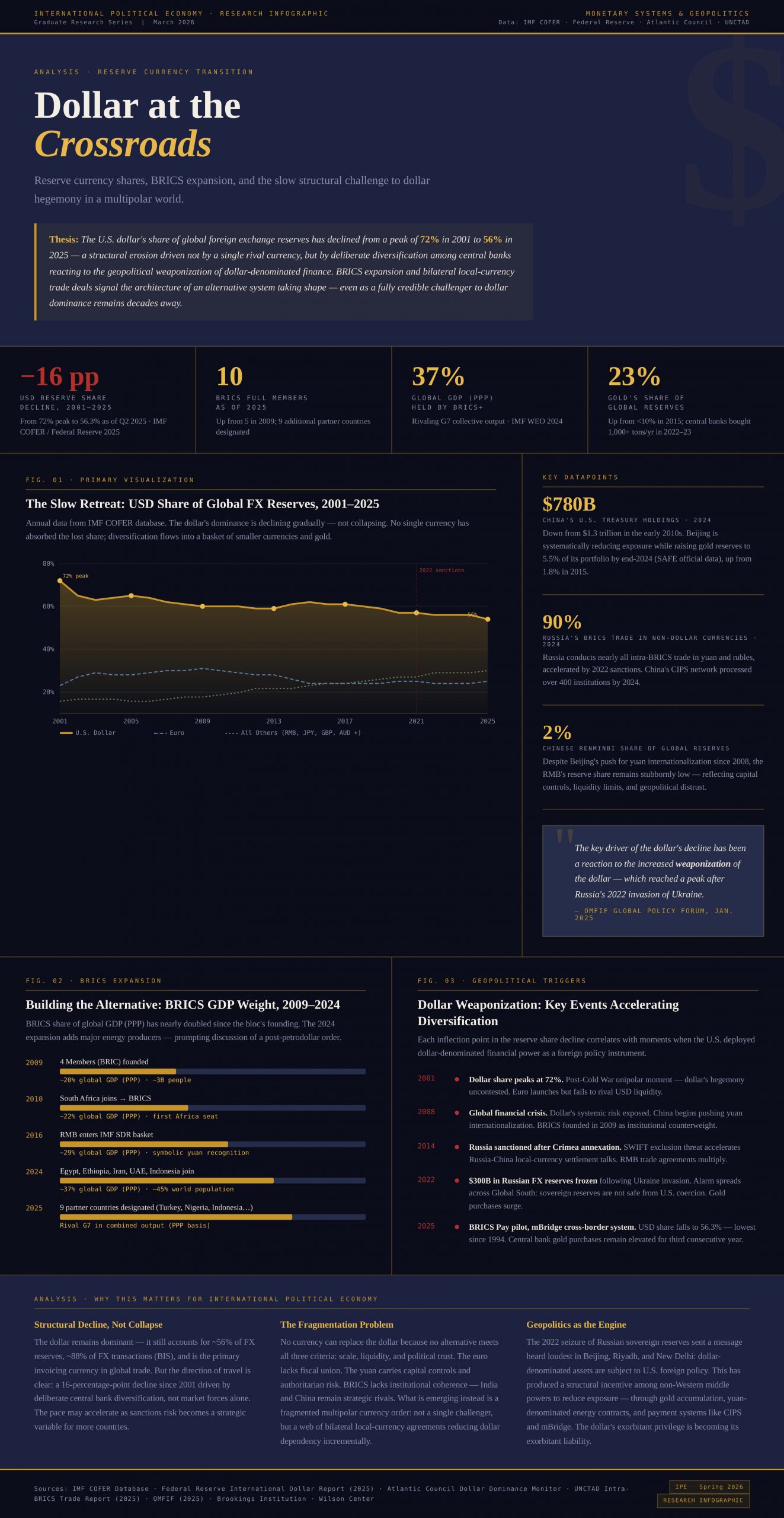
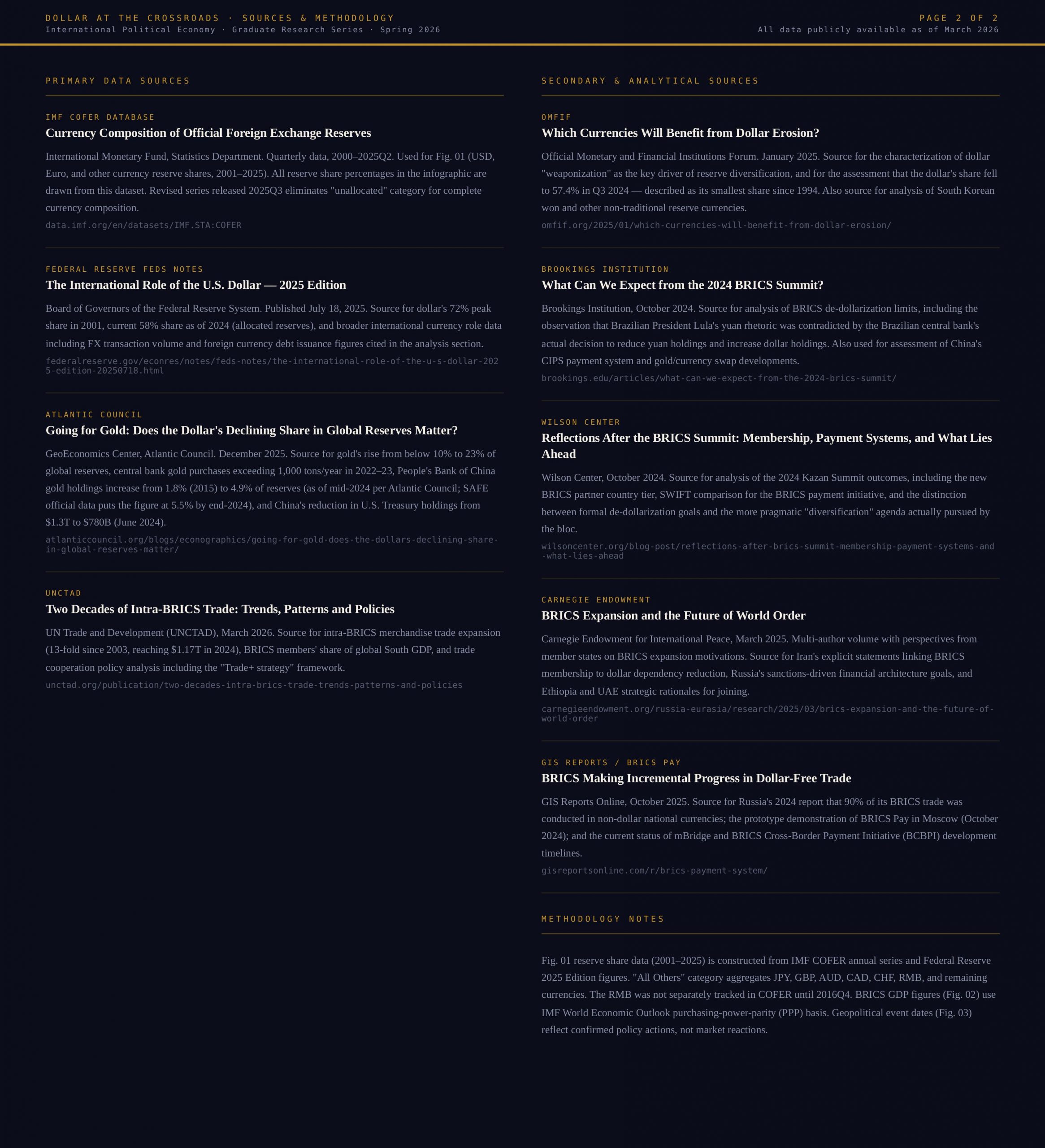
This work argues that the US dollar’s role as the world’s dominant reserve currency is in structural, though not terminal, decline. This information draws on IMF COFER data to show that the dollar’s share of global foreign exchange reserves has fallen from a peak of 72% in 2001 to 56% as of mid-2025, a 16-percentage-point erosion over two decades. Crucially, no single rival currency has absorbed that lost share; instead, central banks have diversified into a basket of smaller currencies and gold, whose share of global reserves has surged from under 10% to 23% since 2015. The BRICS expansion timeline contextualizes this trend: a coalition now representing 37% of global GDP has assembled around a shared interest in reducing dollar dependency. The geopolitical events timeline ties the data to its engine, particularly the 2022 freezing of Russian sovereign reserves, which gave non-Western governments concrete incentive to treat dollar exposure as strategic risk. Taken together, these patterns point not toward a single moment of dollar collapse, but toward the slow, deliberate construction of a parallel financial architecture designed to reduce coercive dependence on US-dominated monetary infrastructure.