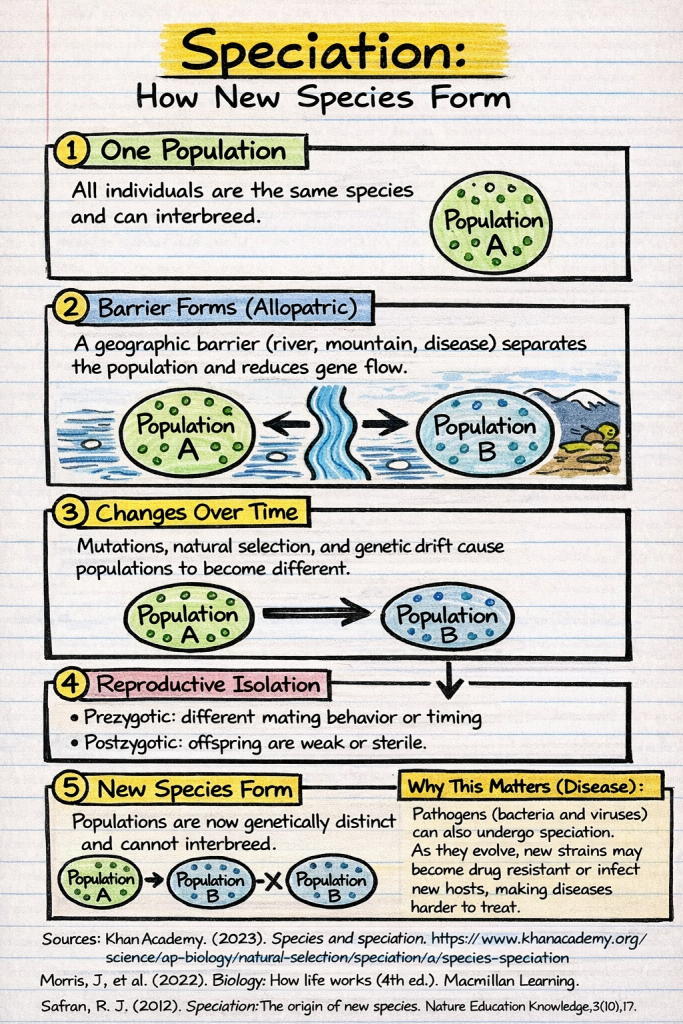
New species arise through speciation, an evolutionary process that splits into two or more genetically distinct species that can no longer interbreed. This process is the source of Earth’s biodiversity, which helps explain how life adapts to challenges, different environments, disease, and climate change. Speciation reduces gene flow between populations, followed by genetic drift through mutations and reproductive isolation. There are two main topics. Allopatric speciation occurs when populations are separated by a geographical barriers. For example, rivers, mountains, or disease outbreaks. Over time, the isolated groups become reproductively incompatible. In contrast to sympatric speciation, when populations divide while in the same geographical location. This can occur from ecological differences like habitat changes or trying different food sources. Understanding speciation matters deeply today because it helps explain pathogen evolution, where bacteria and viruses quickly form new strains that easily become drug-resistant. By knowing how populations change and evolve, speciation research informs us about conservation, agriculture, and how we respond to environmental change.