

Extreme heat doesn’t make headlines such as hurricanes or tornadoes, but it does kill more people every year than both combined. Over the past several decades, global temperatures have risen, changing the climate all around the world.1 As global warming disrupts long-standing climate patterns, the United Kingdom has traditionally been characterized by its cold winters and mild summer conditions. Generally speaking, the UK’s climate is relatively temperate and equable.2 However, rising temperatures may begin to rewrite their story. As summers grow hotter, heatwaves become more frequent and record-breaking temperatures become more common, the UK may be beginning a new chapter in its life.
Heating up a Nation
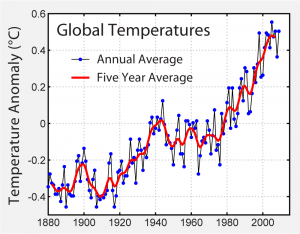
In the past, a heatwave would have sent panic throughout the city- now it’s just a part of summer. Over the past one hundred years, mean temperatures globally have steadily increased. Global average temperatures have risen about 1 degree Centifrade (2 degrees Fahrenheit) since 1850 (Figure 1).3 Beginning with the Industrial Revolution in the late 18th century, modern global warming, is caused by the increase in greenhouse gases mainly stemming from humans through burning fossil fuels, deforestation, and agriculture.4 Summers are becoming progressively longer and hotter, but until recently the idea of an ice cream cone melting before you could finish it felt unimaginable. The defining moment for the UK perhaps began during the summer of 2022 with an unprecedented heatwave reshaping the way summers are perceived. With fried vegetation, cracked infrastructure, and a very sweaty public, it tested the resilience of British society like never before. The UK wasn’t built to withstand extremely high temperatures, and as summers continue to grow hotter will this call for a complete redesign?
When the UK Broke Its Own Thermometer: The Summer of 2022
Early June presented with warm sunny days perfect for going to the park and spending time outside. However, as mid- July crept closer a growing concern spread through society. July 19th, 2022 marks the day the UK recorded a temperature high of 40.3 degrees Centigrade (104.5 degrees Fahrenheit) in Coningsby, Lincolnshire. Shattering the previous record from Cambridge 2019 of 38.7 degrees Centigrade (101.7 degrees Fahrenheit).6 Multiple different stations across England recorded temperatures exceeding 40 degrees Centigrade (about 104 degrees Fahrenheit). This was the first time the UK had reached these temperatures.7 It didn’t stop there, with 4 more heatwaves hitting the UK by the end of August.8 The reason behind the extreme heat spells was a high-pressure weather system, the Azores High, expanding north, allowing heat from southern Europe and North Africa to reach the UK. To further strengthen the high temperature system, a heat dome developed over western Europe.9
As a result, the Met Office issued its first-ever official Level 4 heat health alert and red warning for extreme heat. This alert identified all citizens as being at risk of heat-related illness.10 A number of adverse effects affected society, as the unprecedented temperatures strained daily routines. The July 2022 heat events served as a wake-up call, emphasizing how the climate is changing right now. This event served as a pivotal moment that reshaped perceptions on extreme heat, and marked the country’s growing vulnerability to extreme heat.
Public Health: Heat Risks and Everyday Challenges
The most tragic effect of the extreme heat was the toll taken on the public.
Heat exposure can lead to serious health illnesses such as cramps, heat exhaustion, heat stroke, and even death. Some individuals are put at more of a risk if they meet certain criteria; above the age of 65, cardiovascular or respiratory conditions, and young children are particularly vulnerable.11 Socioeconomic factors, limited mobility, and pre-existing conditions can worsen the effects of heat, especially for those who can’t get access to cooling spaces or medical attention. Many factors play into why an individual may be affected by the heat. Heat combined with humidity, wind, exposure to the sun, and urban areas all add to a higher risk.12 A heat mortality monitor estimated about 2,803 excess deaths of individuals above the age of 65 during summer 2022, as compared to about 3,271 excess deaths over all from heat. 13 This was the highest number recorded in a single year up to that point. On average there are around 2,000 heat-related deaths each year in the UK, with an estimate of 166% increase in the 2030s.14
The effects on public health extended past just physical health. Many people struggled with their routines being interrupted, reduced outdoor activity, and increasing travel time. The heat also exacerbated mental health stressors as a lack of sleep and discomfort from heat occurred.
Most of the UK’s housing was built with the main function to trap heat during long cold winters. Over half on the UK homes experience overheating, projecting to increase by 90% if a global warming increases by 2 degrees Centigrade. As a result, during hot days it becomes extremely difficult to cool down inside especially if there’s no air conditioning- which is a majority of the UK.15 High temperatures makes it difficult to work, sleep, and participate in daily activities, creating a widespread discomfort and reduced of quality life. With more than half of the UK homes subject to overheating, indoor environments are a significant challenge. Many schools had to cut their days short due to the heat.16 With this is mind the need for growth and change is on the horizon.
Infrastructure at Its Boiling Point
During the intense heatwaves of summer 2022, the UK experienced a strain across its infrastructure, transportation, and power supply. Many of the UK’s systems were not built for such high temperatures- which was shown as they struggled to keep up. On railroads, extreme temperatures caused steel rails to expand and buckle, and overhead cables sagged from melting (Figure 2).17

Have you ever gone downtown and immediately noticed it was hotter? This is due to something called the urban heat island effect-a phenomenon in urban dense areas trap and radiate heat creating a pocket of heat. Materials like asphalt, concrete, and brick absorb such large amounts of solar energy during the day and release it throughout the night. Temperatures can be found almost 4 degrees Centigrade (7 degrees Fahrenheit) higher in urban areas during the day, and 1 to 3 degrees Centigrade (2 to 5 degrees Fahrenheit) warmer at night. Since greenery is limited in these areas, there is little natural cooling because vegetation helps absorb heat, making it essential to implement green space into cities.21 The heatwaves of 2022 worsened the urban heat island effect that’s was already affecting many cities in the UK, like London.22
Assessing the Issue
To prevent a repeat of the disruptions experienced during the summer of 2022, the UK must prioritize stronger preparation and adaption strategies. Updating heat-related policies need to be better aligned with the new temperature reality to help protect the country. In order to be more effective in responding to the potential heatwaves of the future, experts highlighted five key areas where improvement is essential.
First, expanding resources and first responders. Emergency services reported they felt stretched thin throughout the summer, also noting resources running low. A longer-lasting event would likely have compromised their ability to perform. Therefore, increasing staff, equipment, and coordination will be essential in the future.23
Second, changing peoples attitudes and behaviors. Many people disregard the severity of heatwaves, treating them as a inconvenience rather than an actual hazard. For example creating a small fire from a BBQ during dry conditions. A lack of communication from the weather/ government services creates a gap of knowledge, leading to individuals participating in risky behaviors. Strengthening communication between meteorologist/media can reduce a knowledge gap and make the public feel safer.24
Third, improving preparedness and strategy. The UK needs comprehensive plans to help reduce overheating in homes, ensure cooling of infrastructure, and adapting the power grid to an increased demand and heat.25
Fourth, enhancing governance. Updating new policies and collaborating so government agencies can deliver timely responses.26
Fifth, addressing knowledge gaps. There is still a lack of knowledge surrounding heatwaves, cooling techniques in infrastructure, and heat-resilience. Expanding educational efforts and informing the public on extreme heat and the risks involved is necessary to fill the gaps.27
Different recommended policy actions are needed to become more prepared and to lessen the affects of heatwaves.
- Nature-based measures to create more living space for species and to limit urban heat island effect. Expanding green space through new parks, along streets, and urban forestry, creates habitats for species while also providing shade and cooling urban areas (Figure 3). Implementing vegetations into building such as green roof and along the walls provide similar benefits.28 Vegetation and trees play an important role in temperature regulation. As a matter of fact they lower surface and air temperatures by providing shade and evapotranspiration, a process where water is absorbed through their roots and evaporate through their leaves, lowering surface and air temperatures.29

Figure 3. Urban green forestry in the town.30 CC BY-SA 4.0 - Property measures are extremely important because only around small portion of homes currently have air conditioning.31 As summers continue to get hotter, active cooling (fans and air conditioning) may become essential for keeping indoor temperatures safe. Other changes such as switching to LED lighting and adopting passive building cooling deigns like heat-sensitive architecture, will help reduce overheating.32
- Preparedness and Response planning is an essential change for the UK and the public. Heatwave plans for transportation systems, schools, and workplaces can help to ensure the safety of people. These plans will only work, however, if accompanied by changing behaviors and mindsets towards heatwaves. Many people can put themselves in harms ways by being uninformed about the risks. Implementing early warning systems to notify the public when there is extreme weather and providing a guidance on how to stay safe.33
- Urban adaptations, if implemented, can transform cities into cooler and more livable environments. Expanding shade in urban areas, increasing indoor and outdoor green spaces, and planting urban greenery will all help to reduce the effects of higher temperatures. Cooling systems (air conditioning and fans) are critical for infrastructure that overheats easily. Heat-resistant infrastructure, such as light-colored roofs, green infrastructure, solar controlled glass, and ventilation systems, help to reduce electricity demand and the potential overheating of power systems.34
The Summer Britain Won’t Forget
The summer of 2022 was a wake up call for the UK, exposing their unpreparedness for rapid climate change. Melted railroads, overheated buildings, and the tragic loss of life all made it impossible to deny that climate change is no longer in the future, changes are happening right now. Heatwaves are projected to become more frequent with a higher intensity and longer duration.35 The heatwaves that occurred during the summer of 2022 may soon become a normal event.
As global temperatures continue to rise, the UK’s futures can expect more challenges. However, it is not hopeless. The country does need to adapt to the hotter climate. Strengthening preparedness and planning, expanding green infrastructure, promoting heat-resilient buildings and homes, and redesigning urban areas will improve safety and overall quality of life. By making changes now the UK can transform its cities before it is too late.
- World of Change: Global Temperatures. 2020 Jan 29. https://earthobservatory.nasa.gov/world-of-change/global-temperatures. ↵
- 3. Climate | UK Environmental Change Network. https://ecn.ac.uk/what-we-do/education/tutorials-weather-climate/climate#:~:text=The%20British%20Isles%20are%20within,and%20there%20is%20frequent%20rain. ↵
- Climate change: global temperature | NOAA Climate.gov. 2025 May 29. https://www.climate.gov/news-features/understanding-climate/climate-change-global-temperature. ↵
- Causes – NASA Science. 2022. https://science.nasa.gov/climate-change/causes/. ↵
- This image shows the instrumental record of global average w:temperatures as compiled by the w:NASA’s w:Goddard Institute for Space Studies. (2006) “Global temperature change”. Proc. Natl. Acad. Sci. 103: 14288-14293. Following the common practice of the w:IPCC, the zero on this figure is the mean temperature from 1961-1990. This figure was originally prepared by Robert A. Rohde from publicly available data and is incorporated into the Global Warming Art project.https://commons.wikimedia.org/wiki/File:Instrumental_Temperature_Record.png. ↵
- A milestone in UK climate history. Met Office. https://www.metoffice.gov.uk/about-us/news-and-media/media-centre/weather-and-climate-news/2022/july-heat-review. ↵
- https://www.weather.gov/media/rnk/Newsletter/22FA-2022_UK_july_heatwave.pdf. ↵
- Heat mortality monitoring report: 2022. GOVUK..https://www.gov.uk/government/publications/heat-mortality-monitoring-reports/heat-mortality-monitoring-report-2022. ↵
- Extreme Weather in the UK 2022 Heatwave Case Study. Internet Geography.https://www.internetgeography.net/topics/extreme-weather-in-the-uk-2022-heatwave-case-study/. ↵
- Met Office National Climate Information Centre. 2022. Unprecedented extreme heatwave, July 2022: National Weather Service; Available from:https://www.weather.gov/media/rnk/Newsletter/22FA-2022_UK_july_heatwave.pdf. ↵
- Turning up the heat: learning from the summer 2022 heatwaves in England to inform UK policy on extreme heat. Grantham Research Institute on climate change and the environment. https://www.lse.ac.uk/granthaminstitute/publication/turning-up-the-heat/. ↵
- Turning up the heat: learning from the summer 2022 heatwaves in England to inform UK policy on extreme heat. Grantham Research Institute on climate change and the environment. https://www.lse.ac.uk/granthaminstitute/publication/turning-up-the-heat/. ↵
- Howarth C, Armstrong A, McLoughlin N, Murtagh E, Stuart-Watt A. 2023. The 2022 heatwaves: England’s response and future preparedness for heat risk. London: Grantham Research Institute on Climate Change and the Environment, London School of Economics & Political Science. ↵
- Turning up the heat: learning from the summer 2022 heatwaves in England to inform UK policy on extreme heat. Grantham Research Institute on climate change and the environment. https://www.lse.ac.uk/granthaminstitute/publication/turning-up-the-heat/. ↵
- Turning up the heat: learning from the summer 2022 heatwaves in England to inform UK policy on extreme heat. Grantham Research Institute on climate change and the environment. https://www.lse.ac.uk/granthaminstitute/publication/turning-up-the-heat/. ↵
- National Weather Service. 2022. Unprecedented extreme heatwave, July 2022. NOAA. https://www.weather.gov/media/rnk/Newsletter/22FA-2022_UK_july_heatwave.pdf ↵
- National Weather Service. 2022. Unprecedented extreme heatwave, July 2022. NOAA. https://www.weather.gov/media/rnk/Newsletter/22FA-2022_UK_july_heatwave.pdf ↵
- https://commons.wikimedia.org/wiki/File:Heat_distortion_of_railway_line.jpg ↵
- Extreme Weather in the UK 2022 Heatwave Case Study. Internet Geography. https://www.internetgeography.net/topics/extreme-weather-in-the-uk-2022-heatwave-case-study/. ↵
- Extreme Weather in the UK 2022 Heatwave Case Study. Internet Geography. https://www.internetgeography.net/topics/extreme-weather-in-the-uk-2022-heatwave-case-study/. ↵
- US EPA O. 2014 June 17. What Are Heat Islands?https://www.epa.gov/heatislands/what-are-heat-islands. Especially during a heatwave this can cause unbearable situations. ↵
- Howarth C, Armstrong A, McLoughlin N, Murtagh E, Stuart-Watt A. 2023. The 2022 heatwaves: England’s response and future preparedness for heat risk. London: Grantham Research Institute on Climate Change and the Environment, London School of Economics & Political Science. ↵
- Howarth C, Armstrong A, McLoughlin N, Murtagh E, Stuart-Watt A. 2023. The 2022 heatwaves: England’s response and future preparedness for heat risk. London: Grantham Research Institute on Climate Change and the Environment, London School of Economics & Political Science. ↵
- Howarth C, Armstrong A, McLoughlin N, Murtagh E, Stuart-Watt A. 2023. The 2022 heatwaves: England’s response and future preparedness for heat risk. London: Grantham Research Institute on Climate Change and the Environment, London School of Economics & Political Science. ↵
- Howarth C, Armstrong A, McLoughlin N, Murtagh E, Stuart-Watt A. 2023. The 2022 heatwaves: England’s response and future preparedness for heat risk. London: Grantham Research Institute on Climate Change and the Environment, London School of Economics & Political Science. ↵
- Howarth C, Armstrong A, McLoughlin N, Murtagh E, Stuart-Watt A. 2023. The 2022 heatwaves: England’s response and future preparedness for heat risk. London: Grantham Research Institute on Climate Change and the Environment, London School of Economics & Political Science. ↵
- Howarth C, Armstrong A, McLoughlin N, Murtagh E, Stuart-Watt A. 2023. The 2022 heatwaves: England’s response and future preparedness for heat risk. London: Grantham Research Institute on Climate Change and the Environment, London School of Economics & Political Science. ↵
- Howarth C, Armstrong A, McLoughlin N, Murtagh E, Stuart-Watt A. 2023. The 2022 heatwaves: England’s response and future preparedness for heat risk. London: Grantham Research Institute on Climate Change and the Environment, London School of Economics & Political Science. ↵
- US EPA O. 2024 Mar 29. Benefits of Trees and Vegetation. https://www.epa.gov/heatislands/benefits-trees-and-vegetation. ↵
- https://medium.com/johns-writing-portfolio/the-vital-role-of-green-spaces-in-urban-communities-fca82dc84de5 ↵
- Britain is getting hotter – but are air conditioners the answer? 2025 Aug 31. https://www.bbc.com/news/articles/c5yl5v4elgno. ↵
- Howarth C, Armstrong A, McLoughlin N, Murtagh E, Stuart-Watt A. 2023. The 2022 heatwaves: England’s response and future preparedness for heat risk. London: Grantham Research Institute on Climate Change and the Environment, London School of Economics & Political Science. ↵
- Howarth C, Armstrong A, McLoughlin N, Murtagh E, Stuart-Watt A. 2023. The 2022 heatwaves: England’s response and future preparedness for heat risk. London: Grantham Research Institute on Climate Change and the Environment, London School of Economics & Political Science. ↵
- Howarth C, Armstrong A, McLoughlin N, Murtagh E, Stuart-Watt A. 2023. The 2022 heatwaves: England’s response and future preparedness for heat risk. London: Grantham Research Institute on Climate Change and the Environment, London School of Economics & Political Science. ↵
- US EPA O. 2024 Nov 19. Extreme Heat. https://www.epa.gov/climatechange-science/extreme-heat. ↵