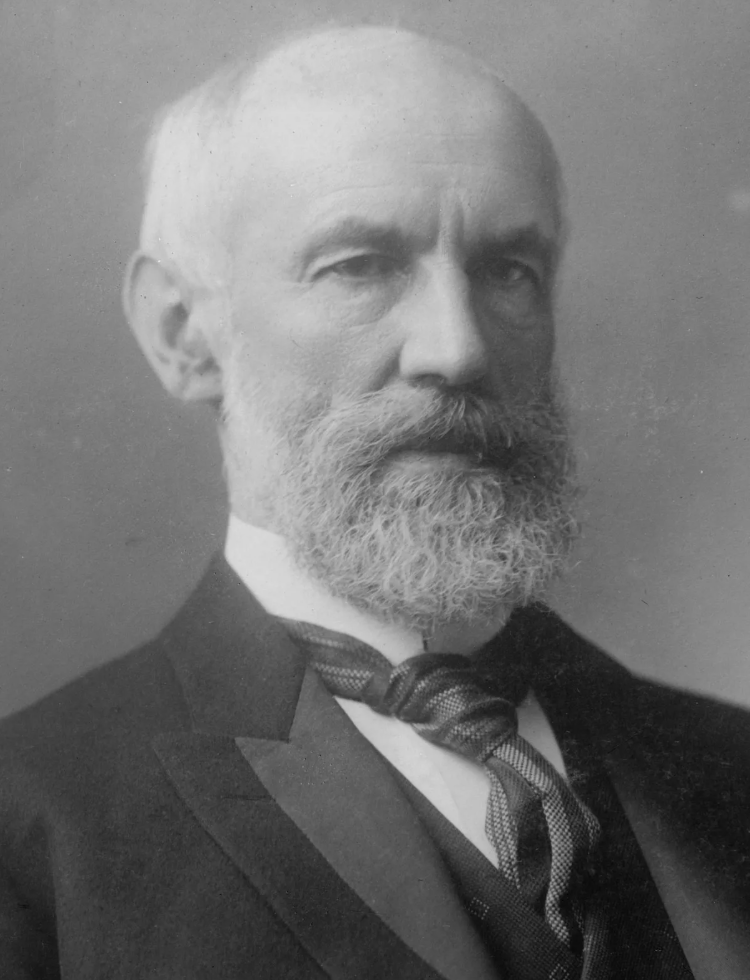

In the disciplines and orderly world of mid-19th century New England, childhood was understood as little more than preparation for adulthood. Young people were expected to mature quickly, adopt responsibility, and move quickly into adult roles. The years in between what we now call adolescence were rarely acknowledge as a distinct phase of life. Into this world was born G. Stanley Hall, a curious and ambitious thinker who would challenge this assumption and ultimately redefine how society understood youth. Through his research, writing, and institutional leadership, Hall transformed adolescence from an overlooked transition into a central concept in psychology.1
Hall did not begin his career intending to revolutionize the study of human development. Like many educated men of his time, he initially pursued a traditional path in religion and education. However, his intellectual route changed when he encountered new ideas emerging from Europe, particularly in Germany, where scholars were beginning to study the human mind through scientific methods. Inspired by these developments, Hall became convinced that psychology could be established as a legitimate academic discipline grounded in research and experimentation.2

When Hall returned to the United States, he dedicated himself to building this new field. He helped establish some of the earliest psychological laboratories and played a vital role in developing academic programs devoted to the study of the mind. Yet as psychology grew, Hall noticed a significant gap in its focus. Researchers had examined childhood and adulthood, but the period between them remained largely ignored. Hall began to suspect that this neglect was not accidental, but rather a reflection of a deeper misunderstanding. He believed adolescence was not simply a short transition, but a crucial and more complex stage of development deserving serious scientific attention.3
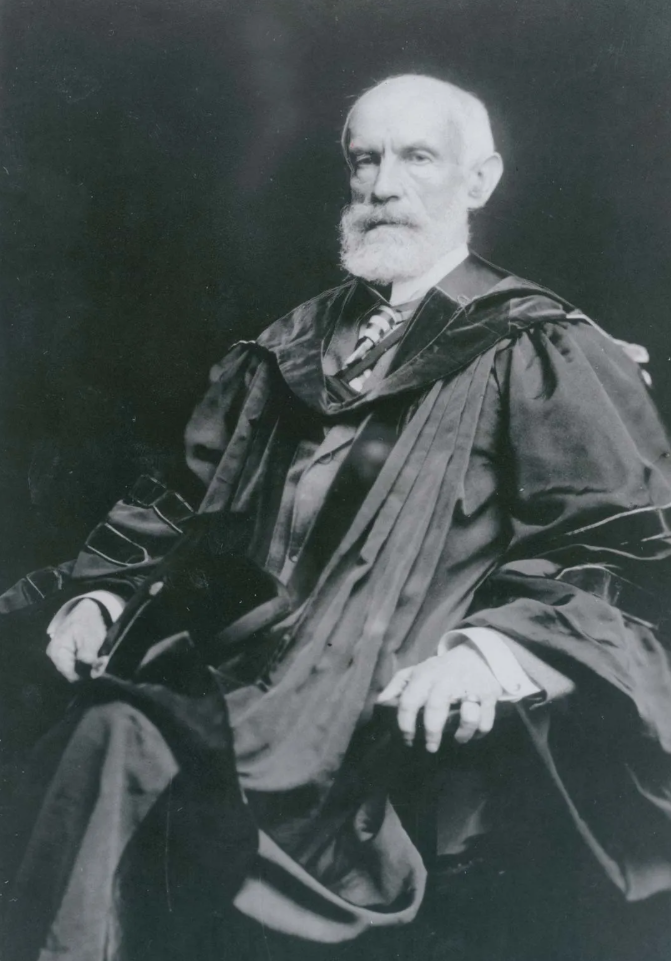
Determined to prove this idea, Hall embarked on an ambitious research project. He began collecting large amounts of data on young people, using surveys to ask about their fears, emotions, ambitions, and daily experiences. At the tine, this approach was highly unconventional. Many scholars questioned whether such subjective responses could be considered valid scientific evidence. Nevertheless, Hall persisted, gathering thousands of responses that revealed recurring patterns of emotional intensity, inner conflict, and rapid personal growth.4
These findings led Hall to develop one of his most influential and controversial ideas that adolescence was characterized by what he called “storm and stress.” According to Hall, the teenage years were marked by emotional turbulence, rebellion, and psychological struggle. Rather than viewing these traits as signs of immaturity or moral failure, he argued that they were natural and necessary aspects of development. Adolescence, in his view, was a formative period during which individuals grappled with identity, independence, and social expectations.5
Hall’s work emerged at a time of significant social change in the United States. Industrialization was transforming family life, education systems were expanding, and young people were spending more time in school rather than entering the workforce at an early age. These changes made the question of youth development increasingly important. Hall argued that modern society had in effect, created adolescence as a prolonged stage of life, and that understanding it was essential for educators, parents, and policymakers alike.6
In 1904, Hall published his most important work, Adolescence, a massive two volume study that sought to define this stage of life in scientific terms. The book synthesized his research and presented a comprehensive theory of adolescent development grounded in biology, psychology, and evolutionary thought. While some readers praised the work for its ambition and originality, others criticized it for relying too heavily on unscientific evidence and lacking strict methodology. The debate surrounding Adolescence reflected broader tensions within the emerging field of psychology, as new approaches such as behaviorism and psychoanalysis began to challenge earlier theories.7
Despite the controversy, Hall’s central insight proved remarkably durable. Over time, scholars increasingly accepted the idea that adolescence was a distinct and meaningful stage of human development. His work influenced the growth of developmental psychology, a field dedicated to understanding how individuals change over the course of their lives. Educators began designing schools and programs specifically tailored to teenagers, while psychologists, expanded research into identity formation, emotional development, and social behavior.8
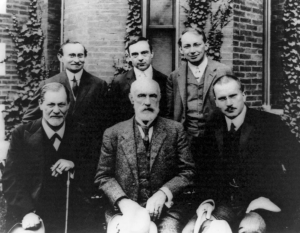
Hall’s legacy extends beyond his theories. He was a key institutional figure in American psychology, helping to establish professional organizations, academic journals, and research programs that shaped the discipline for decades. He also played a role in bringing influential European thinkers to the United States, further integrating American psychology into the global scientific community.9
Although many of Hall’s specific claims, particularly his emphasis on “storm and stress” have been revised or challenged by later research, the fundamental question he raised continues to shape the field. By insisting that adolescence deserved serious study, Hall opened the door to a deeper understanding of human development. What had once been dismissed as a brief and insignificant transition became recognized as a critical stage of life, rich with complexity and importance.10
G. Stanley Hall set out to convince the world that adolescence mattered. By the end of his career, he had succeeded. Today, the concept of adolescence is so deeply embedded in psychology, education, and everyday life that it is difficult to imagine a time when it did not exist. Hall did not merely study adolescence, he helped invent it.11
- Rose Zeligs, “G. Stanley Hall, Psychologist and Educator,” Journal of Applied Psychology 27 (1): 83. ↵
- Rose Zeligs, “G. Stanley Hall, Psychologist and Educator,” Journal of Applied Psychology 27 (1): 84. ↵
- Wolfgang G. Bringmann, Michael W. Bringmann, and Charles E. Early, “G. Stanley Hall and the History of Psychology,” American Psychologist 47 (2): 281. ↵
- Sheldon H. White, “G. Stanley Hall: From Philosophy to Developmental Psychology,” Developmental Psychology 28 (1): 29–30. ↵
- Sheldon H. White, “G. Stanley Hall: From Philosophy to Developmental Psychology,” Developmental Psychology 28 (1992): 31–32. ↵
- Sheldon H. White, “G. Stanley Hall: From Philosophy to Developmental Psychology,” Developmental Psychology 28 (1992): 25–26. ↵
- Sheldon H. White, “G. Stanley Hall: From Philosophy to Developmental Psychology,” Developmental Psychology 28 (1992): 30–31. ↵
- Sheldon H. White, “G. Stanley Hall: From Philosophy to Developmental Psychology,” Developmental Psychology 28 (1992): 25–31. ↵
- Wolfgang G. Bringmann, Michael W. Bringmann, and Charles E. Early, “G. Stanley Hall and the History of Psychology,” American Psychologist 47 (2): 281-284. ↵
- Wolfgang G. Bringmann, Michael W. Bringmann, and Charles E. Early, “G. Stanley Hall and the History of Psychology,” American Psychologist 47 (2): 284-285. ↵
- Sheldon H. White, “G. Stanley Hall: From Philosophy to Developmental Psychology,” Developmental Psychology 28 (1992): 30–31. ↵

