
In a moments notice, decades of one’s life can be swept away without warning. The lives of many destroyed before having the opportunity to evacuate. For the people in Mozambique, repeated floods relentlessly destroy lives during the monsoon’s torrential rains or each time a cyclones makes landfall! Mozambique’s geographic location seems to bring on unrelenting natural disasters. Regular flooding forces displacement and many other severe disruptions in daily lives in Mozambique. The country must assess decision about maintaining dams, any possibilities for preventive action, and lack of control about about the implications of climate change on Mozambicans, especially those who live in high-risk areas. Might new dams bring some protection?
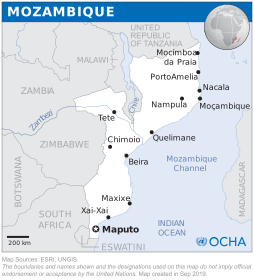
The Republic of Mozambique has a long coastline with a population estimated at around 35 million. Portugal colonized Mozambique and held onto it until a decade and half after most other countries on the African continent won their independence. Mozambique fought a 16-year civil war during which Mozambicans suffered enormously and finally reached independence in 1975.
This year in January and February 2026, flooding has hammered Mozambique’s capital, Maputo. Its climate curse compounds in negative effects with its political challenges. Daniel Chapo most recently elected leader of Mozambique succeeded Filipe Nyusi. Mozambique has very complex social issues that rival the complications of the environmental issues that the country experiences. Election rigging in particular has become a regular topic to protest about which has led to further political insurgency happening in Mozambique currently. 1 Amongst tensions happening politically in Mozambique, they face another dire issue. Displacement.
From the Southern region Maputo to Zambézia Province, Mozambique is drowning. Transformation happens in Maputo because the infrastructure has been torn down, lost to the aggressive weather events that have occurred. While Zambézia is the main center for displacement as a result of the constant rainfall; this creates mass floods. This is why Zambézia is considered a higher-risk region and why displacement is common, this reveals a lack of preventative action. If there isn’t urgency about moving Mozambicans away from a high-risk area to prevent more devastation until action happens to safely reduce the risk of living in these areas then there is a failure on the front of securing safety for Mozambicans. We will discuss how an action as simple as emphasizing that those in Zambézia are at risk to not only bring awareness to the country but create awareness inside the country, even further if there is a solution to offer such as an alternative safer area that would reduce the amount of people affected if they choose to settle into an area less likely to flood.
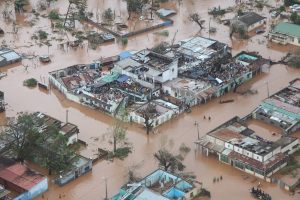
In recent floods, 620,000 people were affected by the floods and more than 72,000 homes were destroyed with essential infrastructure also falling victim to the flood’s damage. Their repair costs are projected to be around $30 million. Rainfall isn’t expected to stop anytime soon.2 This is the tip of the iceberg because Mozambique has a long history of struggling to keep their land above water, their location has everything to do with this struggle.
Mozambicans have dealt with constant adversity primarily due to their geographical location. Mozambique faced cyclones in March and April 2019: these two cyclones swept through the Southwest Indian Ocean/Southern Hemisphere, Cyclone Idai and Kenneth made landfall in Mozambique. With a growing population but an aging infrastructure the vulnerability of the population in Mozambique has grown. Europe promotes hydroelectric dams during this time because of their hydroelectric technology so the solution became obvious: build a dam. The building of these dams in Africa became frequent after World War II. Two were built in Mozambique, the Kossou Dam in Côte d’Ivoire, and the Masinga Dam.3
The Cost of Disaster for Mozambicans: The Promise and Peril of Dams
What is the real impact on people’s lives when environmental disaster, often not fully predictable, relentlessly submerge large parts of the country? Many people have to stay with relatives or friends because their own homes were destroyed by Cyclone Adai in 2019. Displacement has become the ultimate solution. Around 88,000 individuals were misplaced into mostly rural areas. The debate questions whether this can benefit people as they adapt to a disaster. Rural regions became known as high-risk zones that were no longer suitable for habitation. The Mozambique government does try to get people out of high-risk zones to safer places when it can. Mozambicans have become comfortable with a system that contributed to pressures that led to relocation and can, at times, encourage exploitation. Those in poverty after relocating from a high-risk zone are treated without care. There isn’t a system in place for Mozambicans that are at-risk of being affected by the extreme floods that happen so they then have to continue trying to live that does not help them if they are starving, sick, or robbed of their lives as a result of a cyclone. The current system does not provide any benefits for those affected in these times of instability. What the current system does do is prioritize profit at the expense of Mozambicans who struggle with basic needs: food, water, and housing.
The prazo system, a semi-feudal system leaning towards industrial capitalism, can enable exploitation within its structure. Portuguese colonial times resulted in relocation such as the Cahora Bassa Dam project, the post-independence villagisation policy, and the re-education camps of Frelimo led to large groups of people being relocated. Relocation today is caused by: oil, gas, other mineral exploitation, infrastructure development, nature conservation, and private investments. Critics of these systems argue that common law is not always being enforced by the government which presses those who are being relocated into a state of poverty. Mozambique has a problem with its ability to relocate people in high-risk areas into safer regions however, less flooding in a region does not guarantee water security. Lacking clean water contributes to waterborne diseases that will continue to spread without action towards Mozambique’s accessibility to water. That problem alone appears smaller compared to the complex nationwide challenge of climate change. 4 Climate change is caused by many of the environmental issues that caused by fossil fuels being burned that is reason for things like droughts, floods, and soaring temperatures. There is an unspeakable pressure being forced on the African continent as it deals with the storm that is climate change.
Climate change is one of the main issues that plays into displacement particularly in the African continent. There will be several mentions of climate change and its effects throughout the article. It is reported that climate change will continue to add to poverty, degrading of the environment, and damage already weak governments. Not only this but the continent has faced the brunt of a lot of the effects of global warming. When compared to the fact that the entire continent has produced less than four percent of the world’s green house gases. The most visible effects of climate change are flooding, cyclones, droughts, drying up of rivers and lakes, and decreased quality of water. These effects lead to much bigger problems; such as soil erosion and a lack of biodiversity resulting in food shortages that then causes disease to continue to spread. It all feeds back into a negative feedback loop eventually ending in displacement due to environmental emergencies. When it comes to accessing water in rough times like droughts or rivers that have dried up, people get creative.
It could be digging holes in the earth to hope that they find clean water or others have built jo-janks that they refill with already purchased water bottles. Unfortunately, these strategies require capital which the urban poor do not have access to. This issue features an essay that focuses on four critical dimensions of the water crises facing the African content in an age of climate change: the first, increasing scarcity, privatization, and commodification of water in urban centers. The second, the impact of large dams on the country side. The third, is about the health consequences caused by water shortages which will in-turn impact their experiences, sociopolitical dynamics, and broadly conceived. The fourth is water governance at the local, nation, and transnational levels.5 Each of these problems are interconnected. Climate change and the complete conversion away from fossil fuels haven’t always been prioritized by every state. The first step should be to trying to decrease the privatization and commodification of water within urban centers. By putting system or certain policy in place that lessens the amount of water that can be bought would help Mozambicans access to water which would decrease disease that would otherwise spread, the current state where people in Mozambique do not always have access to clean water. This would provide an opportunity stop competition on increasing commodification of water in an area that has already been deprived of clean water in certain areas. Upon the loss of water, the un-clean water being used causes health issues for those who are already disadvantaged. The poor do not have access to any clean water and the structures of dams are being promoted by the government of Mozambique as the temporary band-aid.
Dams are intended to aid the prevention of Mozambique’s infrastructure and health being completely stripped by flooding. If dams are set to be a solution then Mozambicans should be able to identify the benefits. Researchers have discovered otherwise. In fact, it has the opposite effect. Dams were found to permanently alter a river’s flow regime. When the flow regime timing and flooding extent is changed, it destroys the agricultural practices done for years by those who would benefit greatly from the natural resources that the river offered. It became noticeable that these dams made challenges for downstream fishers, increased the spread of disease, eroded the shoreline and the cost being a large investment, all while creating a decrease of riparian animals alongside plant life. The cost placed into these dams did not offer a lot in return which highlights that dams are not a reliable solution. Dam projects are still being developed in modern day Mozambique.6
Mphanda Nkuwa is a dam project being developed by Mozambique officials. Despite being far from Portuguese rule, there is still the inclination to have a dam that shines through Mozambique’s history. Why? This is because there is an economic imperative. For South Africa, there is a clear path to cheap energy and that is the dam projects that are not being put through proper impact studies which is what is said about Mphanda Nkuwa. Mozambique is completely infatuated with the idea of hydro-development.7
This is a particularly difficult problem to address. Managing the problem happening with regard to water is a hard situation to cope with but there are people who propose that there become a focus on ways to cope and adapt with creative solutions. The problem that is causing both droughts and floods is climate change. Climate change affects and modifies the hydrological cycle; climate change cannot be solved overnight but there are better solutions to the sudden changes aside from dams. There is a reason that many people use clean water when cooking or needing a drink and it becomes a problem when they are unable to access clean water, consuming dirty water then results in circumstances to get sick which can lead to morbid consequences. Dams have not been proved to be the ultimate solution. Such as an Egyptian dam, Aswan Dam, this was in 1902 and showed a significant rise in schistosomiases. Not just this but around 60% of the peasants suffered from disease, cultivators were getting hookworm from the sudden change in moisture that was infecting the soil, many suffered from pellagra due to the overreliance on grain.8 These circumstances keep Mozambicans in a cycle of suffering from sickness and upon survival, trying to stay healthy when there isn’t access to things needed to be healthy. Health issues are a huge problem for Mozambique, one of the most aggressive diseases being Cholera.
Breathing in the Risk: The History of waterborne disease in Mozambique
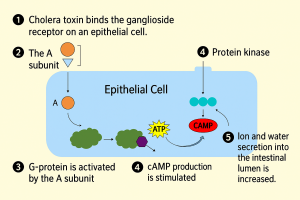
Cholera is a waterborne illness that highlights how devastating a disease that is spread faster in crowded areas; In Mozambique, crowded areas are commonly a result of displacement due to tragedies in high-risk areas. Understanding the history along with the issues that Cholera has caused Mozambique further develops an understanding of a truly deep tragedy that continues to attack. The waterborne disease, cholera morbus, appeared in the Portuguese chronicler Gaspar Correa’s: Lendas da Índia. It’s in this chronicler that Gaspar Correa depicts what can only be described as a devastating endemic that struck Goa in 1543. Cholera Morbus remained an endemic in India over the next two centuries, through these two centuries there were several Indian and African plants that were said to have medicinal properties to offer aid for the symptoms of Cholera. The first epidemic to strike Mozambique came during the third pandemic which occurred in 1839 to 1861 and reached the Swahili coast and extended beyond Cape Delgado; it took a serious toll.9 This wave of Cholera in India then spread for a long enough amount of time to allow those who participated in developing medicine to find remedies. This alone shows how dire people were for a solution for the disease and how long cholera plagued the population of both Africa and India. Although Cholera took longer to develop in Mozambique, it had a very tragic long-term effect on the country that would continue into modern Mozambique.
James Christie reported on cholera and believed that the first case of cholera only struck Mozambique on May 6th 1870 but was incorrect when stating that ‘the epidemic had not passed beyond Cape Delgado’ but a report from the regimental infirmary at Ibo, Portuguese officials knew cholera was beginning to enter as early as mid-January during 1870.10 Mozambique heavily dealt with Cholera and experienced a great loss during the third and forth pandemics. The Portuguese authorities were more prepared to deal with Cholera during 1870-1871 in comparison to the earlier outbreak in 1859. Even within Portuguese control, Mozambique was dealing with huge losses when it came to this disease. Being more prepared in 1870 could not compare to the outbreak in the mid-1970s when a completely new strain of cholera emerged.11
The mid-1970s was a time where a different strain of Cholera developed during the seventh pandemic. There was a completely new bio-type that developed: Vibrio cholerae 01 El Tor. Evolution occurring meant that there was a faster means of transportation, greater endurance since its first appearance in 1937 and El Tor is described as a completely new disease. By 1985, the World Health Organization reported that Cholera had become an endemic to Mozambique. Devastation in Mozambique is frequent and often occurs from rural areas to towns and cities, events like the civil war between the rebel Renamo forces and the government of Frelimo which devastated Mozambique in regards to educational along with health infrastructures from 1977 to 1992. However, Mozambique was able to manage the environmental disaster of of flooding caused by the cyclones during the first quarter of 2000. It was in 2019, Mozambique was hit by back to back cyclones but despite perfect conditions for an outbreak, there was only 8 deaths and 7,000 cases.
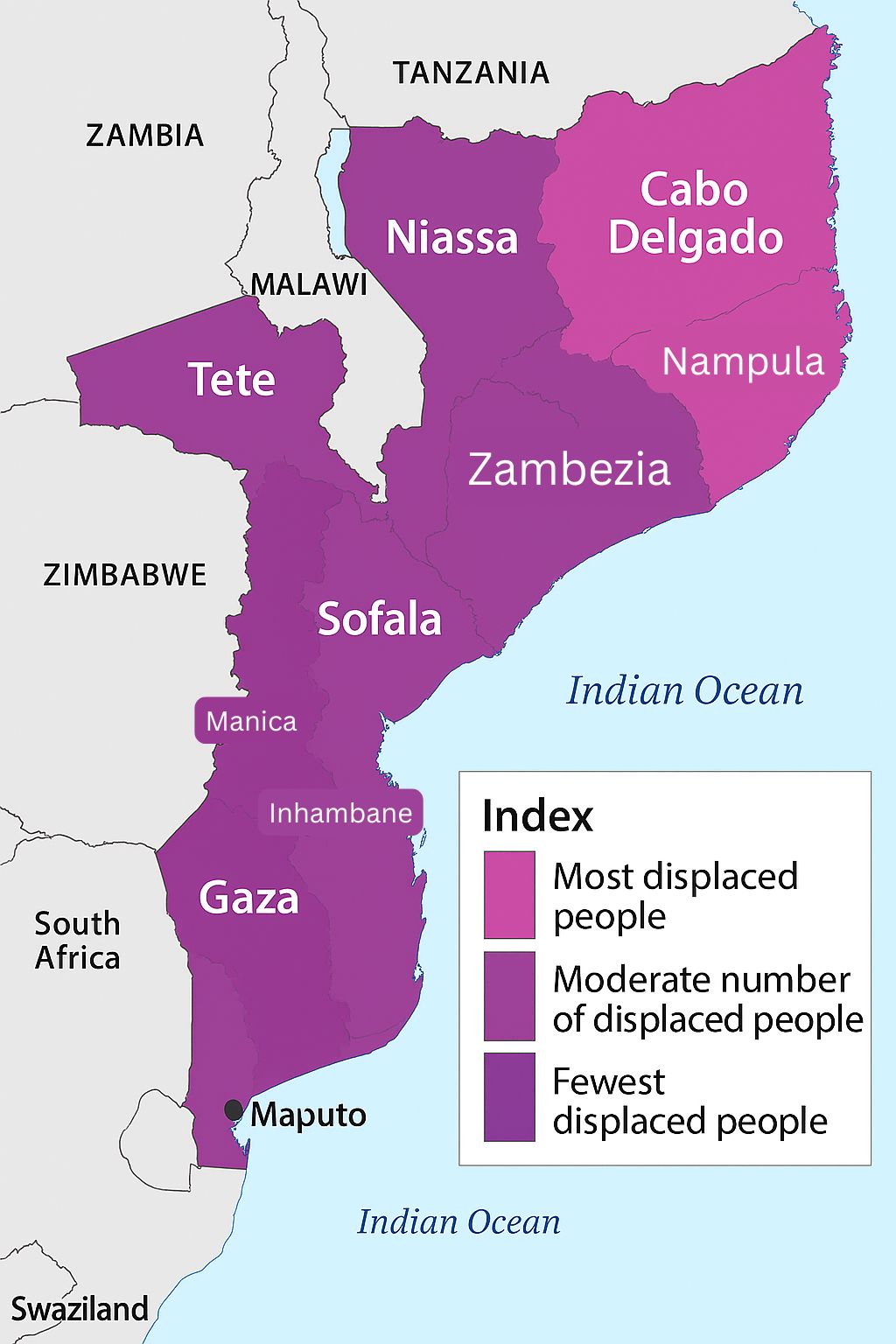
Mozambique does respond to these outbreaks quickly after emergency situations but that isn’t the problem, the issue is that there is a lack of preventive action that would mean lessening the occurrence of last-minute forced displacement. This displacement from different factors is the main culprit blamed for the spread of Cholera in Mozambique due to the rise of cases in Cabo Delgado; in just the first two months of 2021, there were nearly 5,000 cases of cholera reported causing 55 deaths. It is then said by Edward A. Alpers that even when completing The Long History of Cholera in Mozambique that Cyclone Gombe completely pummeled Mozambique during March of 2022, more than 100,000 people were affected and about 11,629 were displaced to temporary accommodation centers.12
The more that displacement occurs, the more that Mozambicans are likely to contract Cholera. There are many factors that cause displacement like groups fighting for their own agendas, there are natural occurrences that force people into displacement but hosting large numbers of displaced persons in one area without the proper care for creating awareness of diseases creates a breeding ground for an endemic.
To address the suffering caused by Mozambique’s climate and health crises, the nation must move beyond emergency response toward a structural “transition of resilience.” This involves decentralizing disaster management, investing in climate-proof infrastructure, and addressing the underlying socio-economic fragility that turns natural events into humanitarian catastrophes.
The Resilience Transition: An Analysis of Mozambique
Mozambique is currently navigating a precarious transition from a state of reactive crisis management to one of proactive climate adaptation. As one of the world’s most vulnerable nations to climate change, the country faces a “double bind” where seasonal cyclones, such as Idai and Kenneth, are increasingly followed by secondary health crises like cholera. To alleviate the resulting displacement, the Mozambican government and international partners must prioritize the “Resilient Housing” model. This involves moving populations from high-risk floodplains in the Limpopo and Zambezi basins to planned “resettlement hubs” equipped with elevated sanitation systems. This transition is not merely logistical but political; it requires the state to prove it can provide security and services in new territories, thereby strengthening the social contract during a time of environmental upheaval.
The second pillar of this transition focuses on the intersection of infrastructure and public health. The recurring cholera outbreaks in urban centers like Beira and Quelimane are symptoms of a “transit system” that has outgrown its colonial-era sewage capacity. Overcoming this suffering requires a transition toward “Integrated Water, Sanitation, and Hygiene” (WASH) infrastructure that is specifically designed to withstand inundation. By implementing decentralized solar-powered water purification systems, Mozambique can ensure that even when the central grid fails during a cyclone, clean water remains accessible, effectively “de-linking” natural disasters from disease outbreaks. This strategic shift represents a transition from treating cholera as an inevitable seasonal occurrence to treating it as a preventable failure of urban planning.
Finally, Mozambique’s transition must address the economic displacement caused by “climate migration.” When farmers lose their land to salt-water intrusion or flooding, they often migrate to insurgent-prone areas in the north or overcrowded urban slums, trading environmental risk for political or economic instability. Alleviating this suffering requires a transition toward “Climate-Smart Agriculture” and the establishment of a national “Disaster Insurance Scheme.” By providing smallholder farmers with flood-resistant seeds and micro-insurance payouts following a disaster, the nation can prevent the total loss of livelihoods that drives long-term displacement. Ultimately, Mozambique’s success as a nation in transition depends on its ability to weave climate resilience into its very identity, ensuring that its geographic location becomes a manageable challenge rather than a permanent sentence of suffering. 13
Investing in a future for Mozambique
When discussing Mozambique the step towards displacement that is not intended to drain vulnerable people, there has to be an understanding of what that looks like and how we can implement a system of displacement that provides stability for those displaced. One thing that is emphasized within this article is that the system of displacement should not be able to create more problems for people who are already at a disadvantage due to forced displacement. This would punish the high-risk area population for not engaging with preventative action when the population of these areas are often not brought into the governments plans when it comes to actions in stabilizing these high-risk areas when emergencies occur.
I’m going to use the 1998 UN Guiding Principles on Internal Displacement (UN GPID) and the related ISAC Framework on Durable Solution for Displaced Persons (IDPs) which breaks the solution down into three paths. The first path would be returning to their place of origin. The second path is to allow people to integrate into the local area of refuge. The last path encourages resettlement in a completely new area.
The IPCC has adaption strategies to treat the problem where it starts with climate change. The steps look like this: protect, accommodate, and only in drastic matters, retreat. It should be noted that the retreat option is not intended to be used as an option but the absolute last resort when a state cannot protect or accommodate.
Tadgell et al is a literature review that identifies five guiding principles to assess the appropriateness and feasibility of resettlement as a climate change adaption measure. The first of these principles is proactivity; this is the foresight of removing all persons from high-risk areas before a disaster occurs. The second is participation and communication, this covers the proposition of circulating the situation with communities so they can express interest or concerns within the resettlement process. The third principle is permeance which happens when resettlement is the only viable adaption measure which needs attractive pull factors in terms of long-term success. The fourth principle is the compensation of re-settlers – the good thing is there is multiple ways that compensation can be provided. The point of compensating is to make feel re-settlers fairly treated because they are already classified as disadvantaged due to their move. The final principle is livelihood protection which is defined by those who need to move as quickly as possible which can lead to restore income opportunities and community bonds in the new resettlement area. According to the Brookings Guidance, planned relocation has ended when “Relocated persons no longer have needs or vulnerabilities related to the Planned Relocation and can enjoy their rights at least at the same level as pre-Planned Relocation or before the impacts of disasters and environmental
change affected the enjoyment of such rights.”
This theory of fulfillment is intended to satisfy their rights in a long-term way especially in ways as before in resettlement. It was said that the returnees were not met in the city themselves but several of the respondents said that some people already arrived back to the city. Tadgell al’s four last resettlement principles are far from being achieved in Mozambique.
There are lessons to be drawn from Mozambique’s post-Idai resettlement approach. The important lesson derived from this approach is reaction to emergency when there is not a lot of time to act and there becomes a dependence on communication, which from the government can be needlessly long, creating ownership builds to interacting with people who are living in these high-risk areas because it increases the preparedness of those people. Creating awareness over high-risk factors can convince people to live in safer areas. This requires long-term investments and being proactive to develop a satisfying livelihood for people.14
- BBC News. “Mozambique Country Profile.” March 19, 2019. https://www.bbc.com/news/world-africa-13890416. ↵
- Al Jazeera. “Torrential Rains Displace Thousands in Mozambique as Floods Wreak Havoc.” January 22, 2026. https://www.aljazeera.com/gallery/2026/1/22/torrential-rains-displace-thousands-in-mozambique-as-floods-wreak-havoc. ↵
- Isaacman, Allen, and Muchaparara Musemwa. “Water Security in Africa in the Age of Global Climate Change.” Daedalus 150, no. 4 (2021): 12–13. ↵
- Jacobs, Carolien, and Bernardo Almeida. “Government-Led Resettlement after Natural Disasters as a Durable Solution? The Case of Cyclone Idai.” Refugee Survey Quarterly 40, no. 2 (2021): 239–41. https://www.jstor.org/stable/48812889. ↵
- Isaacman, Allen, and Muchaparara Musemwa. “Water Security in Africa in the Age of Global Climate Change.” Daedalus 150, no. 4 (2021): 7–12. https://www.jstor.org/stable/48620137. ↵
- Isaacman, Allen, and Muchaparara Musemwa. “Water Security in Africa in the Age of Global Climate Change.” Daedalus 150, no. 4 (2021): 13–14. ↵
- Isaacman, Allen, and Muchaparara Musemwa. “Water Security in Africa in the Age of Global Climate Change.” Daedalus 150, no. 4 (2021): 18. ↵
- Isaacman, Allen, and Muchaparara Musemwa. “Water Security in Africa in the Age of Global Climate Change.” Daedalus 150, no. 4 (2021): 17–18. https://www.jstor.org/stable/48620137. ↵
- Alpers, Edward. “The Long History of Cholera in Mozambique.” The Great Circle 44, no. 1 (2022): 29. ↵
- Alpers, Edward. “The Long History of Cholera in Mozambique.” The Great Circle 44, no. 1 (2022): 31. ↵
- Alpers, Edward. “The Long History of Cholera in Mozambique.” The Great Circle 44, no. 1 (2022): 35. ↵
- Alpers, Edward. “The Long History of Cholera in Mozambique.” The Great Circle 44, no. 1 (2022): 36–42. ↵
- Alpers, Edward A. “The Long History of Cholera in Mozambique: A Problematic Indian Ocean Disease.” The Great Circle 44, no. 1 (2022): 37–42. https://www.jstor.org/stable/27186809. ↵
- Jacobs, Carolien, and Bernardo Almeida. “Government-Led Resettlement after Natural Disasters as a Durable Solution? The Case of Cyclone Idai.” Refugee Survey Quarterly 40, no. 2 (2021): 241–47. https://www.jstor.org/stable/48812889. ↵