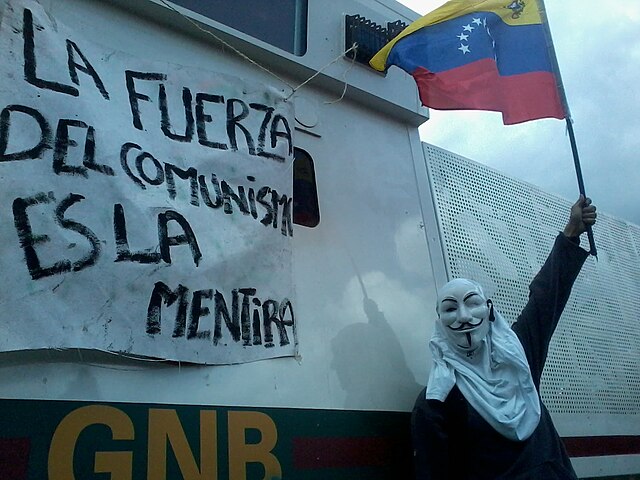

(March 2014) Wikimedia Commons, Author NoonIcarus, This file is made available under the Creative Commons CC0 1.0 Universal Public Domain Dedication.
Translation of poster: “The strength of communism is the deceit”
Fireworks burst in the sky, families embrace under their glow, glasses clink in celebration. For most countries around the world, the New Year brings hope for new beginnings, along with time for resolutions and self-reflection. However, for Venezuelans the year of 2026 brought new political upheaval, marked by the abduction of their head of state, adding further chaos to its longstanding corrupt and fractured government. Taking to the streets for strikingly contrasting reasons, Venezuelans rallied in opposition to military intervention by the U.S. and gathered with their families, not to celebrate the new year, but to soothe their fears for the future of their nation.
While millions across the globe wound down from festive traditions and settled into the dawn of 2026, U.S forces launched a swift and decisive action that captured Venezuela’s President Nicolás Maduro and his wife, Cilia Flores, on January 3rd. 1 This event stunned the world, took headlines by storm, and proved to be a turbulent start into what is widely recognized to be a time for new beginnings. As Venezuelans read the headlines linking “narco-terrorism” and “drug trafficking” to their missing leader, a storm of emotions surged within them, tarnishing their hopes for a clean slate before the country even had the chance to flourish.
Just as Maduro’s capture sparked intense international debate, it divided Venezuelan society, with citizens swept up in fear and uncertainty of how their reality had changed overnight. While some felt a sense of relief for what they considered a turning-point for democracy, Maduro loyalists rallied in the streets demanding the release of their leader calling the event a “kidnapping.”2 Regardless of the stance Venezuelans took, one thing remained clear for both loyalists and opponents alike: the capture of Nicolás Maduro marked a significant turning point in Venezuela’s tumultuous history. For many years Venezuela has wrestled with political unrest, economic challenges, and humanitarian crises.
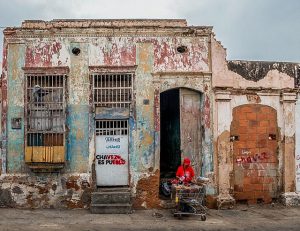
From flourishing as the richest country in Latin America to tanking into an economic crisis, Venezuela’s economy has collapsed over the past decade under the weight of political turmoil and the dependence on the very thing that brought its wealth: oil.3 At the height of oil reserve value in 2012, Venezuela’s nominal Gross Domestic Product (GDP) reached roughly $372 billion.4 By 2020, its GDP had plunged to about $44 billion, a dramatic decline from its peak roughly a decade before. In recent years, oil exports have financed almost two-thirds of the government’s budget, proving how vulnerable Venezuela is to any drop in a single commodity and how it can threaten social programs, public services, and the overall stability of the country.
The socialist policies introduced under Hugo Chávez, combined with Nicolás Maduro’s erosion of democratic institutions and heavy reliance on oil revenue, fueled corruption, widespread poverty, and economic instability. 5
Maduro’s Rise Under Chavez
Born on July 28, 1954, Hugo Chavez rose to power as a populist president serving from 1999 to his death in 2013, known for leading the socialist “Bolivarian Revolution.”6 Chavez gained support through utilizing oil wealth during an economic boom to support social reform and programs reduce poverty and improve literacy rates.7 Despite his widespread support through Venezuela’s impoverished population, his presidency sparked controversy as he increasingly consolidated power and shifted towards authoritarianism, raising concerns for democratic backsliding. During his presidency he used the country’s vast oil wealth to push his agenda and gather public support; however this reliance on oil left the economy vulnerable to fluctuating global oil prices. Over the course of his leadership economic mismanagement, corruption, and declining oil production created instability and structural weaknesses within the Venezuelan economy.8
Before his passing, Chávez designated his Vice President, Nicolás Maduro, his chosen successor to lead Venezuela. In a December 2012 televised address, Chávez urged supporters to vote for Maduro, who then became acting president. Inheriting the economic turmoil of Chavez presented a series of struggles for the new authoritarian president who tightened his grip on power by dictatorial rule, without any of the economic leverage to keep the critics at bay. During Maduro’s presidency over 7 million Venezuelans have left the country, creating the world’s largest displacement crises.9 His government has been characterized by human rights abuse, imprisoning political opponents, and suppressing protests.10 In addition, to growing repression and displacement, Maduro’s legitimacy as president was marred by widespread allegations of electoral fraud that undermined confidence in the fairness of the election.11
Following the U.S operation, Vice President and Maduro-loyalist, Delcy Rodríguez, took the oath of office to serve as interim president.12 Citizens who once believed that the removal of Maduro from power could usher a democratic transition, realize that Maduro’s regime remains and maintains the status quo. It remains uncertain whether this leadership change in Venezuela will genuinely address the issues of governance and economic stability demanded by its people. For many civilians, the realization that Maduro himself was not the root of dictatorship but instead one part of a vast systematic institutionalized problem creates an overwhelming and disheartening feeling that the whole country must undergo serious transformation and intentionally move away from authoritarianism.
Economic Collapse Fuel Protests (2014–Current)
Over the past decade, Venezuela has experienced one of the most severe economic collapses in modern history, largely due to the sharp decline in oil prices, which fell from more than $100 per barrel in 2014 to under $30 per barrel by early 2016.13 In an attempt to compensate for the funding shortage, the government began printing money through the central bank, regularly expanding the money supply by an estimated 20-30% per month.14 This triggered a hyperinflationary spiral, making it increasingly difficult for ordinary citizens to obtain staple goods. Unprepared families paid the price of a government unprepared to manage economic instability and unwilling to reform failing institutions, as basic human necessities such as food, water, and medicine became a luxury. As the economy plummeted and unemployment skyrocketed, social services suffered, and hospitals, schools, and public infrastructure struggled to function. Today, an estimated 70-80% of the population lives in poverty, a stark reflection of a government incapable of providing for its citizens.15
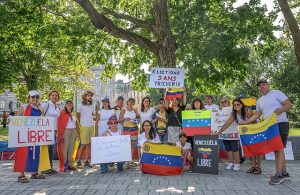
Powerless to the insatiable prices of necessities and vulnerable to a government that chooses political control at the expense of public wellbeing, the people of Venezuela grew more fueled to demand reform, as seen through the widespread protests across the nation. Frustrated by daily hardships, protestors find strength in their voice, demanding access to food, medical care, fair wages, and political reform. Students, teachers, workers, and families took to the streets to express their anger towards longstanding government corruption. The government, widely criticized for its use of political imprisonment, responded to rallies with excessive force and violence, including reports of assaults, torture, and sexual abuse.16 These efforts to silence the outraged public drive a further wedge between the government and the general public, extending the crisis from an economic issue into a broader struggle for political accountability and basic human rights.
A Boiling Point for the Nation
As basic necessities became scarce and government neglect persisted, frustration erupted into widespread protests across the country, signaling a boiling point for Venezuelan society. Activists, citizens, and leaders continue to fight to rebuild their country rather than surrender to brutal authoritarianism. The transition from Chávez to Maduro marked the beginning of a more repressive and unstable political era in Venezuela. Discontent reached its boiling point: protests, strikes, and civil disobedience erupted, highlighting the clash between a population demanding reforms and a government determined to maintain power. Despite these challenges the resilient spirit of many Venezuelans remains alive and well as they continue to hope for a brighter future for their country. The courage and hope the people of this nation embody shines through public opinion as 83% of Venezuelans expressed positive feelings and over half (53%) supported Maduro’s arrest, according to recent nation-wide survey by Gold Glove Consulting.17 While for average Americans this problem has just recently been at the forefront, making international headlines, Venezuelans have been dealing with political unrest and mass protests for over a decade.18 Venezuela has continued to demand reform beginning with waves of protests in 2014 and continuing major nationwide movements.
When Systems Fail, Families Suffer:
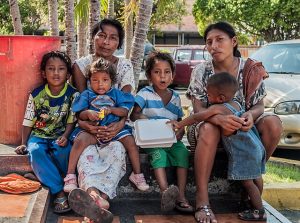
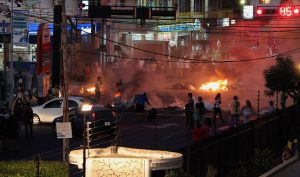
Families whose government is not set out to protect them are facing the consequences of the crisis they had no part in. Their world is unraveling as unemployment and shortages in medicine and basic human needs are making daily life a struggle. Blackouts and water rationing affect daily life, schools, and businesses— weighing heavily on their hope for the future.
In Barcelona, a mid-sized city in Eastern Venezuela, the Ruiz family faced the harsh reality of government oppression first hand. A playful pastime between friends turned into a devastating display of how harmless citizens face the consequences of a collapsed system, when Scarlett Ruiz’s 19 year-old brother was arrested under the charge of “treason.” Ruiz’s brother alongside 24 other young men had been participating in a traditional water balloon fight. Quickly laughter and community turned into cries of desperation, fear, and confusion when Venezuelan authorities arrived, fired shots, and detained the boys merely for being on the street. This incident illustrates how government power in Venezuela has extended beyond political opposition to affect everyday citizens, demonstrating that systemic instability places ordinary families at constant risk. Furthermore, the fear these young men and their families face, reflects a broader reality for the public: when a government criminalizes normal behavior, trust is replaced by fear, highlighting the grave systemic failure. Many citizens cannot walk the streets without fear of being stopped, questioned, and detained. The result of this is that while many Venezuelans wish to celebrate the removal of Maduro, they are too terrified to admit it out loud, reflecting widespread anxiety about future repression and instability.19
The Path Forward
The path forward is still unraveling and remains uncertain. However, two major patterns of interactions between the U.S. and Venezuela emerged through the ambiguity. The first being the use of pressure and intervention to influence political change, and the second being continued reliance on negotiation and diplomatic cooperation to maintain stability and rebuild economic relations.20 The United States placed initial pressure on Venezuela through military, political, and economic measures to influence the country’s government. However, after years of conflict both nations turned to diplomacy and recognized the importance of cooperation to maintain stability. Diplomatic relations have been formally restored as of March 2026, following Maduro’s removal, and aims to promote economic recovery, political reconciliation, and a peaceful transition toward democratic governance, though the long-term outcomes remain unclear. Much of the U.S. interest in Venezuela is tied to the country’s oil reserves, with energy cooperation and foreign investment being key priorities.21 The renewed relationship, that previously severed ties in 2019, coincided with a series of significant policy changes under acting President Delcy Rodríguez, including the passage of an amnesty law that led to the release of hundreds of political prisoners, effectively acknowledging that many individuals had been detained for political reasons. For Venezuelans, this signaled a hopeful turning point, with political grievances officially acknowledged and the government taking concrete steps toward accountability and reform.22 Ultimately, the future of Venezuela will depend not only on political leadership, but on whether diplomatic cooperation can translate into lasting economic stability and democratic legitimacy
Despite the promising shift in leadership and diplomacy, dangers remain embedded in everyday life. Citizens continue to face economic insecurity, threats to personal safety, and restrictions on political expression. While the citizens face food insecurity, lack of medical resources, and educational exodus, they continue to display remarkable strength and solidarity, showing that resilience persists even under difficult circumstances. And while Maduro’s removal sparks debate over whether a true regime shift will emerge from his absence or if it’s only a temporary delay in continued autonomy, the daily realities for ordinary citizens suggest that instability and hardship persist. So long as the citizens and leaders of Venezuela continue to fight, hope is not lost. However, for meaningful change to take place, there would need to be systematic reforms and continued reliance on international relationships to strengthen democratic institutions and rebuild stability. The absence of a single leader does not automatically fix a broken system, but it provides a window for potential transformation and growth.
- C. R. Seelke, (2026, January 12), U.S. capture of Venezuela’s Nicolás Maduro: Considerations for Congress (CRS Insight No. IN12618), Congressional Research Service, https://www.congress.gov/crs-product/IN12618. ↵
- G. Goodwin, C. Vasquez, & T. Bateman (2026, January 3) “A long road ahead”: Venezuelans react to Maduro’s arrest with hope and worry, BBC News, https://www.bbc.com/news/articles/c86vq753nwpo. ↵
- Council on Foreign Relations, “Venezuela: The Rise and Fall of a Petrostate,” CFR Backgrounders, 2019, https://www.cfr.org/backgrounders/venezuela-crisis. ↵
- A. O’Neill, Statista Research Department, Gross domestic product (GDP) in Venezuela 1980–2026, https://www.statista.com/statistics/370937/gross-domestic-product-gdp-in-venezuela/?srsltid=AfmBOopBj8e5vHolbUAgWJipqLqNwyQ6djX_Xu1FffXwpy4W10O56Hy6. ↵
- V. Mijares, “Legitimacy Crisis and Venezuela’s Long Road to Democratic Transition,” German Institute of Global and Area Studies (GIGA), 2024, accessed February 2026, https://www.giga-hamburg.de/en/publications/giga-focus/legitimacy-crisis-and-venezuela-s-long-road-to-democratic-transition. ↵
- M. Aliprandini, (2023). Hugo Chávez, EBSCO Research Starters, EBSCO Information Services, https://www.ebsco.com/research-starters/politics-and-government/hugo-chavez. ↵
- B. Lee, & K Lizarazo, (2017, May 1), Venezuela’s Chávez era, Council on Foreign Relations, https://www.cfr.org/articles/venezuelas-chavez-era. ↵
- D. Roy, & A. Cheatham, (2024, July 31), Venezuela: The rise and fall of a petrostate, Council on Foreign Relations, https://www.cfr.org/backgrounders/venezuela-crisis. ↵
- United Nations High Commissioner for Refugees (n.d.), Venezuela humanitarian crisis (UNHCR), https://www.unrefugees.org/emergencies/venezuela/. ↵
- T. Phillips, (2025, January 9), Venezuela tumbles deeper into dictatorship with Nicolás Maduro set to extend 12‑year rule, The Guardian, https://www.theguardian.com/world/2025/jan/09/venezuela-dictatorship-nicolas-maduro-democratic-leaders-boycott. ↵
- K. Paqué (2024), Venezuela: Maduro: An electoral fraudster as president of Venezuela? Friedrich Naumann Foundation for Freedom, https://www.freiheit.org/venezuela-electoral-fraudster-president-venezuela. ↵
- A. Hernández, (2026, February 18), Under pressure from Trump, Venezuela’s new president has aces up her sleeve, BBC News Mundo, https://www.bbc.com/news/articles/cn87rv0jdy1o. ↵
- Council on Foreign Relations, “Venezuela: The Rise and Fall of a Petrostate,” CFR Backgrounders, 2019, https://www.cfr.org/backgrounders/venezuela-crisis. ↵
- F. Muci,(2024, September 23), Why Did Venezuela’s Economy collapse?, Economics Observatory, https://www.economicsobservatory.com/why-did-venezuelas-economy-collapse. ↵
- E. Sweigart, Venezuela: A 2026 Snapshot, (2026, January 21), Americas Quarterly, https://www.americasquarterly.org/article/venezuela-a-2026-snapshot/. ↵
- Venezuela’s National Guard linked to killings, torture and repression, UN probe finds, (2025, December 11), UN News, https://news.un.org/en/story/2025/12/1166565. ↵
- M, Feirstein, & M, Speck, (2026, March 2), Venezuelans welcome U.S. intervention, but hope for a rapid democratic transition post‑Maduro, Center for Strategic and International Studies, https://www.csis.org/analysis/venezuelans-welcome-us-intervention-hope-rapid-democratic-transition-post-maduro. ↵
- Human Rights Watch, (2014), World Report 2014: Venezuela (Events of 2013), In World Report 2014, Human Rights Watch, https://www.hrw.org/world-report/2014/country-chapters/venezuela. ↵
- T. Romero, J. Nicas, P. Sulbarán, (2026, January 25), After Maduro, They’re Scared To Voice Hope, The New York Times. ↵
- J. Perry, (2026, February 20), Venezuela after the Abduction of President Maduro, Newstex. ↵
- Q&A on US Actions in Venezuela (2026, January 6), Center on Global Energy Policy at Columbia University SIPA | CGEP, https://www.energypolicy.columbia.edu/qa-on-us-actions-in-venezuela/. ↵
- R. Garcia Cano & M. Janetsky, (2026, March 6), US and Venezuela agree to reestablish diplomatic relations in major shift after Maduro’s ouster, The Associated Press. ↵

16 comments
Valentín García
Layla, I had high expectations for your article, considering Venezuela is a state of interest for my work, as well as personal research. To say you delivered, is an understatement! Your analysis on the sociopolitical and rentier petro-state history of the state is comprehensive and captures the uniqueness that drives Venezuela’s perennial issues from fiscal policy to state corruption to shortages of resources for the common person. Venezuela wrestles with many of the same issues as Cuba, so much so that their very issues coalesce on matters of symbiotic relations — an alliance predicated just as much on strategic adaptability as with survival and their trade reflecting as much. When Venezuela was targeted by US special interests on the pretense of military and political objectives, it signaled a new epoch for all states in the region helmed by leaders the US would deem ‘inconvenient’ for its hegemonic interests and preservation. You do exceptional in capturing the tension at hand, and just as much at evoking a sense of long-term curiosity in the state’s developments within the reader. You capture the tension gripping the state in an aggregate sense, while also humanizing the state by way of revealing the real, non-abstract struggles of the common family.
On the whole, I absolutly loved this piece ( I read it several times), and especially how it mirrors the developments in my own country, per my article. I could write an essay, solely analyzing your good work. You cover the turbulence of the state in freefall, reflections of this unraveling across the state and society, and you humanize it all well enough to evoke a sense of empathy and drive for advocacy in the reader. These are all qualities, in the same continuity I strove to capture in my own article. Indeed one of my favorites from our class this recent SP26, I hope you continue writing. Superb work, Layla!
Mía Perez
I really enjoyed reading your article because it showed how Venezuela’s economic collapse is not just about politics, but about the impact on ordinary families trying to survive. I especially found the discussion about the country’s dependence on oil and the way corruption deepened the crisis very important because it explains how quickly instability can spread through every part of society. The story about the Ruiz family also made the article feel much more personal and emotional.
Rosa Inocencio
Hi Layla, I loved the way that you started your article, it captured my attention, it was super creative and informative. I like many heard about the capturing of Venezuela’s president Nicolas Maduro, but I did not know much about it. It was very interesting to know about how Venezuela is going about wanting a change, and although it has yet to happen, hopefully they are able to make something happen so that they can improve as a country. Great Article!
Silvia Benavides
Hello Layla,
Congratulations on writing such a descriptive article with amazing storytelling. I really enjoyed reading it. I enjoyed the images you used and added to the storytelling of the article as a whole. Amazing job!
Isabel Gerwig
Given the current new this is such a detailed analysis of how oil is one of the main drivers for this conflict. Layla, the way you wrote this was incredible, and I love your take on how removing Maduro is not the real solution to issues that are embedded deeply into Venezuela. This article really sheds light on the real issue at hand, which is political and economic mismanagement. This relates to my article as Argentina has dealt with mismanagement of its government for years, and you can see the impact economically, with high rates of inflation. Great job on this article!
Christian Molina
Hey Layla! Your work on Venezuela was really intriguing. Particularly the parts on the public reaction to the removal of Maduro. It’s one thing to see Venezuelan-American reactions, but another to hear about the reaction in Venezuela itself. Now that Maduro is gone, what happens to Venezuela next is uncertain. You’re right in saying that the removal of one man isn’t enough to change things forever.
Maurissio Gonzalez
Hi Layla! I really like your article I think it is incredible that you researched Venezuela and are helping spread information on this wonderful nation, I liked that you addressed the ways the U.S. government has interfered and influenced the Venezuelan government, especially given president Trump ordering the removal of Maduro. I researched Tunisia and Tunisia as with Venezuela also struggles with dictatorships, Tunisians were able to remove a dictator in 2011, but they recently have fallen back into an authoritarian government.
Tina
Hello, Layla! I found your article extremely intriguing and you did an amazing job at covering the transitions that Venezuela has gone through over time. I’m extremely interested in what direction the country will go since Maduro’s removal because, as it’s clear, the removal of a leader does not suddenly put a band-aid on a nation. Mozambique doesn’t have a newfound sense of freedom but they do have the strength of many of the same day-to-day issues of any nation that is going through transition such as food scarcity, lack of healthcare, and lack of educational resources/accessibility.
Emilio Orona
Hi Layla, I really enjoyed reading this article and becoming informed about the situation in Venezuela! I really was one of the firm believers that Venezuela would do so much better automatically after the removal of Nicolas Maduro. However, that was not the case due to the structural failure embedded in the politics of Maduro. The authoritarian regime still is being carried out by his loyalists. This is similar to Bosnia and Herzegovina because both believe that they finally have a democratic system but they are both flawed. This is an important lesson, which is that democratic is not all positive aspects, but it can carry obstacles that limit long term stability.
Kamilah Rodriguez
Hello Layla, one of the strongest aspects of your piece is the way you balance macro‑level political analysis with human centered narratives. The inclusion of families like the Ruiz family adds emotional weight and demonstrates how systemic failures translate into everyday fear and insecurity for ordinary citizens. This grounding in lived experience strengthens your argument that Venezuela’s crisis cannot be reduced to the actions of a single leader.