
Eugenics in Germany played a crucial role in how society perceived individuals. Eugenicist, Ernst Rüdin, assisted the Third Reich in fabricating the myth of the “hereditary tainted individuals,” marking mentally ill individuals as disabled, and placing a stigma on these individuals. Mentally ill residents of Germany were labeled Lebensunwertes Leben, meaning “lives unworthy of living.” This label isolated mentally ill individuals while condemning their deaths as well, under the logic that they couldn’t contribute to society.1 The Nazis’ wicked practice of medicine, turned doctors into agents of state-ordered murder. This process was known as “euthanasia” and was an ideological system that enabled the T4 program, converting hospitals into a systematic plan to kill mentally ill individuals. The switch from racial hygiene to the spread of genocide was driven by the manipulative mechanism known as the Meldebogen system.2
Sitting atop a hill, surrounded by tall trees, the horrors of the T4 program unfolded. However, the town of Hadamar was not always evil. The Monchsberg, or “The Monks Mountain,” overlooked the town of Hadamar. In 1883, the Korrigenden-Anstalt, a correctional facility in Hesse, was founded near the town of Limburg an der Lahn. The number of disturbed persons grew in Germany during the early 20th century, which led to more medical facilities in the small town of Hadamar. In 1906, the correctional institute was converted into a medical institution, later known as the facility of Hadamar. By 1930, the institution contained 320 patients. Nazi law decreed that nursing costs in psychiatric settings were to be reduced. As a result, mental homes became overcrowded. Conditions continued to deteriorate as food became scarce due to reduced supplies in the facility. The original correctional institute was designed to accommodate 250 patients, although by 1939, Hadamar Correctional Institute housed 600 patients.3
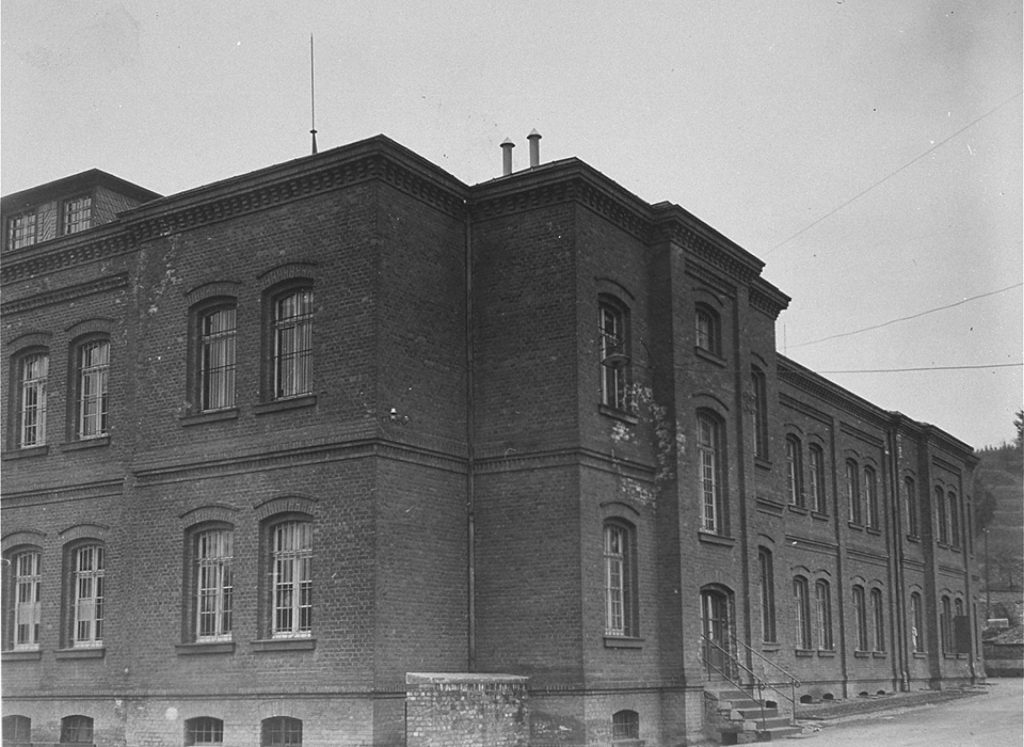
In the facility of Hadamar, power belonged to one man. Alfons Klein was born on June 8, 1909, in the town of Frickhofen. During his youth, he trained as a dairy assistant.4 Later, in the early 1920s, he expanded his network, which led him into the National Socialist network. Klein joined the administrative staff of the Landesanstalt Hadamar, where he served as an administrator in Hesse. Klein began with administrative duties but later assumed a greater role. In 1941, the second phase of the T4 program, Alfons Klein, took control of the Hadamar facility. Klein rose to power through Fritz Bernotat’s support, who was a responsible district deputy, strengthening Klein’s position.5
Although Klein oversaw administrative duties, lethal medical procedures were carried out by Irmgard Huber after her promotion to head nurse in 1944. Irmgard Hubner, from 1920 to 1925, was an apprentice nurse at the institution Gaverse. After obtaining her nursing license, Hubner began her career at Hadamar in March of 1932. For the first two years, Hubner worked with patients with mental illness. In 1942, Klein was appointed the institution’s administrator, thereby granting him authority to coordinate lethal procedures.6
The horrors at the Hadamar facility weren’t incidental; these actions were the direct result of Nazi Racial Hygiene. Racial hygiene was an ideology deeply rooted in a pseudo-scientific campaign to construct a “pure” German race. The T4 euthanasia program centered on the Volksgemeinschaft, known as the people’s community. The people’s community was an ideology that judged individuals by their usefulness to Germany.7
In 1939, the Reich interior ministry distributed one-page questionnaires to psychiatric clinics and hospitals across Germany. The questionnaire requested clinical data on patients with long-term stays or specific diagnoses. Once questionnaires were completed, the files were sent to “expert reviewers,” physicians who determined fates, without ever meeting patients individually. Doctors made life-or-death decisions based on paperwork.8 Physicians wrote their decisions using a letter grading system in the margins of the questionnaires. A red “A” plus meant a death sentence, as a blue minus spared an individual and granted them a second chance at life.9 The “paperwork of death” led to mass genocide, ensuring that when victims reached the gates of the facility at Hadamar, their deaths had already been authorized.10
In 1941, the T4 program appeared to have ceased, although it was in fact ongoing. In the first phase of the T4 program, Hadamar personnel authorized the deaths of 10,000 patients through asphyxiation. After an increase in public awareness, the T4 program was suspended on December 10, 1941. In August 1941, the operation was given the code name “14f 13.” Hospital rooms became death locations; the intent was to hide the torture individuals were facing.11
As the head physician, Adolf Wahlmann oversaw the facility.12 Overseeing operations at Hadamar, such as observing grey buses and ensuring that mentally ill individual laborers were processed and executed efficiently. The first arrival of victims at the Hadamar facility was in January 1941. Victims were transported in grey “Gekrat” buses. Wahlmann’s authority was unimaginable, ensuring the deaths of Hadamar victims. Under Huber’s authority, medical care was replaced by procedures such as dietary thinness and lethal injections. Ensuring that victims of Hadamar were silenced under the illusion of medical treatment.13
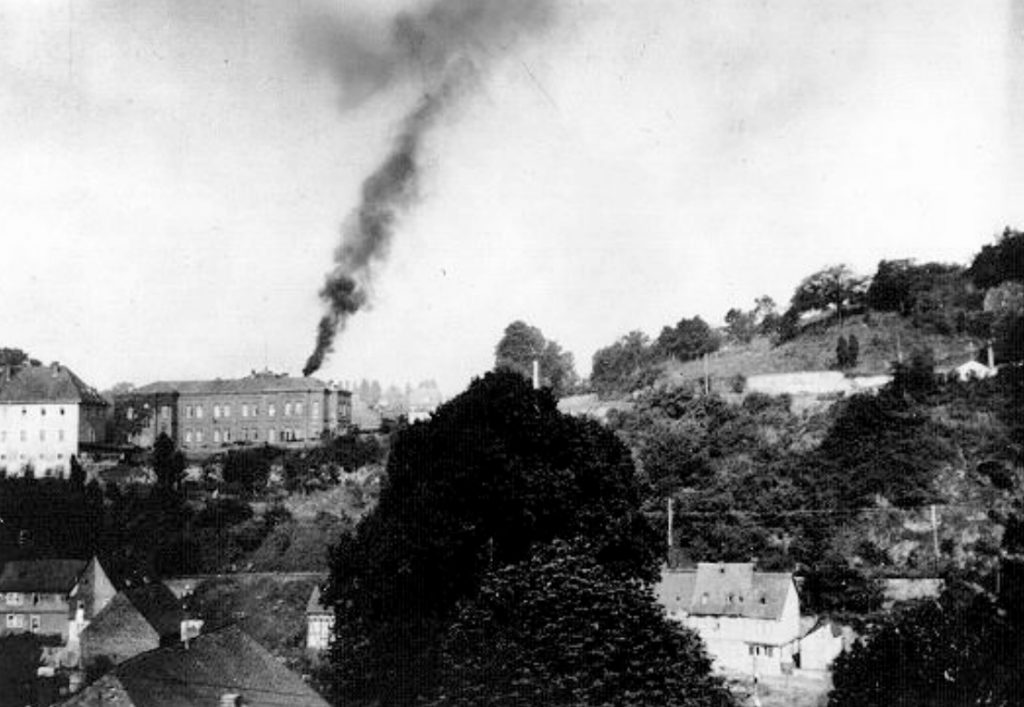
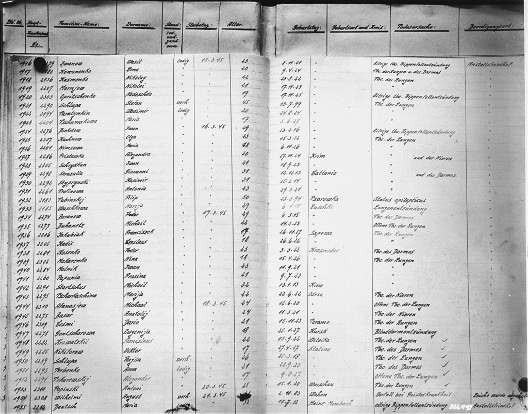
Medical personnel began to murder disabled patients from 1942 until the end of the war in May 1945. The Hadamar facility executed 4,400 victims with lethal injection.14 An addition was a gas chamber in the facility’s basement. Patients were killed with carbon monoxide poisoning. After the killing, the staff incinerated the bodies in the crematorium. Smoke poured from the Hadamar chimneys and could be seen from afar; citizens of Hadamar reported that they could smell the smoke. Relatives of the deceased would be sent an urn upon request. Attached was a “comfort letter” describing a false cause of death, the time of death, and the place of death. If relatives requested, an urn would be sent to them. However, the urns failed to contain the ashes of their loved ones. The T4 program claimed a total of 200,000 victims during its reign, with a total of 4,420 persons killed at the Hadamar facility.15
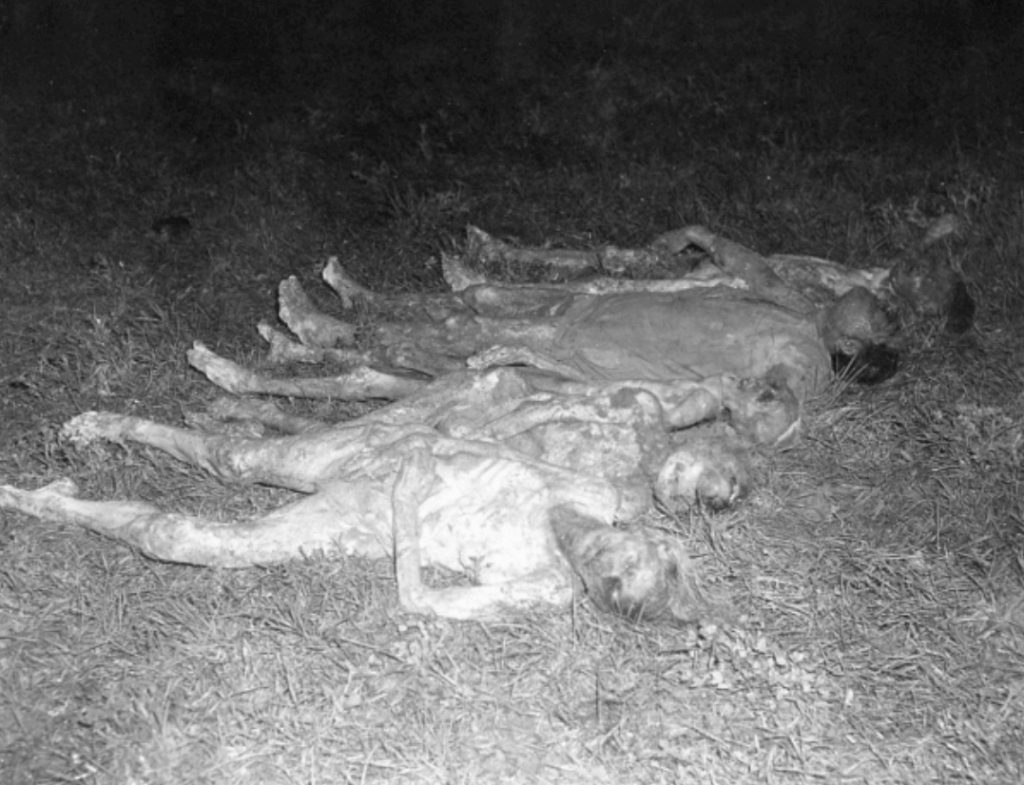
March 26, 1945, US personnel reached the town of Hadamar on their journey to Central Germany. Troops liberated the town and institution from mass genocide, ending the murders which collected 15,000 victims during the “T4” program. At the initial arrival of American soldiers, they discovered the reality of Hadamar. Discovering 500 patients who varied from malnutrition and abuse, weak and limp, with obvious signs of systematic neglect. The hospital ward and equipment were run down due to Nazi policy. US troops attempted medical care; unfortunately, help came too late. Several individuals fell to their deaths in the following days and weeks of liberation.16
Obvious traces of murder were left, which aided in the US Army investigation, which began after liberation. Key members like Karl Brandt were taken into custody and investigated. Witnesses were questioned about the murders, and evidence was seized. The United States Army conducted investigations into the institutional cemetery where the murdered patients had been buried in mass graves created in 1942. The Hadamar Facility was one of the first major murder sites to be liberated by the US Army. Survivors of Hadamar overcame the murder that took place and the physical conditions at the institution. In April of 1945, English-language newspaper articles and weekly newsreels began covering the trial of Hadamar. As a result, the images spread around the world, and Hadamar became a symbol of Nazi euthanasia crimes. Under the investigation of US pathologists, several bodies were uncovered, exhumed, and examined by forensic experts. Evidence gathered during the investigation led to a first trial in October of 1945. The trial was conducted in a US military court in Wiesbaden against the staff of Hadamar who contributed to the deaths.17
The prosecution of Adolf Wahlmann took place in 1945-1947, along with twenty-three doctors and administrators accused of organizing and participating in war crimes and involvement in crimes against humanity in the torturous form of medical procedures and experiments. Known as The Doctors case, Karl Brandt was the lead defendant; his role was the senior medical official at the Hadamar facility. Other defendants included senior doctors and administrators, including Irmgard Huber. These individuals were indicted on four counts, including conspiracy to commit war crimes and crimes against humanity, war crimes (crimes against persons protected by the laws of war, such as prisoners of war), crimes against humanity (including persons not protected by the laws of war), and membership in a criminal organization. Specific crime charges included more than twelve series of medical experiments concerning effects of treatments for high altitude conditions, freezing, malaria, sulfanilamide, poison gas, bone, muscle, and nerve regeneration, bone transplantation, saltwater consumption, epidemic jaundice, sterilization, typhus, poisonings, and incendiary bombs. It was discovered that Jews were utilized for anatomical research, the killing of tubercular patients, and the euthanasia of the sick and disabled. Defendants were charged with ordering, supervising, and coordinating criminal activities, as well as participating in them directly. Karl Brandt and six others were convicted, sentenced to death, and executed. Nine defendants were convicted and sentenced to terms in prison, leaving seven defendants acquitted. Court materials presented in this trial include file documents, evidence file documents, and trial transcripts.18
Hadamar’s legacy stands today as a harrowing reminder of what can happen when medical ethics are constructed to fit ideology. What began as a pseudo-scientific campaign for racial hygiene developed into a systematic genocide where thousands of individuals were victim to the torture due to being deemed as unworthy lives. The conviction of Adolf Wahlmann and his associates at the Doctors’ trial brought a measure of justice. The conclusion of the T4 program in 1942 aligned with ideologies that led to the holocaust, as Nazi programs chose to eliminate individuals deemed “embarrassments” based on race. At the center of this madness was Adolf Wahlmann. Today, Hadamar serves as a historical site where the purpose is exemplified. The facility at Hadamar is a symbol of liberation and the necessity of protecting human life, regardless of their contributions to society. Transcripts and evidence at Hadamar ensure that the smoke from the chimney and the ashes of those killed by lethal injection are never forgotten.
- Michael Burleigh, Death and Deliverance: ‘Euthanasia’ in Germany, c. 1900–1945 (Cambridge: Cambridge University Press, 1994), 113–29. ↵
- Robert Jay Lifton, The Nazi Doctors: Medical Killing and the Psychology of Genocide, 2nd ed. (New York: Basic Books, 2017), 45–79. ↵
- “Hadamar,” Holocaust Historical Society, August 13, 2018. ↵
- Peter Sandner, Verwaltung des Krankenmordes: Der Bezirksverband Nassau im Nationalsozialismus (Gießen: Psychosozial-Verlag, 2003), 731. ↵
- Samuel Sonenfield and James D. Murphy, “Extracts from the Review and Recommendations of the Deputy Theater Judge Advocate in the Case of the United States vs Klein, Wahlmann, et al,” February 1, 1946, Nuremberg Trials Project, Harvard Law School Library, Item No. 160, 2-4. ↵
- United States Holocaust Memorial Museum, “Deadly Medicine: Irmgard Huber | Holocaust Encyclopedia.” ↵
- Robert Proctor, Racial Hygiene: Medicine Under the Nazis (Cambridge, MA: Harvard University Press, 1988), 179. ↵
- T4 Registration Form (1939-1940),” German History in Documents and Images, accessed March 28, 2026, germanhistorydocs.org. ↵
- “The Registration Form Procedure,” T4-Denkmal, accessed April 9, 2026, t4-denkmal.de. ↵
- Henry Friedlander, The Origins of Nazi Genocide: From Euthanasia to the Final Solution (Chapel Hill: University of North Carolina Press, 1995), 77. ↵
- “The T4 Programme and the Hadamar Killing Centre (1941),” Gedenkstätte Hadamar, accessed March 26, 2026, gedenkstaette-hadamar.de. ↵
- “Adolf Wahlmann” (1876–1956), T4-Denkmal, accessed April 9, 2026, https://www.t4-denkmal.de/eng/Adolf-Wahlmann. ↵
- “The Hadamar Trial,” Holocaust Encyclopedia, United States Holocaust Memorial Museum, accessed March 26, 2026, ↵
- “Decentralised Euthanasia (1942-1945),” Gedenkstätte Hadamar, accessed April 9, 2026, gedenkstaette-hadamar.de. ↵
- “Hadamar,” Holocaust Encyclopedia, United States Holocaust Memorial Museum, accessed March 26, 2026, ushmm.org. ↵
- “Liberation of the Killing Centre (1945),” Gedenkstätte Hadamar, accessed March 26, 2026. ↵
- “American Soldiers Uncover Medical Mass Murder at Hadamar,” The National WWII Museum, accessed April 9, 2026. ↵
- “The Doctors’ Trial,” Holocaust Encyclopedia, United States Holocaust Memorial Museum, accessed March 3, 2026. ↵


1 comment
Emma Jimenez
I like how clearly you connect ideology to real human consequences, especially in how you explain the T4 program and how “medical authority” was twisted into something used for harm. The way you break down the system step by step makes it easy to understand just how structured and deliberate everything was, instead of it feeling random or chaotic. You also did good job showing how ordinary roles doctors, administrators, nurses became part of something much larger and much darker. The sections on Hadamar specifically stand out because you really build a clear picture of how the institution itself transformed over time, not just the individuals in it.