

Policy Brief on U.S. National Security
Executive Summary
This policy brief examines the growing threat of cartel activity in the Western Hemisphere, especially pertaining to drug trafficking, human smuggling, and the flow of firearms between the U.S. and Mexico. It poses a significant risk to U.S. national security and public health. Due to the U.S. shared borders, these issues cross our borders quickly. Over time, the organization’s power increases, making it difficult to resolve by using traditional law enforcement or a one-country approach. That is why there are three policy recommendations offered in this memo: designating cartels as Foreign Terrorist Organizations (FTOs), strengthening U.S.- Mexico cooperation, and disrupting cartel financial networks.
Background/ Context
The U.S. National Security Strategy, published by the White House, emphasizes how it is in the best interests of the Western Hemisphere to cooperate with the U.S. on issues such as cartels, drug trafficking, and human smuggling. Due to the U.S. geopolitical location, the shared border with Mexico should be a matter of interest since it is one of the main points for transnational crimes to occur. Due to the rapid expansion of cartels in the Western Hemisphere, these criminal networks have expanded from drugs to human trafficking and organized violence. Their involvement in multiple criminal activities helps expand their economic power. So it is more difficult to break them down as they keep evolving, if relying only on one country’s law enforcement framework (Boister, 2012).
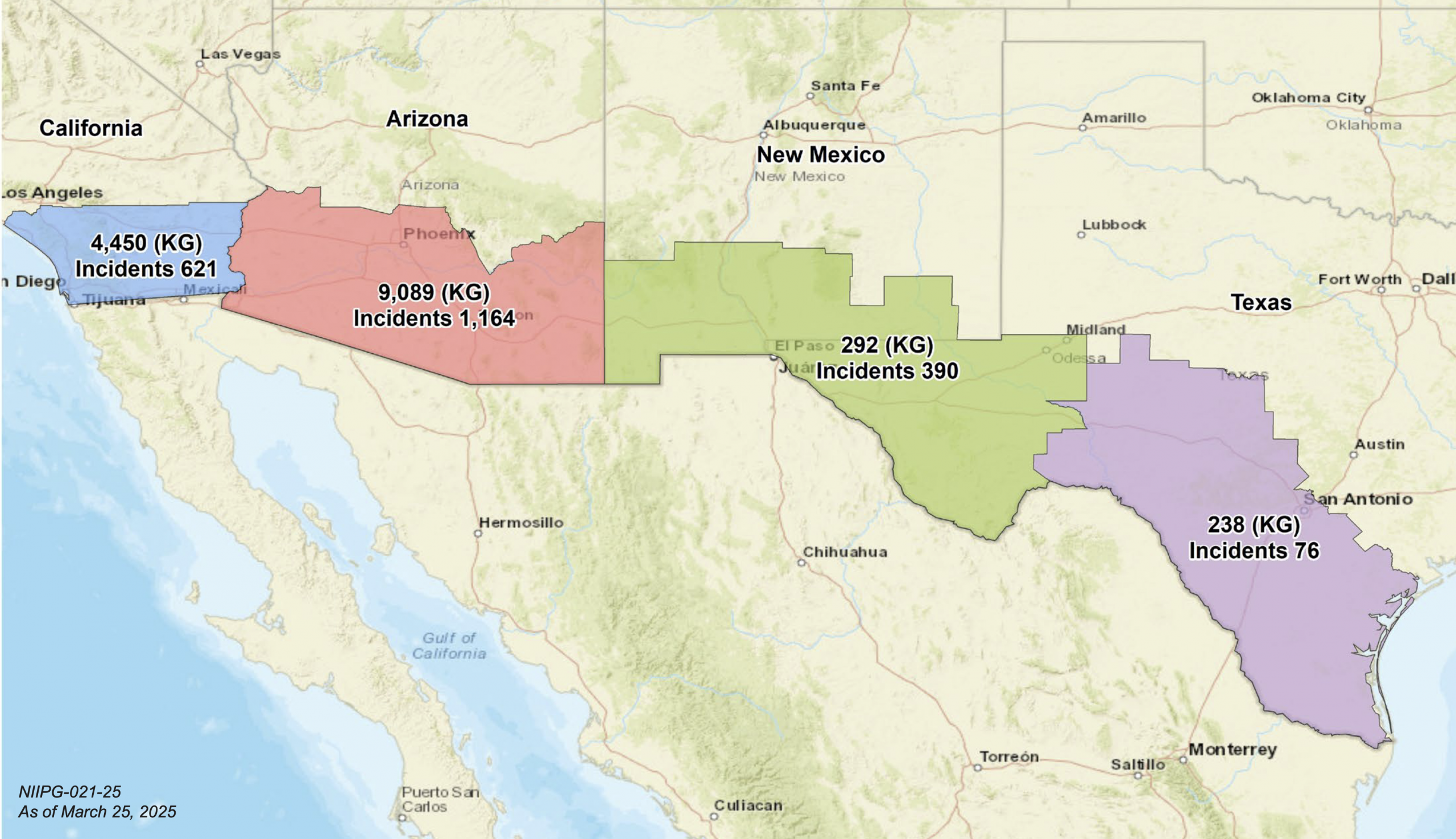
One of the most important concerns linked to cartel activity is the fentanyl crisis. The rapid and ongoing drug smuggling has created a crisis in the U.S. The fentanyl crisis represents a national security concern because of its substantial impact on public health. It is sold illegally, with just one kilogram of fentanyl having the potential to kill around 500,000 people (DEA, 2021). In 2024, synthetic opioids, primarily fentanyl, were the main cause of 60% overdose deaths in the U.S. (U.S. Government Accountability Office, 2025).
In addition to drug trafficking, cartels are also involved in human smuggling and trafficking networks. One of the most profitable industries is prostitution. It is harder for the victims to come forward since they feel vulnerable due to their undocumented status. In the study, it is seen how there are big prostitution networks in Mexico and in the U.S., with minors more commonly found in the U.S (Palacios et al., 2017). Human trafficking takes a toll on public health since victims can have physical trauma, psychological disorders, or infectious diseases.
Another key source of cartel power is the easy access to military-grade firearms. The majority of weapons used by cartels in Mexico come from the U.S., which is commonly known as the iron river trade. Around 70% of guns recovered at crime scenes in Mexico come from the U.S., with approximately 200,000 guns smuggled to Mexico annually, many of them being military-style assault rifles (Slomanson, 2023). This is due to the weak regulation in the U.S. that allows guns to make it into illegal markets in Mexico, which are then bought by powerful criminal organizations. This demonstrates the role of U.S. domestic factors in forming cartel power and regional security.
Policy Recommendation 1: FTO Designation of Cartels
One main policy approach is to designate cartels as Foreign Terrorist Organizations (FTOs). At the federal level, a 2025 executive order initiated a process to potentially designate certain cartels as FTOs, signaling an important shift to treating cartel activity as a national security threat (The White House, 2025). By formally declaring them FTOs, the U.S. can shift from treating them as a criminal group to treating them as a national security threat.
This approach would expand the use of U.S. security and military tools to tackle cartel activity. Cartels would be designed as terrorists since they operate in similar ways to them. They use violence, intimidation, and territorial control to achieve their goals. In certain areas of Mexico, cartels operate almost as if they were their own authority, controlling security, resources, and daily activities. This shows that cartels share similarities with terrorist organizations in the means used to achieve their goals. While terrorist groups are often driven by political or religious motives, cartels are mainly motivated by economic goals. But their level of organization and power justify a broader, more strategic response beyond traditional criminal approaches (Flanigan, 2012). As mentioned in The National Security Strategy, a strong military strategy would involve targeted deployments to secure the border and defeat cartels, including, where necessary, the use of force (The White House, 2025). The military, working alongside other law enforcement agencies, can create a unified strategy to protect U.S. borders. Since most cartel-related issues are now handled domestically, the U.S. would now be allowed to take a more direct role in operations, including a stronger on-the-ground presence.
Policy Recommendation 2: U.S.–Mexico Cooperation
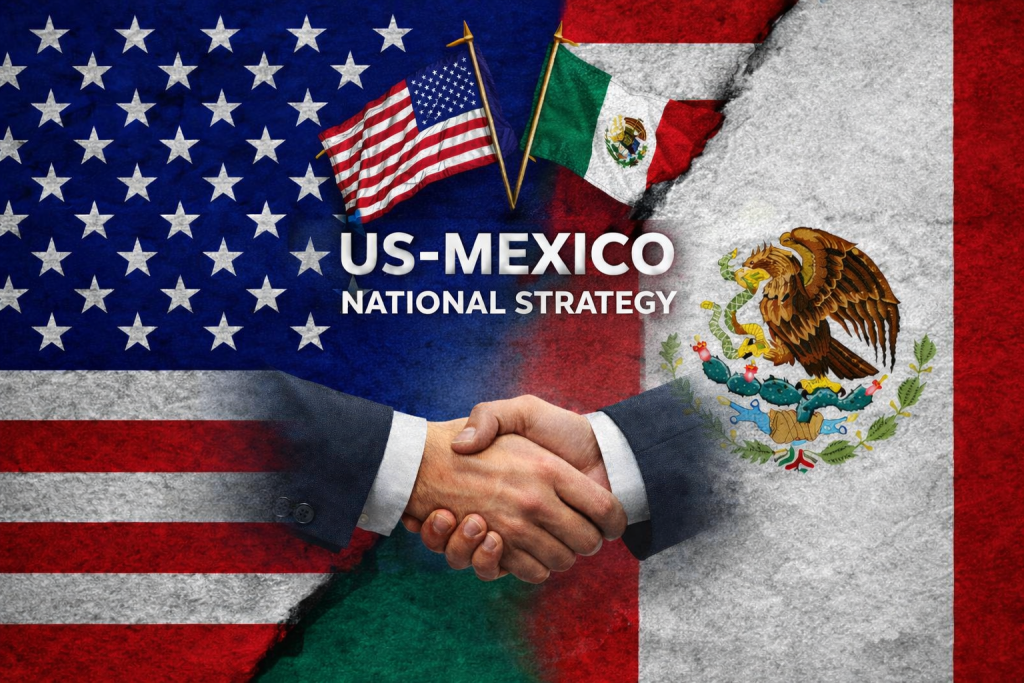
Another policy approach is to strengthen cooperation between the United States and Mexico to address cartel activity. Due to the cross-border nature of these crimes, the U.S.’s effectiveness is limited because cartels tend to exploit differences in legal systems and enforcement capacity. The high amount of trafficking that happens across the border shows how porous borders are, especially when around 115.6 million fentanyl pills were seized in 2023 (Palamar et al., 2025). This creates a need for bilateral coordination to fully address cartel-complex operations (Cockerham & Colnic, 2014). This cooperation needs to incorporate stronger connections among agencies, particularly through intelligence sharing. By improving communication among agencies, both regions can track cartel operations more accurately and effectively disrupt their trafficking routes, thereby dismantling the organizations. The U.S. can offer further support to Mexico by offering training, resources, and institutional support to reduce corruption in its law enforcement agencies and build a strong, non-corrupt police force to support operations. This would strengthen Mexico’s capacity to manage domestic cartel problems, which is important since many cartel operations originate in Mexico but then extend into the United States. This recommendation aims to address the issue at its root, as managing it only at the border has proven insufficient.
For cooperation to work, it needs to be trustworthy. There are tensions between the U.S. and Mexico regarding the flow of firearms to Mexico. The Mexican government has been frustrated since most of the weapons the cartels use in their criminal activities come from the U.S. Mexico has previously filed lawsuits against U.S. gun manufacturers, but U.S. laws, such as the Protection of Lawful Commerce in Arms Act (PLCAA), protect gun manufacturers, distributors, and dealers from liability when their products are used in crimes (Slomanson, 2023). Therefore, that distrust continues to strain the possibility of a bilateral partnership. So, the U.S. can take intervention in addressing the flow of weapons, or at least acknowledge the power boost it gives cartels. By doing so, it can strengthen trust among countries and enhance the effectiveness of joint efforts to combat cartel activity. By working together, both countries can improve regional peace and create a more effective long-term strategy to counter cartel operations.
Policy Recommendation 3: Financial Disruption
The final policy option focuses on disrupting financial networks. Therefore, the next recommendation is to weaken their financial networks by disrupting their access to funds that support their criminal operations. The U.S. can impose financial sanctions, freeze assets, and block their financial transactions. By targeting their money-laundering operations, it becomes difficult for cartels to pay all members of their organization, continue investing in other criminal activities, and buy more weapons. It is easier for cartels to recover after losing some members in confrontations with law enforcement than to rebuild their financial networks. Since cartel operations depend on profits from drug trafficking, human smuggling, and other unlawful activities, restricting access to these resources limits their ability to function across several divisions. This approach has been used to weaken terrorist organizations. That is why this step was taken by the U.S., which implemented sanctions against cartel organizations and their leaders (U.S. Department of the Treasury, 2025). Showing how financial disruption is a useful policy tool for gaining leverage.
Risks and Trade-offs
While the policy recommendations offer potential advantages for the U.S., it is important to keep in mind the risks and trade-offs associated with the strategy. Designating cartels as FTOs and implementing a strong military presence can lead to an escalation of violence in the Mexican region. That approach might provoke and intensify confrontations between cartels and government forces, which can increase civilian casualties and destabilize vulnerable areas. There can also be an escalation on the political side, since Mexico may view it as a violation of its sovereignty, which could limit the Mexican government’s willingness to cooperate with U.S. authorities. Even though bilateral cooperation is necessary, there is no guarantee of success. The effectiveness of that cooperation heavily relies on the government’s trust in one another and on institutional capacities. Cartels have the power to infiltrate institutions, increasing the risk of corruption and reducing the effectiveness of inter-agency communication because of potential leaks.
At the same time, a financial disruption strategy experiences limitations, including time constraints and durable sustainability challenges. Affecting the cartels’ profits requires coordination among multiple agencies and international partners, a process that can take a long time to establish. At the same time, it gives cartels time to adjust their economic operations and find an alternative source of income. That is why short-term policies, such as asset freezes and sanctions, lose their grip over time.
Regarding U.S. regulations on the Iron River trade, the main complexity is that research shows how a small fraction of gun dealers, less than 10%, account for a large share of crime-linked firearms (Slomanson, 2023). This means that implementing broad regulatory approaches could have unintended consequences for the wider legal gun market, since only a small portion of sellers are directly involved with cartels. Harsher regulations in the gun sector could interfere with market activity by affecting lawful businesses and placing economic pressure on dealers who are not participating in illegal trafficking.
Final Recommendations
Based on the analysis of the policy recommendations and associated risks, the most effective approach is to strengthen cooperation between the United States and Mexico. Because designating cartels as Foreign Terrorist Organizations (FTOs) can lead to greater escalation and challenge diplomatic relations, it is less sustainable. Focusing on cooperation allows both countries to coordinate efforts, gain from shared intelligence, and address cartel activity across both regions without destabilizing areas already vulnerable to cartel influence. Ultimately, stronger cooperation can lead to the financial disruption of the cartels’ economy.
Note: AI tools were used in the final stages of this project to assist with minor editing, formatting, and clarity improvements. All analysis, arguments, and content are the original work of the author.
References:
Boister, N. (2012). International Tribunals for Transnational Crimes: Towards a Transnational Criminal Court? Criminal Law Forum, 23(4), 295–318. https://doi.org/10.1007/s10609-012-9182-4
Cockerham, G. B., & Colnic, D. (2014). Good Neighbors? Prospects of United States-Mexico Cooperation for Joint Security. The Latin Americanist, 58(4), 3–26. https://doi.org/10.1353/tla.2014.a705898
Drug Enforcement Administration. (2021, April 29). Facts about fentanyl. https://www.dea.gov/resources/facts-about-fentanyl
Flanigan, S. T. (2012). Terrorists Next Door? A Comparison of Mexican Drug Cartels and Middle Eastern Terrorist Organizations. Terrorism and Political Violence, 24(2), 279–294. https://doi.org/10.1080/09546553.2011.648351
Izcara Palacios, S. P. (2017). Prostitution and Migrant Smuggling Networks Operating between Central America, Mexico, and the United States. Latin American Perspectives, 44(6), 31–49. https://doi.org/10.1177/0094582×17699910
The White House. (2025). National Security Strategy of the United States of America. https://www.whitehouse.gov/wp-content/uploads/2025/12/2025-National-Security-Strategy.pdf
Palamar, J. J., Fitzgerald, N., Carr, T. H., Cottler, L. B., & Ciccarone, D. (2025). National and regional trends in fentanyl seizures in the United States, 2017–2023. International Journal of Drug Policy, 138, 104417. https://doi.org/10.1016/j.drugpo.2024.104417
Slomanson, W. (2023). Iron River Case: Blueprint for Gun Trafficking Analytics.Suffolk University Law Review, 56(1), 1–46.
U.S. Department of the Treasury. (2025, August 14). Treasury takes decisive action against violent Mexican cartels. https://home.treasury.gov/news/press-releases/sb0224
U.S. Government Accountability Office. (2025, August 14). Fentanyl continues to be the leading cause of overdose deaths: What’s being done to combat trafficking into the United States? https://www.gao.gov/blog/fentanyl-continues-be-leading-cause-overdose-deaths.-whats-being-done-combat-trafficking-united-states