

Policy Brief for the National Security Council
Executive Summary
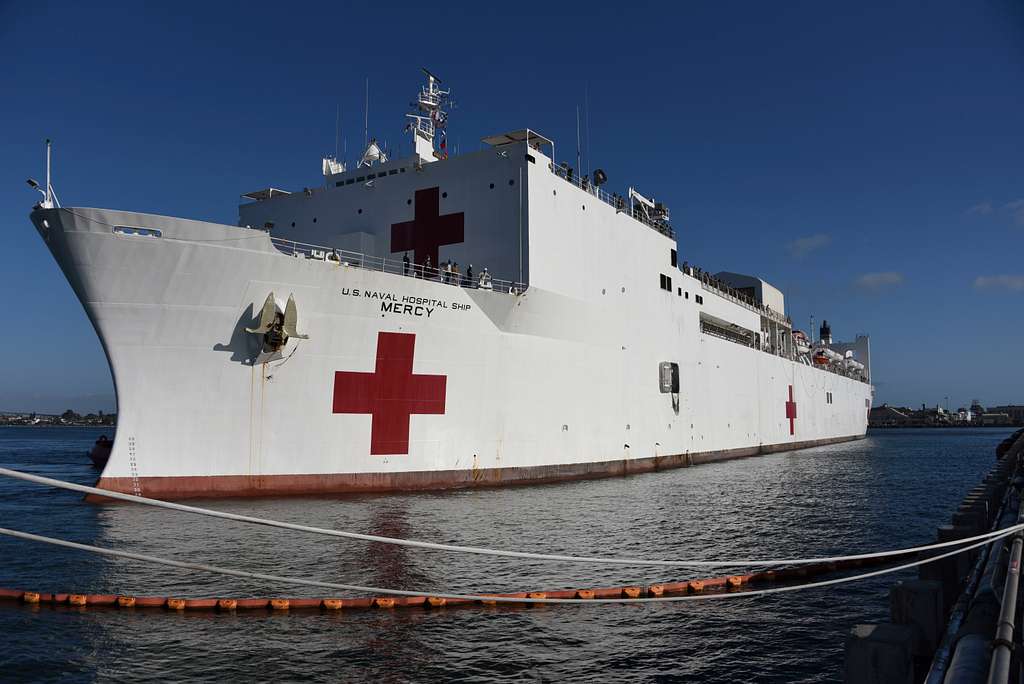
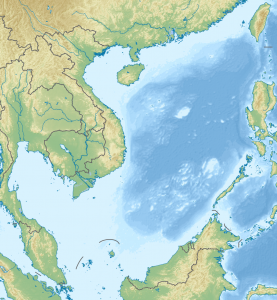
The 2025 National Security Strategy calls for “a more suitable Coast Guard and Navy presence to control sea lanes, to thwart illegal and unwanted migration, to reduce human and drug trafficking, and to control key transit routes in a crisis” (The White House, 2025, p. 16). In addition to the aforementioned need for U.S. Navy presence in the Western hemisphere, China’s Navy strives to dominate the South China Sea, where one-third of global shipping passes annually. Funaiole and Hart (2025) highlight that the PLA Navy currently has far more ships than the U.S. Navy and is projected to continue increasing in size. Shambaugh (2025) further cautions how, “[t]he multifaceted challenges that China presents to the United States (and to the world) today are so urgent and complicated that most analysts are now debating how – not whether – to push back against China” (p. 24). Amidst the growing need for a strong U.S. Navy presence across the globe, the 50-year old USNS Mercy is currently undergoing a $90 million overhaul which began March 20, 2026 (Graves, 2026).
While naval medical capabilities are not specifically referenced in the 2025 National Security Strategy, one can infer that it is appropriate, and even essential, to replace the USNS Comfort and USNS Mercy to best meet U.S. national interests in the 21st century. This military medicine initiative clearly falls in line with the Trump administration’s overall goal of fielding “the world’s most powerful, lethal, and technologically advanced military” (The White House, 2025, p. 3). With the ever-increasing U.S. naval operational tempo, rather than continuing to nurse these two aged hospital ships to health for the foreseeable future, this policy brief proposes three alternative courses of action the National Security Council should consider to best ensure navy medicine is capable of meeting the humanitarian and combat needs of the United States as outlined in the 2025 National Security Strategy. In essence, now is the ideal time to build two new state-of-the-art hospital ships.
Background and Context
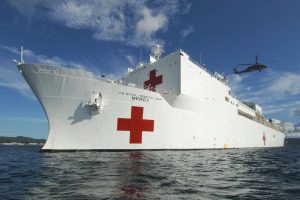
The USNS Mercy and USNS Comfort are 1,000 bed “floating level-I trauma centers” with a long history of compassionate service, each having cared for thousands of patients across the globe (Sechriest and Lhowe, 2008, p. 849). According to Provencher and Douglas (2011), their “primary mission centers on providing an afloat, mobile, acute surgical and medical facility to the U.S. military in support of expeditionary warfare. [Their] secondary mission is to provide full hospital services to support U.S. disaster relief and humanitarian operations worldwide” (p. 38). The USNS Comfort is homeported in Norfolk, Virginia, and primarily operates in the Atlantic Ocean, while the USNS Mercy is homeported in San Diego, California, and primarily operates in the Pacific Ocean.
According to the U.S. Navy’s Military Sealift Command (2025), the current USNS Mercy is the third U.S. Navy ship to bear the name and was initially built as an oil tanker in 1976. In 1984, it was acquired by the U.S. Navy, converted to a hospital ship, renamed Mercy, and launched in 1985. The USNS Mercy is assigned to the Pacific Ocean, although it was called upon to support Operation Desert Shield. During its 40 years of military service, the USNS Mercy has responded to multiple typhoons and other natural disasters throughout the Pacific, and most recently supported the COVID-19 response in Los Angeles, California, in March of 2020.
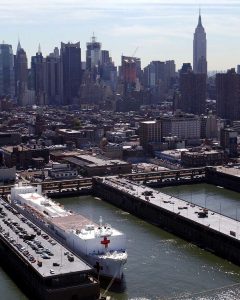
The U.S. Navy’s Military Sealift Command (2025) additionally discusses how the USNS Comfort has a similar story to that of the USNS Mercy. It was also originally launched in 1976 as an oil tanker and later converted to a hospital ship in 1987, making both the USNS Mercy and USNS Comfort 50 years old. The mission and capabilities are identical, as the Comfort also provides mobile and acute surgical medical facilities when needed, albeit primarily in the Atlantic Ocean. Similar to the Mercy, onboard medical capabilities include 80 intensive care beds, 15 patient wards, 11 operating rooms, a 5,000-unit blood bank capacity, a radiology suite, and so much more. “Fully staffed, there are 1,214 military personnel and 63 civilian mariners” (Worlton et al, 2020, p.1). Notable recent USNS Comfort missions include Operation Noble Eagle, where it docked in Manhattan immediately following the 9/11 terror attacks in New York City, Hurricanes Katrina and Rita in New Orleans, Louisiana, Operation Iraqi Freedom, and Operations Desert Shield and Desert Storm. Finally, while the USNS Mercy was docked in Los Angeles, California, in support of COVID-19, the USNS Comfort was docked in New York City during the pandemic.
Policy Option 1 – Replace the USNS Comfort and USNS Mercy
The recommendation to replace the dated USNS Comfort and USNS Mercy is in harmony with the spirit of the November 2025 National Security Strategy. “We want to recruit, train, equip, and field the world’s most powerful, lethal, and technologically advanced military to protect our interests, deter wars, and – if necessary – win them quickly and decisively, with the lowest possible casualties of our forces” (The White House, 2025, p. 3). The 2025 National Security Strategy goes on to highlight that “there is, rightly, much focus on Taiwan” (p. 23), and as the Trump administration reconsiders U.S. military presence in the Western Hemisphere, “a more suitable Coast Guard and Navy presence” is needed (p. 16). As the U.S. Navy rapidly modernizes and builds needed capabilities to prepare for possible future conflicts, their hospital ships cannot be left out of the discussion. In regards to foreign policy, President Trump’s principle of “peace through strength – strength is the best deterrent” inevitably includes military medicine, specifically the U.S. Navy’s two hospital ships, as a critical part of this strategy (p. 8).
This initiative is likely to be well received by both parties, as both Republicans and Democrats serve in the military, and both have family members and friends who serve. This bipartisan effort will go a long way to healing the toxic divide currently found in the United States, allowing President Trump to build upon his legacy of being a peacemaker. “[O]ver the course of just eight months, we settled eight raging conflicts – including between Cambodia and Thailand, Kosovo and Serbia, the DRC and Rwanda, Pakistan and India, Israel and Iran, Egypt and Ethiopia, Armenia and Azerbaijan, and ending the war in Gaza with all living hostages returned to their families” (The White House, 2025, p. i). Resolving political conflict within the U.S. would be a wonderful addition to this list and further strengthen President Trump’s resolve to put America First.
Policy Option 2 – Update/Revise the November 2025 National Security Strategy
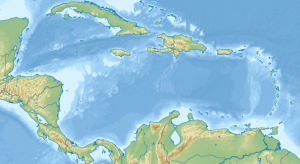
The Trump administration can consider revising the 2025 National Security Strategy to focus on fewer regions of the world which would minimize, or at least delay, the need to replace the U.S. Navy hospital ships. In four separate instances, the 2025 National Security Strategy calls for action to stop drug trafficking (The White House, 2025). To this end, the Trump administration labeled drug cartels as terrorist organizations and began a U.S. naval buildup in the southern Caribbean in August 2025. Several news reports, to include an article written by Watson (2025), indicated that the U.S. military had carried out three deadly strikes in September 2025, specifically targeting boats carrying drugs from Venezuela. Detsch and Bazail-Eimil (2025) reported how Secretary Rubio took the opportunity to tell reporters that the Trump administration would “wage combat” against drug cartels threatening the United States. Hubenko (2025) noted that Secretary Rubio vowed to continue military strikes against drug cartels, and during a recent meeting with Mexican President Claudia Sheinbaum he stated “What will stop them [drug cartels] is when you blow them up, when you get rid of them.” This war on drugs, of course, is in addition to the concerns with Taiwan and China, as cited in the 2025 National Security Strategy. Furthermore, Trotta (2026) reports how more than a dozen U.S. presidents have opposed Cuba’s Communist government and criticized its human rights record. As the U.S. is at war with Iran, President Trump has also drawn attention to Cuba, hinting at the possibility of the United States taking action against them. With the United States focusing on these and so many other priorities, it is possible that the U.S. Navy will eventually be stretched too thin to effectively carry out all of these military operations simultaneously around the world.
Policy Option 3 – Reinvigorate Diplomatic Efforts
McCormick (2024) reminds us that the Department of State is the oldest Cabinet post in the United States and it engages directly in diplomatic relations with nearly every country across the globe. Walt (2018) highlights that there is good reason why the U.S. founding fathers intentionally created a Cabinet specifically dedicated to diplomacy. George Washington warned against the U.S. becoming too entangled with other nations. This message was essentially repeated by Dwight D. Eisenhauer who emphasized the need for America to not invest too much into military options and capabilities, but rather focus on diplomacy to solve problems so that much of the money spent on war efforts could be redirected to other purposes. Both of these generals had made their thoughts known after winning the Revolutionary War and World War II, so they were intimately familiar with combat. As experts in war, however, they urged America to use nonmilitary options when possible.
Risks and Trade-offs
The current plan for the USNS Comfort and USNS Mercy is to continue investing in upgrades to keep these ships operational for years to come, but antiquated military equipment is simply not ideal for 21st century challenges. Acquiring new hospital ships will be expensive, so risk occurs as other U.S. initiatives become a lesser priority. However, replacing these hospital ships will ensure that the U.S. warfighters will get the world-class medical attention they deserve. Additionally, these platforms keep surgical skills current, facilitate world-class medical research, and offer “the unique capability to provide humanitarian surgical assistance” (Fluke et al, 2018, p. 1307).
Final Recommendation
Of the three recommendations proposed in this policy brief, I recommend replacing the two U.S. Navy hospital ships. Considering the long history of proven success in multiple operations across the globe, coupled with the current and immediate need for critical maritime operations, it is paramount that the USNS Comfort and USNS Mercy legacy continue to keep pace with today’s scientific and technological advancements. With the Trump administration’s focus on improving U.S. Naval capabilities, simply put, it would be a lost opportunity for the National Security Council to overlook the Comfort and the Mercy during this time of military seafaring modernization and growth. This initiative is clearly aligned with the goals outlined in the November 2025 National Security Strategy of the United States of America. “Deterring a conflict over Taiwan, ideally by preserving military overmatch, is a priority” (The White House, 2025, p. 23). A key component to military capability is military medicine. Even in a hypothetical peaceful world, without terrorism and wars, these hospital ships are a good investment for the American people. With President Trump’s desire to increase the U.S. Navy and U.S. Coastguard presence across the globe, now is an opportune moment to acquire two new U.S. Navy hospital ships.
Note: AI was not used for this assignment
References
Detsch, J. & Bazail-Eimil, E. (2025). US, in escalation, conducts strike on drug vessel near Venezuela. Politico. https://www.politico.com/news/2025/09/02/navy-strike-drug-vessel-venezuela-00540325
Fluke, L. M., Restrepo, R. D., Pryor, H. I., Duncan, J. E., & Mann, K. E. (2018). The surgical experience aboard USNS COMFORT (T-AH-20) during operation continuing promise 2015. The American Surgeon, 84(8), 1307-1311. https://doi.org/10.1177/000313481808400842
Funaiole, M. P. & Hart, B. (2025, September 2). China’s military in 10 charts. Center for Strategic & International Studies. https://www.csis.org/analysis/chinas-military-10-charts
Graves, M. W. (2026, March 25). 900-foot floating hospital arrives in Portland for $90 million overhaul. The Oregonian/OregonLive. https://www.oregonlive.com/pacific-northwest-news/2026/03/900-foot-floating-hospital-arrives-in-portland-for-90-million-overhaul.html
Hubenko, D. (2025). US says attacks on suspected drug boats will happen again. DW. https://www.dw.com/en/us-says-attacks-on-suspected-drug-boats-will-happen-again/a-73872107
McCormick, J. M. (2024). American foreign policy and process. Cambridge University Press.
Provencher, M. T., & Douglas, T. D. (2011). Humanitarian assistance and disaster relief aboard the USNS Mercy (TAH-19). Journal of Surgical Orthopaedic Advances, 20(1), 38. https://www.wheelessonline.com/userfiles/20-1-7.pdf
Sechriest, V. F. & Lhowe, D. W. (2008). Orthopaedic care aboard the USNS mercy during operation unified assistance after the 2004 Asian tsunami: A case series. The Journal of Bone & Joint Surgery, 90(4) 849-861. https://doi.org/10.2106/JBJS.G.00821
Shambaugh, D. (2025). Breaking the engagement: How China won & lost America. Oxford University Press.
The U.S. Navy’s Military Sealift Command. (2025). USNS Comfort. https://www.msc.usff.navy.mil/Ships/Comfort/
The U.S. Navy’s Military Sealift Command. (2025). USNS Mercy. https://www.msc.usff.navy.mil/Ships/Mercy/
Walt, S. M. (2018). The hell of good intentions: America’s foreign policy elite and the decline of the U.S. primacy. Macmillan Publishing.
The White House. (2025). National security strategy of the United States of America. https://www.whitehouse.gov/wp-content/uploads/2025/12/2025-National-Security-Strategy.pdf
Trotta, D. (2026). Trump says he can do ‘anything I want’ with Cuba. Reuters. https://www.reuters.com/world/americas/trump-says-he-thinks-he-will-have-honor-taking-cuba-2026-03-16/
Watson, E. (2025). Trump administration tells Congress the U.S. is in “armed conflict” with drug cartels after Venezuela boat strikes. CBS News. https://www.cbsnews.com/news/trump-tells-congress-armed-conflict-drug-cartels-venezuela-boat-strikes/
Worlton, T., Uber, I., Bronaugh, S., Liedtke, E., Dougherty, J., Pinkos, K., Weimerskirch, B. (2020). USNS Comfort (T-AH 20) surgical services response to the COVID-19 pandemic in New York City. Annals of Surgery, 1-3. https://doi.org/10.1097/SLA.0000000000004320


6 comments
Alfonsina Aldama
Hi Paul, I really enjoyed reading your policy brief. You do a great job showing how naval medical capabilities go beyond a traditional support role and instead play a meaningful part in overall military effectiveness. I especially liked how you connected the condition of aging hospital ships to broader issues of readiness and long-term operational sustainability. Your integration of national security strategy also helped strengthen your argument and made your recommendations feel more grounded and relevant. One thing I found particularly interesting was how you framed medical readiness as contributing to deterrence, which adds a different perspective to how we typically think about military power. Overall, this was a very well-written and thoughtful brief that clearly reflects strong research and understanding of the topic.
Jaizeth Munoz
Hi Paul! First of all congrats on your nomination, that is so amazing and very well deserved. As always, I really enjoy listening to your podcast and learning new things from you. I liked this topic a lot because it is not something people usually think about when talking about national security, and you made a really interesting case for why it matters. I liked the different policy options you chose too, especially because everything was new for me and it helped me think through the issue from different angles rather than just one solution. I also liked how you connected military readiness with humanitarian missions and diplomacy, and showed these hospital ships play a much bigger role than people may assume. I learned a lot from this one and I always appreciate how your podcasts make me think about topics from a different angle. Great job as always!
Sabrina Arguello
Paul, your policy brief really highlights how naval medical capability is more than just a support function it is an important asset to the US. Your discussion on the aging of the naval medical vessels highlights that modernization is not just about weapon systems but also about sustaining personnel and their health. I like how you connect this to boarder national security concerns, especially how the Navy’s medical readiness ties into deterrence and disaster response.
Overall, great article it helped me broaden my ideas and definition of what security policy is.
Greitin Rodriguez
I found your policy report to be quite enjoyable in terms of clarity, organization, and readability. I felt as though you provided an excellent correlation between your position and the 2025 national security strategy , thus making your arguments seem both compelling and applicable . I particularly appreciated the way you articulated why hospital ships are important to more than simply humanitarian missions. They’re also critical components to enhancing our military’s readiness. This additional insight made your report unique and clearly demonstrated a greater understanding of the subject matter. Your writing was extremely fluid. It appeared to me that you had spent considerable time researching and articulating your views on the issues discussed. All-in-all, I thought this was an outstanding and interesting report.
Savannah Torres
Hi Paul, I really enjoyed your policy brief and podcast. Your policy brief is clear, well-structured, and effectively connects the condition of aging hospital ships to broader U.S. strategic priorities like naval readiness and humanitarian operations. It also does a strong job incorporating historical context and credible sources to support the significance and urgency of the issue.
Stephen Minka
Paul, I think your brief admirably draws together some timely themes relating to great-power competition, maritime security and challenges, and national defense. I particularly like your linking of USNS Comfort and Mercy with not just humanitarian and medical operations, but being ready for high-end warfighting. I agree with your assessment that hospital ships should not be seen as “support assets” because they enable operations and concepts that would not otherwise be possible. Providing medical services during prolonged operations in the Indo-Pacific will become increasingly necessary as MEDEVAC and FSCM could quickly become overwhelmed.
I wonder if replacement is the only solution or the most cost-effective solution. While these ships were both commissioned in the 1980s, is there a way to employ ship design with a modular medical component that could be moved aboard an auxiliary if needed? There are newer auxiliaries with scalable bed counts that could potentially fulfill this mission should the concept prove viable in war-gaming or field testing. Some have even argued that these ships may be too easy targets given their top-sides visibility in a contested environment, perhaps a more survivable solution is having multiple, redundant mobile medical facilities at sea that can be monitored by command and control centers. Additionally, we are also developing new expeditionary sea bases that could carry medical teams and expand on the services currently offered by Comfort and Mercy.
Speaking of improving your naval presence, perhaps drawing a clearer connection between available hospital beds and overall readiness to sustain joint forces in a Taiwan scenario would help your cause. How many battle casualties can the current hospital ships support if war were to break out tomorrow? I feel like that level of detail could have strengthened your position on ship replacement.
As far as your policy options go, I think you did a good job of incorporating them into the 2025 National Security Strategy. If I had to choose, I think your biggest strength is recognizing that military medicine plays a role in our nation’s deterrence. Delving further into alternative force design solutions would have strengthened your recommendation.
V/R
Minka