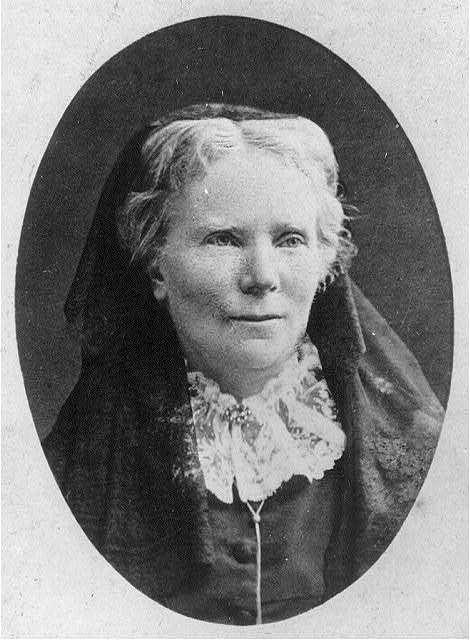

The struggle of acceptance and being treated seriously has been a struggle for women for decades. At the start of the history of the medical field, women were denied opportunities to become doctors and were treated poorly as nurses with little opportunities and they faced discriminatory challenges. Elizabeth Blackwell was one of the first to challenge the gender and societal norms of women who wanted to become physicians. She broke down the barriers that limited women into gaining learning opportunities and work experiences in medicine. Elizabeth Blackwell faced various challenges throughout her journey of becoming the first woman to obtain a medical degree in the United States. Judgement, discrimination in her academic environment, and the struggle to adapt to new changes haunted Elizabeth through her education journey to become a physician as a woman.1
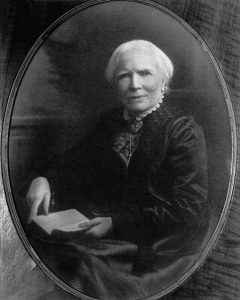
Elizabeth Blackwell was raised in a family of eleven in England, but the family later moved to the United States.2 Elizabeth grew up in a very progressive family that shaped the values she carried into her career and was one of the main reasons why she fought for her education as a woman. She strove for success for herself and for women due to the values that her family have taught her and her passion for her education has always been a priority for Elizabeth. Elizabeth had a strong passion for history and metaphysics, and did not like the idea of the physical body or medicine, but a turning point that changed Elizabeth’s passions was when her very close female friend passed away due to the lack of care in women health. Elizabeth’s friend stated before she passed that, “… a woman of Elizabeth’s intellectual capacity should study medicine.”3 The death of her close friend heavily impacted Elizabeth’s view on medicine and was a turning point in her life that sparked an interest in Elizabeth to study medicine. It made her realize that women were not taken seriously in the medical field and she wanted to challenge herself and the medical field by becoming the first woman physician to prove to others that women should be taken seriously in regard to their health. 4
Once Elizabeth made up her opinion on medicine, she decided to challenge herself to become a physician in order to honor her late friend who passed. She started to research on her own and ended up sending letters to physicians and teachers hoping to get advice or experiences from them, but most of them ridiculed her goals and stated that it was not possible for a woman to be a physician. After dealing with various negative comments, a doctor from South Carolina named Samuel Dickinson, offered to help Elizabeth by giving her beginner teachings of the medical field. Elizabeth studied from Dr. Dickinson for weeks to prepare her for when she would attend medical school. During the end of her teachings in South Carolina, she became motivated to send application letters to medical schools througout the United States. She sent letters to the University of Pennsylvania and various schools in New York hoping to get positive responses to her admission letters. After weeks of waiting for responses from the schools, Elizabeth finally received responses, and was disappointed. She was ridiculed by the offices and they rejected her applications. One of the members of the college offices, Samuel Jackson, laughed at her when she told him that she wanted to become a physician. The rejections and horrible reactions from others did affect Elizabeth’s motivation and drive. The negative outcomes forced Elizabeth to take a break and go home since she did not get the initial outcome she wanted. After her break, Elizabeth decided that she would not give up on her goals of becoming a physician, and sent applications to more medical schools. Geneva College reached out to Elizabeth and stated that at first they struggled to decide if they would accept her application because of her gender, and had to send her application to an all-male student body organization who ended up accepting her but not because they wanted to challenge gender norms like Elizabeth wanted to, but because they saw it as a joke and accepted it as a joke. Although Elizabeth was accepted as a joke, she believed that she might finally gain experiences as a medical student and complete her goals.5
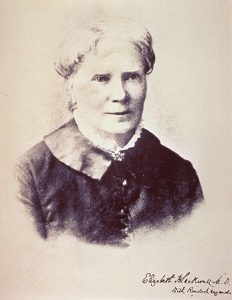
In the beginning of Elizabeth’s Journey at Geneva, she was welcomed by the main anatomy and physiology professor, who stated that he was excited to have her in his lecture. Elizabeth was determined to succeed and gain as much knowledge as she could at Geneva. Elizabeth received mixed reactions once she started her classes. Her peers at Geneva did not take her seriously at first, and would give her strange looks. Her professors, on the other hand, welcomed Elizabeth with excitement and stated that she was an intelligent woman who would succeed in their classes. Even though Elizabeth received support from professors during her first year at Geneva, many peers and citizens around Geneva would mock or ignore Elizabeth, which created an isolated environment for Elizabeth. During one important lecture, Elizabeth’s anatomy and physiology professor wrote a letter to advise Elizabeth to stay home during the upcoming lecture due to the lecture requiring seeing the human reproductive system. Her professor believed that it would not be appropriate for Elizabeth to attend this lecture, since she was a woman and women were not allowed to view these types of lecture content; therefore, he stated that she should stay home. 6
Upon receiving her professor’s letter, Elizabeth felt discriminated against. She states in her letter to her professor that she should be considered equal to her other peers as a student and not be disregarded due to her gender because she has honest intentions to pursuing a medical degree like her peers. The act of trying to force Elizabeth to stay home during a lecture pushed her motivation further. Her motivation of proving that women should be included in medical professions and deserve equal opportunities increased after the lab incident due to her experiencing isolation and discriminative actions. After reading Elizabeth’s response, Professor Webster applauded Elizabeth’s courage to fight for her rights and read her letter to the class to show her bravery. This incident changed Elizabeth’s environment in Geneva. She began to finally see respect from peers and professors after fighting for her deserved rights to an education as a woman. Throughout her first term at Geneva, Elizabeth began to see progress with her goal of gaining equal healthcare towards women and obtaining respect for women in the medical profession. She began to create friendships with her peers, and her professors allowed her to work with a few female patients to gain more knowledge for healthcare for women, which created a successful path to Elizabeth’s goal to obtain information on women’s health.7
Following her first year at Geneva, Elizabeth and her peers were required to gain knowledge and experiences from the medical field outside of Geneva. The task was challenging for Elizabeth due to the fact that various hospitals and medical facilities did not allow female medical students to intern or work for them. Since Elizabeth was struggling with unequal medical opportunities, she decided to intern at Blockley Almshouse, a hospital near Geneva that accepted her after she made a plan to meet with each leader and speak about her goals with them. After hearing Elizabeth’s goals and motivations, the facility accepted Elizabeth and enrolled her to the women’s syphilis department. At first, Elizabeth was unsure of the position and department, but she remembered the main reason why she wanted to become a physician. She recalls her goal of acquiring her degree to support and create better healthcare systems for women and creating a path for equal opportunities for women in medical professions. Although she struggled with the idea of working with the human body, Elizabeth pushed aside her fears and put her goals of creating a path for women in healthcare first. Once she set aside her concern for herself, Elizabeth started to work with the female patients and learned about various information regarding women. During her time at Blockley, Elizabeth felt lost and confused due to being ignored at the facility. Since Elizabeth was a female intern, doctors and other employees refused to teach her or ignored her existence. The isolation and the horrors she saw at the facility made adapting to the new environment difficult for Elizabeth. She states that the good part of her journey at Blockley was the interactions with the patients. She gained joy by getting to know the female patients, understanding their issues, and how she can help them. The interactions with the patients allowed her to gain more experience and knowledge on how to help other women with their medical issues. Elizabeth faced various difficult experiences with Blockey and considers it as her most challenging obstacle due to the chaos.8
Elizabeth was grateful for the experience at Blockley because she gained more knowledge on the disease Typhus due to there being various patients in Blockley with the disease and it ends up being her first published medical article about how the disease started, how to slowly treat it, and its symptoms.9 She writes in her publication that Typhus began with refugees from the Irish famine and that it was first called ship fever. She describes the symptoms like the difference in facial features in regard to the eyes and mouth and severe respiratory issues and cardiac issues. The reason why Elizabeth decided to write her college thesis on Typhus and make it her first medical publication is because of the gender bias. Elizabeth felt that if she wrote about women’s health, she would not be taken seriously due to the gender discrimination and biases in the medical information system. Even after gaining knowledge and proving her knowledge on women’s health, she still felt rejected and isolated with her goals and ideas.10
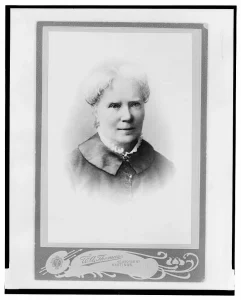
After her experiences with her publication and her first year at Geneva, Elizabeth started her second year strong by attending her next classes in order to finally graduate and earn her degree. Elizabeth’s journey at Geneva has shifted into a positive atmosphere in contrast to her previous year. She began to feel respected and appreciated as a student by her male peers and professors. She stated that she ended up gaining friendships with her peers and respected acknowledgments from her professors. After taking all her required classes, Elizabeth Blackwell finally graduated and obtained her degree and became the first woman in the United States to get a degree in the medical field. During her graduation, Elizabeth broke down barriers by being the only woman at the ceremony to be celebrated. Even though Elizabeth broke down gender barriers and achieved successful goals for herself and women’s health, Elizabeth was still aware of the prejudice and the judgement that women face. Elizabeth refused to do an academic celebration walks for her accomplishments during the graduation in order to avoid judgement and prejudice comments that can be thrown at her.11
Moving forward, Elizabeth continued to work and study on women’s health after Geneva and traveled to various locations like London to gain more medical knowledge. She continued to promote the importance of women’s health and created her own hospital that was centered for women and had predominately women doctors and nurses. Elizabeth Blackwell was a pioneer for women’s health studies, and she created an open door for women to get opportunities in medical fields and other fields of study by proving that she can do the same as her male peers. She achieved her goal of becoming the first woman physician and helping women around the globe while facing various challenges like misogyny, prejudice, and judgement from peers, professors, and her environment. Although she faced these obstacles, Elizabeth never gave up and fought for her right to an education and voiced that she should be treated as equal to the men around her because she has the same passion and intentions. Elizabeth Blackwell created safe spaces for women, and her studies created an equal path for women in medicine.12
- Wendy Moore, “Elizabeth Blackwell: Breaching the Barriers for Women in Medicine,” Lancet 397, no 10275 (London: Elsevier, 2o21): 662-63, https://doi.org/10.1016/S0140-6736(21)00260-9. ↵
- Richard B. Gunderman, “Elizabeth Blackwell: First Woman of America Medicine,” Pediatric Radiology 50, no. 5 (Berlin: Springer, 2020), 628-30, https://doi.org/10.1007/s00247-020-04655-8. ↵
- Janice P. Nimura, The Doctors Blackwell: How Two Pioneers Brought Medicine to Women– and Women to Medicine, 17th ed. (New York: W.W. Norton & Company, 2021), 26-27. ↵
- Janice P. Nimura, The Doctors Blackwell: How Two Pioneers Brought Medicine to Women– and Women to Medicine, 17th ed. (New York: W.W. Norton & Company, 2021), 27. ↵
- Janice P. Nimura, The Doctors Blackwell: How Two Pioneers Brought Medicine to Women– and Women to Medicine, 17th ed. (New York: W.W. Norton & Company, 2021), 37-38. ↵
- Janice P. Nimura, The Doctors Blackwell: How Two Pioneers Brought Medicine to Women– and Women to medicine, 17th ed. (New York: W.W. Norton & Company, 2021),48-49. ↵
- Janice P. Nimura, The Doctors Blackwell: How Two Pioneers Brought Medicine to Women– and Women to Medicine, 17th ed. (New York: W.W. Norton & Company, 2021), 54. ↵
- Janice P. Nimura, The Doctors Blackwell: How Two Pioneers Brought Medicine to Women– and Women to Medicine, 17th ed. (New York: W.W. Norton & Company, 2021), 60-62. ↵
- Samuel Sanes, “Elizabeth Blackwell: Her First Medical Publication,” Bulletin of the History of Medicine 16 (Baltimore: Johns Hopkins University Press, n.d), 87. ↵
- Janice P. Nimura, The Doctors Blackwell: How Two Pioneers Brought Medicine to Women– and Women to Medicine, 17th ed. (New York: W.W. Norton & Company, 2021), 64. ↵
- Janice P. Nimura, The Doctors Blackwell: How Two Pioneers Brought Medicine to Women– and Women to Medicine, 17th ed. (New York: W.W. Norton & Company, 2021), 76-77. ↵
- Janice P. Nimura, The Doctors Blackwell: How Two Pioneers Brought Medicine to Women– and Women to Medicine, 17th ed. (New York: W.W. Norton & Company, 2021), 1-2. ↵