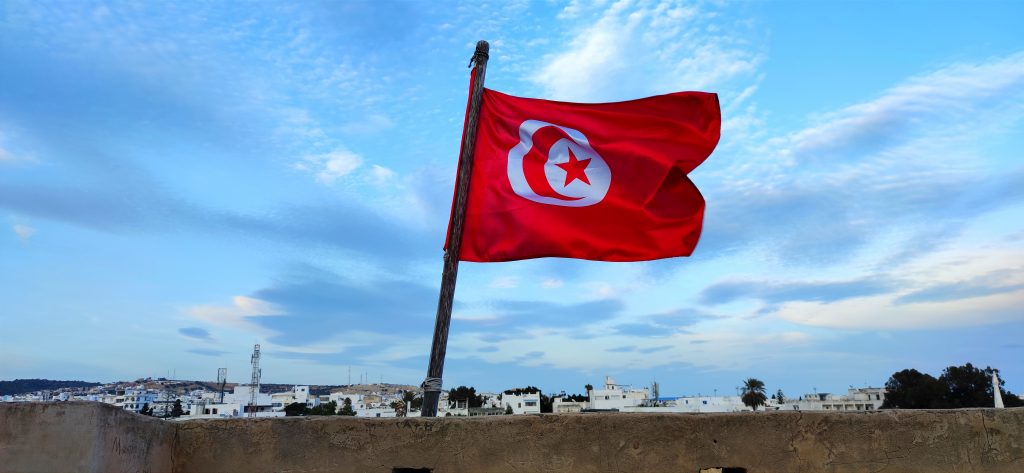

On December 17th, 2010, in the heart of Tunisia, surrounded by the desert climate, lies the city of Sidi Bouzid. In the busy market center one sound, that of a slap, stands out among the rest of them. One of the four police officers, Fida Hamdy, has just slapped 26-year-old produce vendor Mohamed Bouazizi.1 The officer saw the refusal to bride him as justification for slapping this young man while he sold fruit at the market.2 The other three officers joined in and beat Bouazizi, he cried and pleaded to the officers to spare his merchandise; they took all the fruit anyway.2 The fruit cart, c’s only way to earn enough money to feed his family, empty and destroyed. This article examines how one man’s act of desperation and great courage led to over a decade long transition for Tunisia.
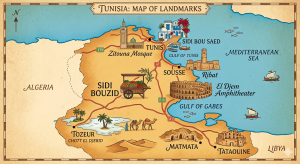
Bouazizi worked as a street vendor without a permit, because registering with the Tunisian administration requires many steps and lots of documentation. Officers agree to look the other way as long as they receive regular bribes so they let him and other street vendors sell their fruit or vegetables to survive.2 Bouazizi’s lafe had brought him much misfortune, his father died of heart failure when Bouazizi was three years old; leaving Bouazizi’s mother and seven children on their own with no income.5 From age ten, Bouazizi had to work odd jobs to help support his family; he attended High school when he could, but soon he had to drop out to work manual jobs so he could support his family.6
After his merchandise was taken, Bouazizi went to the local governor’s office, but the police prevented him from entering the building.7 He cried and pleaded but the doors remained closed to him, no one came to his aid.8 In what must have been a state of true desperation, Bouazizi brought a bottle of petrol and ignited himself on fire.7 A taxi driver witnessed Bouazizi aflame and jumped into action, with his jacket he managed to put out the flames that had engulfed Bouazizi, Bouazizi was quickly taken to the hospital.7 This terrible turn of events on December 17th, 2010 gravely injured Bouazizi. However, it did not end his story, instead Bouazizi’s desperate act of self-immolation set in motion a major turning point in Tunisia’s history and sparked wider movements in the region, now known as the Arab Spring.
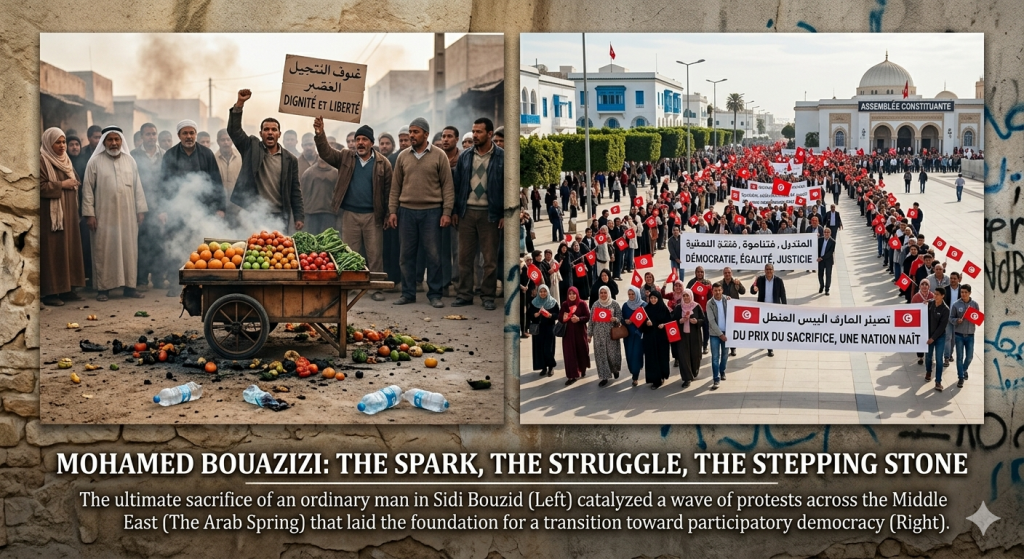
During Bouazizi’s hospital stay a crowd began to protest outside of the governor’s office building, at first a handful of family members and close friends but quickly the crowd grew to dozens and then hundreds.[3.Lageman, T. (2020, December 22). Remembering Mohamed Bouazizi: The man who sparked the Arab Spring. Al Jazeera. https://www.aljazeera.com/features/2020/12/17/remembering-mohamed-bouazizi-his-death-triggered-the-arab.] The governor refused to meet with the protestors and eventually fled from the building.7
Bouazizi died of his injuries on January 4, 2011; however, his demise gave life to protests all across Tunisia, they shouted his name, cried for him, and carried his picture.12 By the time of his death, the government’s attempt to suppress the protesters by arresting several dozen of them had backfired and had drawn international criticism. The protests and the criticism of the government’s decision favored the opposition groups against the authoritarian regime of then President Zine al-Abidine Ben Ali who had been in power since 1987.12
On January 14, just 10 days after Bouazizi’s death, President Ben Ali was forced to resign and left Tunisia.14.
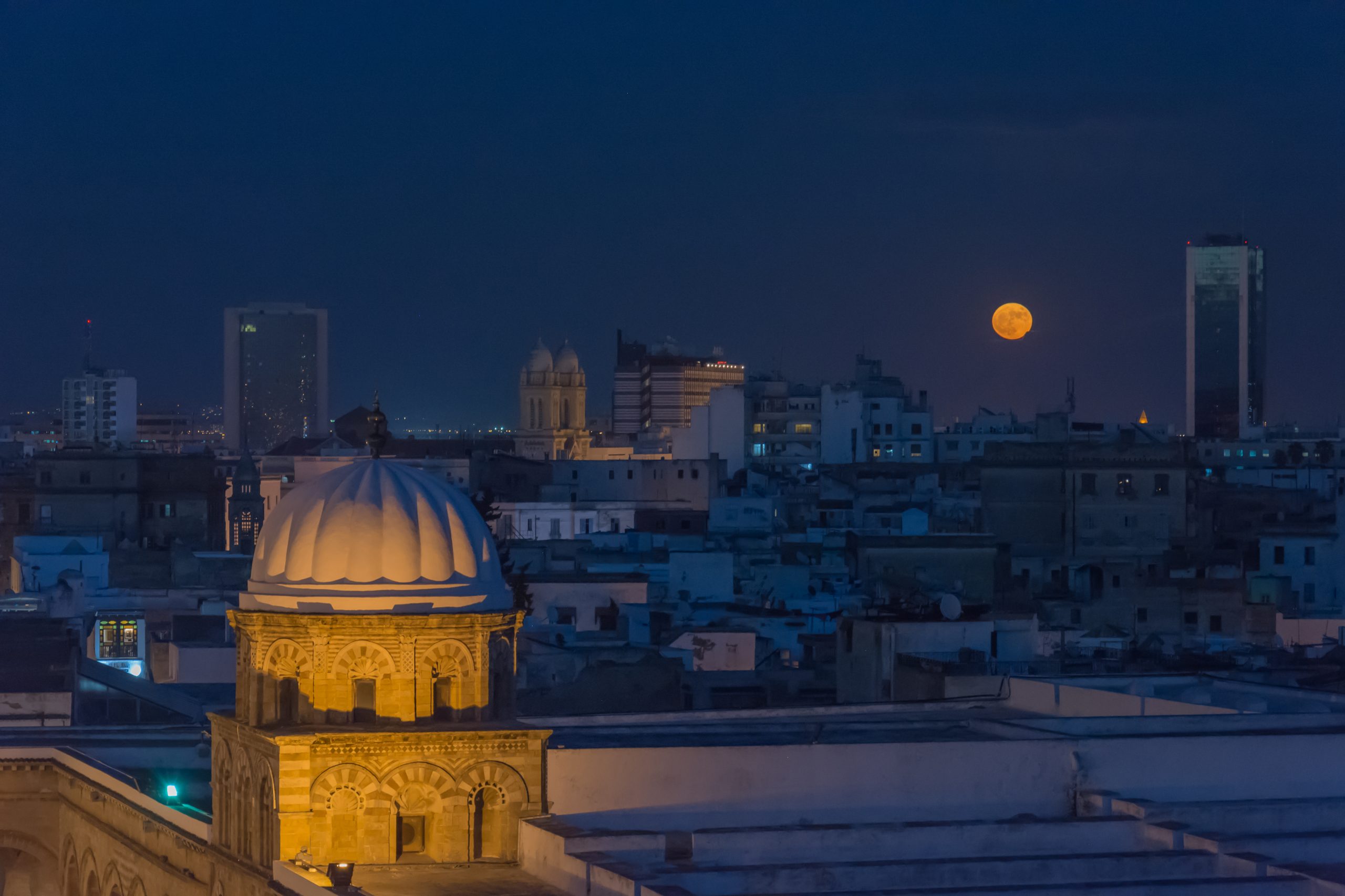
Tunisia was under France until its independence in 1959, Tunisia was established as a republic, but its first leader Habib Bourguiba, a key figure in the independence movement, believed that Tunisia was not ready for political pluralism and rose to power and transformed Tunisia into an authoritarian state.15
Bourguiba was in power until 1987 when his prime minister El Abidine Ben Ali led a coup against him under the guise that Bourguiba was no longer fit to lead due to illness and erratic behavior; Ben Ali took power and sat on the same throne as his predecesor, elections were held under Ben Ali but these were rigged, he jailed and tortured any political opponents he might encounter.16.
The police formed by the authoritarian state learned to beat, intimidate, imprison, and monitor anyone who would dare oppose the regime, they even made people disappear.15 The people were tired. Ben Ali’s departure after Bouazizi’s death was a great step towards democracy, but its political transition started a very complex period for Tunisia. After Ben Ali’s departure, Tunisia entered a state of emergency, and the prime minister Mohammed Ghannouchi took over as interim president.18
Turmoil arose from amid the state of emergency; in the capital, Tunis, a great amount of looting occurred, the main train station was burned, and at least 1,000 inmates were let out by an official; the military took over to try to mitigate the situation, but it ended up escalating the situation, the soldiers would check cars and control the flow of people, if they found suspects of looting they would drag them out of their cars at gunpoint and take them away, unfortunately soldiers were often doing part of the looting too.19
The people of Tunisia would not be able to vote for a president yet; the Constituent Assembly of Tunisia would elect Moncef Marzouki as president on the 12th of December 2011.20 During Marzouki’s term Tunisia would draft a new Constitution known as the 2014 Tunisian Constitution, this new constitution would be seen as a great improvement, it would be known as one of the most progressive constitutions in the Arab world especially regarding Women’s rights and it provide freedom of religion, not unlike in U.S., this new constitution would signal a new beginning one were Tunisia is known as a democracy.21
Marzouki’s presidency would come to an end with the 2014 Tunisian presidential election, this would be the first election were the people of Tunisia would be able to vote, the people would decide to cast their vote for Beji Caid Essebsi winning with 55.68% of the vote; however, this would be considered a setback, by his opponents, for the Arab Spring, due to Essebsi’s ties to the party of Ben Ali.22
In 2017, during Essebsi’s term, the economy of Tunisia seemed to head on a steady recovery (President Beji Caid Essebsi, President of Tunisia, : Viewpoint – Africa 2018 – Oxford Business Group) Essebsi promoted social reform, he called for women to be able to marry non-Muslim men of any faith, and for women to have equal inheritance.23 Essebsi would die on July 25, 2019, at the age of 92 after being hospitalized, and Tunisia would be under another interim president until the presidential elections were held in October of the same year.
In October of 2019 the Tunisian people would elect a new president that would forever leave a mark on the history of Tunisia, his name: Kais Saied. Saied won the election with 73% of votes and he especially won the vote of young people; What compeled the Tunisian people to vote for Saied? He won due to his campaign promise of integrity and anticorruption.24
In 2021 Saied did a move best described by his opposition as a coup, he suspended his prime minister and parliament speaker, this is an unconstitutional power grab, under the 2014 Tunisian Constitution the president has power over the military and foreign affairs, while the parliament had power over administration; Saied’s power grab was not immediately received with anger by the public, instead the public celebrated, the main reason it was faced with celebration was due to the parliament’s inability to deal with the COVID-19 pandemic; Saied declared that the military, which is under his control, would deal with the pandemic.25
A year later in 2022 Saied would dissolve the parliament under the guise that it is necessary to save Tunisia from political paralysis and economic stagnation at the hands of corrupt self-serving elites; he would declared that he would form a committee to draft a new constitution, the people would then vote for/or against the new constitution, and then hold parliamentary elections.26
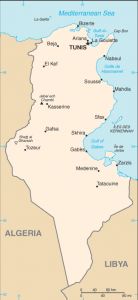
On July 25th of 2022 a referendum for the proposed 2022 Constitution was held, the only question on the referendum was “Do you agree to the new constitution?27 Only 30.5% of elegible voters casted a ballot with 94.6% of them supporting the new constitution; the new constitution would grant the president full executive control, a supreme command of the army, and the ability to appoint a government without parliamentary approval, supporters of the new constitution hoped that the new constitution would free Tunisia from political discord, government paralysis, and a reduced influence of Ben Ali’s former party; those who oppose to the new constitution feared that it would give the president too much power leading to a destruction of democracy in Tunisia.(16.Sands & Murphy BBC 2022)[Murphy, M. & Sands, L. (2022, July 27). Tunisia referendum: Voters give president near unchecked power. https://www.bbc.com/news/world-africa-62314305.]
In 2024, five years after the 2019 election in which Saied was elected, a new presidential election took place, only three out of a dozen potential candidates were able to run, one of them was Saied and another was a man facing twelve years in prison, the reason only three were able to run because police jailed the other candidates. Therefore, people believe that the 2024 election was not a free. Apart from the candidates in prison, no campaign rallies or debates were held, and the great majority of campaign posters promoted Saied; Saied won a second term with 90% of the vote.28
Bouazizi’s sacrifice helped him spark the movement of the Arab spring, his act of desperation that day inspired the protests that followed and were able to create a change not just in the Tunisian government, but across the Arab world; President Saied has helped the government of Tunisia transition further, he drafted a new constitution that consolidated powers to his hands designing more authoritarian institutions, instead of more democratic ones, what Tunisians wanted. Both demonstrate how one person’s actions can create an enormous change in the way the government works.
Democracy has not yet thrived in Tunisia, and the economy has not sufficiently improved either. Tunisia has undergone a process of “silent deindustrialization.” Since 1990s to 2023 Tunisia’s gross domestic income (GDI) coming from the industry sector has fallen from 30% to 23.5%. In the same period manufacturing fell from 17% to 15%. More alarming from 2019 to 2022 over 433 factories closed down. In the first quarter of 2024, industrial investment decreased by 17%. This weakening of the industrial sector has weakened the Tunisian middle class.29 Tunisia’s economic downturn challenges its democratization further.
Tunisia became the birthplace of the Arab Spring, the first seed sprung sprung from the market grounds, seeking democracy’s sunlight and yearning for freedom and economic opportunities to survive. The growth of democracy in Tunisia has stalled, thwarted by a President’s authoritarian inclinations that make future of democracy in Tunisia uncertain. Yet, its people hope that perhaps the 2029 presidential elections at the end of the decade by resetting Tunisia on the path towards democracy. By than it will be 2 full decades after Mohamed Bouazizi’s life sacrifice that inspired his country and his entire region to fight for more.
- Where the Arab Spring began. (2010, December 17). Arab News Japan, https://www.arabnews.jp/en/45thanniversary/article_20930/, ↵
- BBC News. (2011, January 22). Mohamed Bouazizi: memories of a Tunisian martyr. https://www.bbc.com/news/world-africa-12241082. ↵
- BBC News. (2011, January 22). Mohamed Bouazizi: memories of a Tunisian martyr. https://www.bbc.com/news/world-africa-12241082. ↵
- BBC News. (2011, January 22). Mohamed Bouazizi: memories of a Tunisian martyr. https://www.bbc.com/news/world-africa-12241082. ↵
- Lageman, T. (2020, December 22). Remembering Mohamed Bouazizi: The man who sparked the Arab Spring. Al Jazeera. https://www.aljazeera.com/features/2020/12/17/remembering-mohamed-bouazizi-his-death-triggered-the-arab. ↵
- Britannica Editors (2026, January), Mohamed Bouazizi. Encyclopedia Britannica. https://www.britannica.com/biography/Mohamed-Bouazizi. ↵
- Lageman, T. (2020, December 22). Remembering Mohamed Bouazizi: The man who sparked the Arab Spring. Al Jazeera. https://www.aljazeera.com/features/2020/12/17/remembering-mohamed-bouazizi-his-death-triggered-the-arab. ↵
- BBC News. (2011, January 22). Mohamed Bouazizi: memories of a Tunisian martyr. https://www.bbc.com/news/world-africa-12241082. ↵
- Lageman, T. (2020, December 22). Remembering Mohamed Bouazizi: The man who sparked the Arab Spring. Al Jazeera. https://www.aljazeera.com/features/2020/12/17/remembering-mohamed-bouazizi-his-death-triggered-the-arab. ↵
- Lageman, T. (2020, December 22). Remembering Mohamed Bouazizi: The man who sparked the Arab Spring. Al Jazeera. https://www.aljazeera.com/features/2020/12/17/remembering-mohamed-bouazizi-his-death-triggered-the-arab. ↵
- Lageman, T. (2020, December 22). Remembering Mohamed Bouazizi: The man who sparked the Arab Spring. Al Jazeera. https://www.aljazeera.com/features/2020/12/17/remembering-mohamed-bouazizi-his-death-triggered-the-arab. ↵
- Where the Arab Spring began. (2010, December 17). Arab News Japan. https://www.arabnews.jp/en/45thanniversary/article_20930/. ↵
- Where the Arab Spring began. (2010, December 17). Arab News Japan. https://www.arabnews.jp/en/45thanniversary/article_20930/. ↵
- Britannica Editors (2026, January 1). [Mohamed Bouazizi. Encyclopedia Britannica. https://www.britannica.com/biography/Mohamed-Bouazizi ↵
- The New Arab Staff. (2020, December 17). Tunisia: The road to revolution. The New Arab. https://www.newarab.com/analysis/tunisia-road-revolution. ↵
- The New Arab Staff. (2020, December 17). Tunisia: The road to revolution. The New Arab. https://www.newarab.com/analysis/tunisia-road-revolution ↵
- The New Arab Staff. (2020, December 17). Tunisia: The road to revolution. The New Arab. https://www.newarab.com/analysis/tunisia-road-revolution. ↵
- BBC News. (2011, January 15). Tunisia: President Zine al-Abidine Ben Ali forced out. https://www.bbc.com/news/world-africa-12195025. ↵
- Army on streets amid Tunisia unrest. (2011, January 20). Al Jazeera English. ↵
- BBC News. (2011b, December 12). Tunisian activist, Moncef Marzouki, named president. https://www.bbc.com/news/world-africa-16149119. ↵
- Associated Press in Tunis(2014, January 27). Tunisia signs new constitution. The Guardian. https://www.theguardian.com/world/2014/jan/27/tunisia-signs-new-constitution-progressive. ↵
- Markey P. & Amara T. (2014, December 22). Veteran Essebsi wins Tunisia’s first free presidential vote. Reuters. https://www.reuters.com/article/us-tunisia-election-idUSKBN0JZ04F20141222/. ↵
- Cordall, S. S., & Mahmood, M. (2022, October 19). “We are an example to the Arab world”: Tunisia’s radical marriage proposals. The Guardian. https://www.theguardian.com/global-development/2017/sep/04/we-are-an-example-to-the-arab-world-tunisias-radical-marriage-proposals. ↵
- BBC News. (2019, October 14). Tunisia election: Kais Saied to become president. https://www.bbc.com/news/world-africa-50032460. ↵
- Al Jazeera. (2021, July 26). Profile: Kais Saied, Tunisia’s president accused of ‘coup.’ https://www.aljazeera.com/news/2021/7/26/kais-saied-the-political-outsider-accused-of-a-coup. ↵
- The Guardian. (2022, March 31). Tunisian crisis escalates as president dissolves parliament. https://www.theguardian.com/world/2022/mar/31/tunisian-crisis-escalates-as-president-dissolves-parliament#:~:text=His%20opponents%20accused%20him%20of%20a%20coup,a%20parliament%20member%20from%20the%20moderate%20Isl. ↵
- https://www.reuters.com/world/africa/tunisian-president-decrees-referendum-new-constitution-2022-05-25/. ↵
- Muia, W. (2024, October 8). Tunisia election: Kais Saied secures second term with 91% of votes. https://www.bbc.com/news/articles/cx25ree1g18o. ↵
- APAnews. (2026, March 3). Tunisia faces industrial erosion and economic risks. African Press Agency. https://apanews.net/tunisia-faces-industrial-erosion-and-economic-risks. ↵