
Diving into the Change
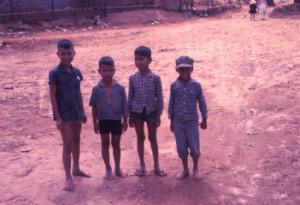
The US education system often essentializes the elements of the nations about which we learn. In the case of Vietnam, these elements evokes overwhelming feelings of uncertainty, pain, and unease. However, when a nation transitions, a huge way of understanding how much this nation progressed comes by looking at the people within the country themselves. Specifically, the cultural and social movements or reforms that the nation experienced through its decades long metamorphosis. This research article explores how Vietnamese women’s rights shifted throughout history and how these provide a detailed and meaningful image of a country. How did former colonial and warring powers negatively impact cultural progress and how did they foster beneficial changes? This article considers the decades of transition from Vietnam’s mid 20th century wartime era to where it is today.
The Shift
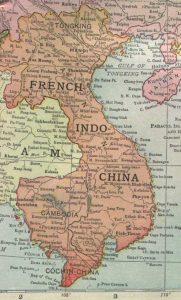
From the early-mid nineteenth century Vietnam was a part of the greater French Indochina territory. This area of the world was considered one of France’s biggest economic pinpoints in comparison to Algeria or Guiana and letting it go would take years of violent resistance.1 though eventually Vietnam along with current day Laos and Cambodia would gain independence. Though even after decolonization Vietnam faced an ideological schism that’d led to further bloodshed as a civil war between Ho Chi Minh’s Communist led North and the ever changing Republican South lasted twenty years. Nguyen’s article describes some of the extreme cases of violence US troops committed throughout US involvement.2 Violence that would stay with Vietnam for generations after yet were able to be looked past as even after the North won and formed the Socialist Republic of Vietnam conflicts with China and Cambodia. As the former attempted to exude influence over Vietnam’s sovereignty which would lead to Vietnamese defiance. Which is why in 1978 Vietnam invaded Cambodia to overthrow the Chinese supported Khmer Rouge into a new pro-Vietnamese government. Though even in independence and its autonomy secured by the 1980s Vietnam was at a low point in its history. As the early half of the 1980s, roughly 80% of Vietnam’s population experience extreme poverty.3, as it became one of the poorest countries in the world. The desperation of the situation the population found itself in required change. In the latter half of the decade, the Vietnamese government enacted major liberal reforms similar to those of China, creating a period of wealth and economic growth.4 This liberalization influenced various aspects of Vietnam, many of which were the opportunities of autonomy and wealth presented to women. The article “North–South discrepancy and gender role attitudes: evidence from Vietnam” stated that due to this “rapid economic and social transformations since the 1986 Doi Moi (Renovation) have contributed to expanding educational and working opportunities for women, enhancing their well-being, and advancing women’s status domestically and in public spheres”.5 The social abilities that gave women the opportunity to now be a large percentage of Vietnam’s workforce. Though, interestingly, the reforms on women’s rights weren’t met with the same type of backlash that might’ve been seen in other nations. Ho Chi Minh already had progressive views on women’s liberation and equality, in fact even viewing gender equality as part of the socialist society he envisioned.6 Thus as these reforms were implemented they were already a good fit in progressing women’s rights, which socially created a smoother transition as they occurred, to where now Vietnam is far more equitable than their surrounding neighbors. Certainly the equality between both men and women has been growing towards the right direction though there is still more that needs to be made as Vietnam ranks only in the top 70 in gender equality. Although, Vietnam’s civil war is behind the nation, and the economic boom has helped further equality, the ruminants of this dichotomy still exist especially in the case of women’s rights.
North-South Divide
The social perspectives between North-South Vietnam are a growing discrepancy that can be seen in many aspects. With the latter being simultaneously more religious yet more progress in contrast to the more atheistic yet, conservative North (a phenomenon that seems quite opposite to what is seen in many other nations). In the research study article “The Effect of Land Tenure Security on Household Labour Supply: Evidence From Vietnam (2008-2016)” Luciano Ayala-Cantu looks into a survey which asked both genders throughout Vietnam what they felt about husbands being the decision-maker of the house or having a more equal balance with their wife. She noted that “those in the north tend to “strongly agree” that men should make important decisions in the family, whereas those in the south tend to “strongly agree” that when wives work, husbands should share equal housework”.7 A study such as this exemplifies how the waves of social changes in Vietnam aren’t consistently across the whole nation but, why is this? While there’re multiple reasons for this phenomenon the first could be how the that generally the south is more culturally and religiously diverse leading to much more tolerance with openness towards new ideas. Many religions such as Islam, Buddhism, and local beliefs permeate which has brought communities more mixed in their thought. Different groups living among another has historically shown people in these communities to have forward-thinking outlooks in comparison to more homogenize ones. Another could be the fact that the south’s recent history was (for a temporary time) shaped directly by the US during its occupation of the region in the Vietnam civil war. Along with this the south’s high population density, better infrastructure, geographic benefits, and being a hot bed for trade throughout its history the region has more progressive views.
This tends to be the case when a industrialized economically culturally diverse society is much more willing to be lax in its social perspectives on women especially. Especially compared to the more underdeveloped north that has worse weather along with less fertile land, along with historically not being as much of a trading hub to other nations than its southern end. Still with the younger generation growing up with the digital age there has been a uniting interest of the world outside of Vietnam which has shaped what it means to be Vietnamese on both sides. Both Thanh-Truc Le and Linh-Chi Nguyen discuss this in their work “Constructing the Nation in Youth: Factors Shaping National Identity Perceptions Among Vietnamese Young People” noting “the glocalize process can be seen throughout many fields. From business, technology to the music industry, youngsters are utilizing their hybrid identity to create cultural yet modern products and techniques”.8 All of these aspects have played a role for North and South Vietnam’s idea of what it means to be Vietnamese which has differed from older generations. A big reason for this has been the rising influence and tensions between nations that Vietnamese see as hip while others as threats. However, unanswered questions still remain in how other nations have influenced Vietnam and how its perceived enemies are changing its social identity.
Friend or Foe?
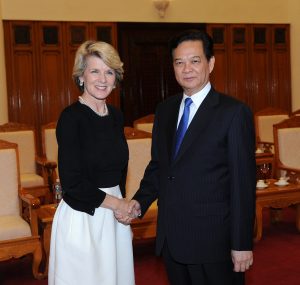
For centuries Vietnam would be heavily influenced by its northern neighbor, that is China, who they’d resist time and time again. Though it wasn’t until the nineteenth century that Vietnam would face its first wave of Western influence though not willingly as France’s control over the region made this a force they couldn’t repel. However, despite the decades of colonization there’s one silver lining in this era that would remain even after French occupation, Vietnamese women (more specifically the upper class) gaining more autonomy during this era. Quynh Thi Nhu Nguyen piece “The Vietnamese Values System: A Blend of Oriental, Western and Socialist Values” states that “with the introduction of the worker class into society, Vietnamese women engaged in most types of careers such as babysitters, sellers, cookers, miners, workers and so forth. In addition, the French educational policies created a new class of educated women who worked as teachers, journalists, secretaries and poets. The notion of equality liberated Vietnamese women from the kitchen corners and their low position in Confucian thoughts”.9 Yet, since this time period it has become apparent how Vietnam has been inspired more by the nations of Europe, Japan, South Korea, and the US than China. Which can be seen with how close relations between Vietnam and these other countries have grown closer since the 1970s, becoming closer allies to nations such as the US through economic ties which have extended to Vietnamese society being inspired by western ideals. One would think after tragedies such as the My Lai Massacre.10 which caused many Vietnamese civilian deaths by US soldiers Vietnam’s would have resentment of the US however, the opposite is true, both nations have grown only closer together with Vietnam’s youth having a favorable view of Americans. This lies with the relationship contrast with China as even before French colonization tensions with their neighbors up north has been high. The reason being is that throughout over a dozen wars and two thousand years of constant conflict with China the rise of anti-Chinese sentiments far outweighs the issues they’ve had with the US and Japan. Though they fought against western imperialism for a century, Vietnamese fight against Chinese colonialism was over millenniums.11 This wouldn’t end after Vietnam’s civil war as China would continue to exercise influence which led to the nation seeking out their recent former enemies in the US to have closer ties with. Leading to American influence in different aspects of Vietnamese society especially in the case of taking more progressive stances when it comes to women’s autonomy. It also makes Vietnam’s relation with Japan (a nation that once brutally imperialized them during the second World War) understandable. As Japan is similarly contending against China’s influence over the east. While there seems to be a major progression, Vietnam has been facing the same issue that many other countries in our current world are going through, that is, the rise of nationalism. Dien Nguyen An Luong in his piece “The Growing Salience of Online Vietnamese Nationalism” goes into the rising issue of such outlooks of nations such as China and how that’s played into Vietnam’s political system. Writing that “there were also other factors that reflected different dimensions of online Vietnamese nationalism: national pride and superiority as well as hawkishness on foreign policy and geopolitical diplomacy”.12 This is worrying as historically when states tend to have major increases in nationalist sentiments, the idea of conformity or the “good of the nation” becomes railing cries. In that progress in human rights and expression (especially regarding women) are looked at as threats to the greater good of the country, which is what matters most. What is the perfect Vietnamese woman is structured more into subordination to the man rather than letting these women themselves decide what they value as being the best version of themselves. Though major crackdowns on corruption have been happening in the country, time will tell whether Vietnam will move forward in continuing its equality for women or slide backwards. These leads to wonder over the future of the nation’s social standing.
Where To Go Next?
Diving into Vietnam’s cultural sifts from coming out of its recent fierce history of Western imperialism and wars into its economic boom that’s contextualize said changes. The current North-South discrepancy creating social divisions between how such a transformation has been processing throughout the country. Finally, the international relationships that’ve been involve with influencing attitudes and the contemporary trends in Vietnam. Still, All of these factors within Vietnam’s metamorphosis bring even more questions about its future. It’s the rise of anti-Chinese sentiment turning into hyper nationalism could be a worry while its embracement of Western and other east asian states could lead to further progress. Only time will tell where these cultural shifts lead to but, for now, Vietnam has and continues to move towards a positive direction. Yet, the true ones to lead this progress is Vietnamese women who only in their hands can further the culture shifts into the next generation.
- Tony Smith, “The French Economic Stake in Colonial Algeria,” Duke University Press, 1975, 186. ↵
- Sarah Nguyen, “The United States Exposed: Ron Ridenhour Reveals the My Lai Massacre,” STMU Scholars, 2018. ↵
- Jon Miltimore, “How a Nation Defeats Poverty,” American Institute of Economic Research, 2024. ↵
- Adam Fforde, “Economics, History, and the Origins of Vietnam’s Post-War Economic Success,” Jstor, 2009. ↵
- Trang Thu Do, Kien Nguyen-Trung, and Chau Hai Le, “North–South Discrepancy and Gender Role Attitudes: Evidence from Vietnam – Asia-Pacific Journal of Regional Science,” 2023, 164. ↵
- Vo Van Dung, “Ho Chi Minh’s Thoughts on Women’s Equal Rights,” European Journal of Political Sciences Studies, 2019, 160. ↵
- Luciano Ayala-Cantu, “The Effect of Land Tenure Security on Household Labour Supply: Evidence from Vietnam (2008-2016),” Problemas Del Desarrollo 56, 2025, 37–66. ↵
- Thanh-Truc Le, Linh-Chi Nguyen, “Constructing the Nation in Youth: Factors Shaping National Identity Perceptions among Vietnamese Young People”, SSRN eLibrary, 2025. ↵
- Nguyen, Quynh Thi Nhu, “The Vietnamese Values System: A Blend of Oriental, Western and Socialist Values” U.S. Department of Education, 2016. ↵
- Adrian Cook, “Investigation into the My Lai Massacre, 1968,” STMU Scholars, 2018. ↵
- Nhi Hoang Thuc Nguyen, “Anti-Chinese Sentiment in Contemporary Vietnam: Constructing Nationalism, New Democracy, and the Use of “the Other,” Digital Common at Trinity University, 2017. ↵
- Dien Nguyen An Luong, “The Growing Salience of Online Vietnamese Nationalism: Iseas Publishing,” ISEAS Publishing Online Bookshop, 2021, 16. ↵


15 comments
Valentín García
Martin, I enjoyed your piece for both its analytic and historical lenses taken to the subject of women’s empowerment. Your explorations in your ‘North-South Divide’ are especially fascinating; of note how the US’ influence over Vietnam’s culture may have cemented values in the North, or fostered others in the South. The dichotomy in culture between the North and South Vietnam – especially throughout its historic evolution – is something I didn’t realize I’d take an interest in, especially as we see new developments facilitated by the internet and its mechanisms.
Moreover, you certainly convey an interesting historical development; despite a history mired in attempted conquests and meddling from its Chinese neighbor, successful French colonization, and US hegemonic strong-arming — Vietnam has endured, persevered, and made the best of these difficult seasons, by way of incorporating the most productive/progressive of these respective cultures into its own.
On the whole, you paint a pragmatic and comprehensive picture for Vietnam, Martin; and I must say I now take an interest in Vietnam’s developments, for its political and social elements. Kudos!
Rosa Inocencio
Hi Martin, I enjoyed reading your article, it provided me with information of Vietnam that I was unaware of. I found it interesting that although there were issues that could have made this even more impossible, Vietnam compared to other countries back then had the most “gender equality” era, which was really good because they allowed their women to become more independent and more involved in not just household work. Hopefully from them till now and the future the gender equality improves more and that they keep progressing the right direction. Great article!
Silvia Benavides
Hello Martin,
This was written in an amazing way, and I love how descriptive you are. The images you used in order to illustrate were also a wonderful choice and helped me understand to a further extent. GREAT JOB!
Mía Perez
Hi Martin! I really enjoyed your article; it was very eye-opening to see Vietnam’s history showing how deeply war, colonization, and reform can shape social progress. Then when you tie this history to women’s rights. Even with progress like the Doi moi reforms, i like how you can still point out the still ongoing indifferences, especially between the north and south. This article and along with other really help other understand that change is not occuring in the some way all around the world. How things like culture, economics, and just outside influence all plat a role in shaping people’s perspectives.
Christian Molina
Howdy, Martin! I must say, in the past I myself have contemplated how we (Americans) view Vietnam given the relatively-recent Vietnam war. After all, it is one of the more recent conflicts America has been in, and it had some of the most propaganda that living generations still remember. But I think the evidence you laid out, like the progressiveness and women’s rights, would change the public opinion of Vietnam if more Americans knew about it.
Layla Rangel
Hey Martin, this article did a great job of painting the factors that shaped women’s rights and social attitudes in Vietnam. I found it interesting that the views differed between the north and south and how that highlights that there can be vastly different perceptions within one country. This is similar to the division in Venezuela on the kidnapping of Maduro. While some citizens demanded their leader back, others celebrated (mostly in private due to fear) about his abduction. All in all, I found your article to be very educational. Great job!
Isabel M Gerwig
Hello! This article was such an interesting topic, as I know very little about Vietnam. It is truly important to look at the people in our societies to assess whether transitions are effective, as they are the ones experiencing these challenges firsthand. I found the regional divide between the north and the south very interesting. The role gender has in this country is similar to that in my country’s article, Argentina, as women are usually dismissed and undermined in what happens to their lives. Women’s equality is so important, and they are such huge drivers in the economy. I am glad you highlighted this in your article. Great job!
Tina
Hi, Martin! You really did provide a detailed image of Vietnam! I really enjoyed how this article explained the past of Vietnam, the liberalization, and the very point where reforms for women were put into place by Vietnam. The data worked really well with the information that was provided too. When explaining that Vietnam was one of the poorest countries in the world, I thought about Mozambique as they deeply struggle with poverty. It’s difficult to recover from but I hope for more positive progress in Vietnam.
Emilio Orona
Hey Martin, your article does a great job about the social outcome of women rights that Vietnam went through. What stood out most is how the author links colonialism, war, and economic reforms (like Đổi Mới) to long-term changes in gender roles, rather than treating women’s rights as an isolated issue. It was great to include the scholarly statistics to convey credibility especially when talking about economic theories like liberalization. My article of Bosnia, like Vietnam, different regions and historical experiences create varying political and social outlooks, making national unity and consistent policy progress difficult. Similarly, just as Vietnam’s modernization created uneven progress in gender equality across regions, Bosnia’s governance structure reflects how historical conflict can freeze or complicate social and political reform.
Maurissio GOnzalez
Hi Martin! Before reading your article, I did not know of the state of women’s rights in Vietnam, thank you for researching this topic and sharing it. Hopefully as the decades come Vietnam will continue doing more progress on women’s rights. I did research on Tunisia and both Vietnam and Tunisia used to be a part of the French Empire, Tunisia has also made a lot of progress in women’s rights, I am uncertain of if it was due to European and American influence, but given that Tunisia is located in northern Africa and has close ties to Europe is very likely that it was also influenced like Vietnam.