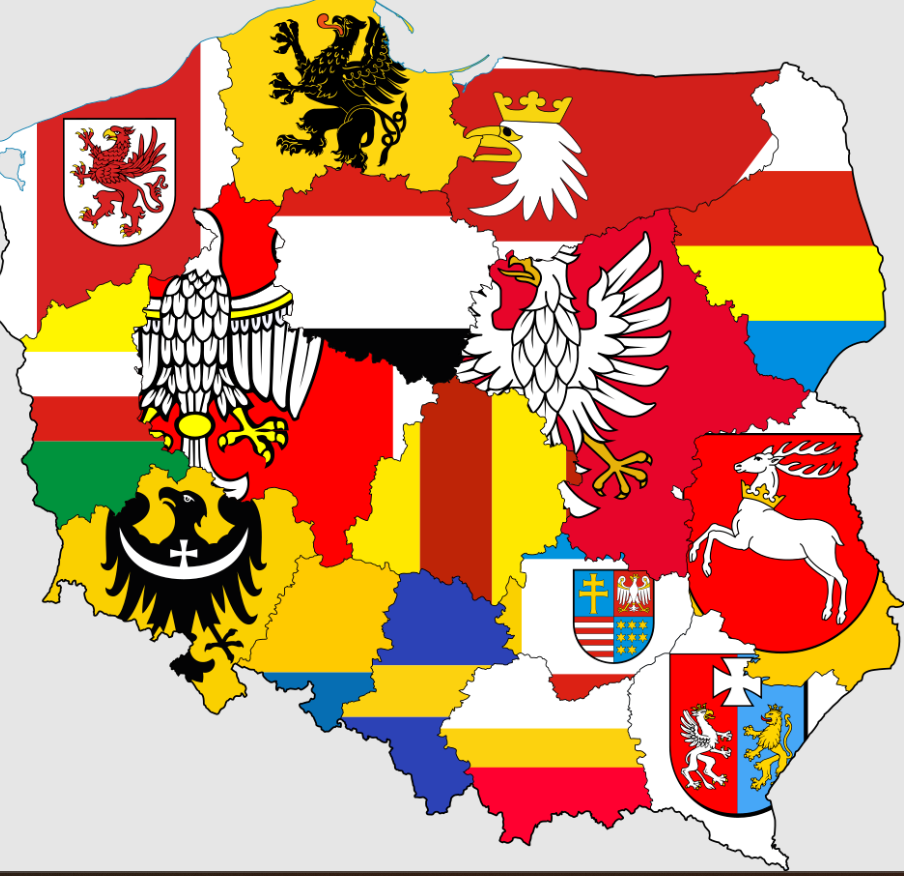

Poland transitions to center stage
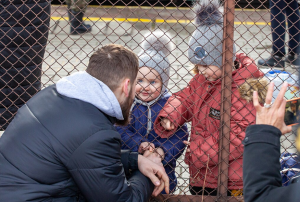
Courtesy of Wikimedia Commons February 27, 2022.
Poland did not use to make headlines in Europe after COVID weakened it so badly. However, when Russia attacked its neighbor, Ukraine, it brought Poland to the heart of European security, giving it the opportunity to boost its leadership. Poland’s economy had started growing after the pandemic, but Russia’s invasion of Ukraine brought on many new challenges. This article explores the consequences of the war in Ukraine and how these have affected Poland – from the numerous Russian attacks on Poland’s energy infrastructure, to economic instability via inflation – and how despite these circumstances, Poland has managed to reclaim its place as a regional power.
In this period of transition, what are the solutions Polish leadership worked on to avoid a deeper economic and security crisis? Poland’s response to the war—characterized by having opened its doors to millions of migrants,- then it implemented an aggressive strategy for decoupling from Russian energy, and facilitating massive military aid to Ukraine. Poland redefined its role in the European project and its own national security mission.
How many refugees are enough?
Credits: AI Gemini (Nano Banana)
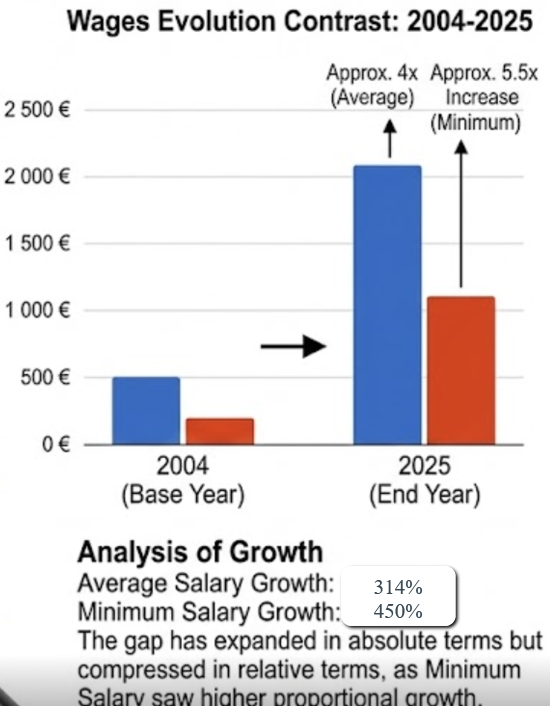
Poland borders the Eastern side of Ukraine—Poland has received close to 3.5 million persons who arrived between February 24, 2022 and mid-May that same year.1 This influx in migration of Ukrainians saturated the labor market at a time when Poland still lacked any real integration plan. Three and a half million refugees, with over 95% Ukrainian nationals, arrived in Poland fleeing the Russian invasion.2 Three and a half million people in three months – that is the scale of the shock to their infrastructure, economy, and even perhaps culture that Poland absorbed. Prior to the 2022 invasion and the subsequent surge of refugees from Ukraine, Poland did not have a comprehensive integration policy in place with measures dedicated to refugees. The National Recovery and Resilience Plan (Krakowy Plan Obdudowy- KPO) development strategy drafted to recover from the Covid economic downturn in Poland received EU approval and substantial financing to rebuild and develop Poland’s economy.3 Not only was Poland expecting to increase its revenue from outside resources, but also hoping domestic investors and corporations would reinvest their profits in 2026. In the 3rd quarter in 2025, exports grew by 6.1% which added 0.2 percentage to the Gross Domestic Product (GDP).4 Clearly, the large influx of migrant has had a positive impact even if very small on their GDP at first.
Honeymoon period for Ukrainian Refugees will soon end
“Conservative-nationalist Polish President Karol Nawrocki [stated that] “Poles feel… that our effort, our multifaceted assistance to Ukraine since the beginning of the full-scale invasion has not been duly appreciated or understood”.”5 Poland’s new leadership has expressed reservations regarding ongoing support for Ukrainian refugees. President Karol Nawrocki emphasized a nation-first approach during his campaign, highlighting priorities for Polish citizens. He has also characterized some Ukrainian refugees as “ungrateful” and as putting a strain on societal resources.6 This stance reflects a strategic effort to reassess refugee assistance programs. President Nawrocki stated that what he called an “incomprehensible and unacceptable situation” where foreigners receive aid without equivalent contribution. The government has announced that they will now gradually phase out these exceptional measures and transition from temporary solutions to more permanent, systemic ones. They contend that Ukrainians are now sufficiently integrated to be treated similarly to other foreign nationals. Currently, 46% of Poles oppose accepting Ukrainian refugees, compared to only 3% at the beginning of the conflict. Under the previous system, employers could easily hire Ukrainian workers; however, new requirements for work permits will introduce additional bureaucratic delays. This shift prioritizes political messaging over labor market considerations, despite opposition from employers, who note that Ukrainians constitute approximately 66% of Poland’s immigrant workforce. Collectively, these factors give the new administration both an ideological reason and a political win for ending the special benefits.7
Poland plans concluding the special legal status previously granted to Ukrainian nationals following Russia’s full-scale invasion in 2022. Under the 2022 special legislation, Ukrainians were permitted to enter Poland without a visa, remain legally without applying for asylum, and receive automatic temporary protection. These provisions are now being phased out, requiring Ukrainians to apply for standard residence permits, work permits, or other immigration channels. Additionally, the program providing free accommodation, subsidized housing, and payments to Polish families hosting refugees is being reduced or discontinued. Access to social benefits such as child allowances, family support, disability assistance, and one-time cash payments is also being restricted, aligning Ukrainians’ status with that of other non-EU migrants rather than protected refugees. While free access to the public healthcare system—covering emergency and routine medical services—has been available, this will now be scaled back, potentially necessitating insurance, employer coverage, or out-of-pocket payments. Although children remain eligible to attend school, as mandated by Polish law, the specialized support programs—including free language classes, integration services, and psychological support for children affected by war—are being reduced amid the policy changes. Initially, during the early stages of the conflict, Ukrainians benefited from temporary measures such as free public transport, food vouchers, emergency cash, and humanitarian aid packages. These programs are now coming to an end as the government considers the “emergency phase” to be over. Ukrainians will now be treated the same way any other third-country nationals immigrants to Poland would, rather than as protected refugees. 8
Energy independence fuels strength
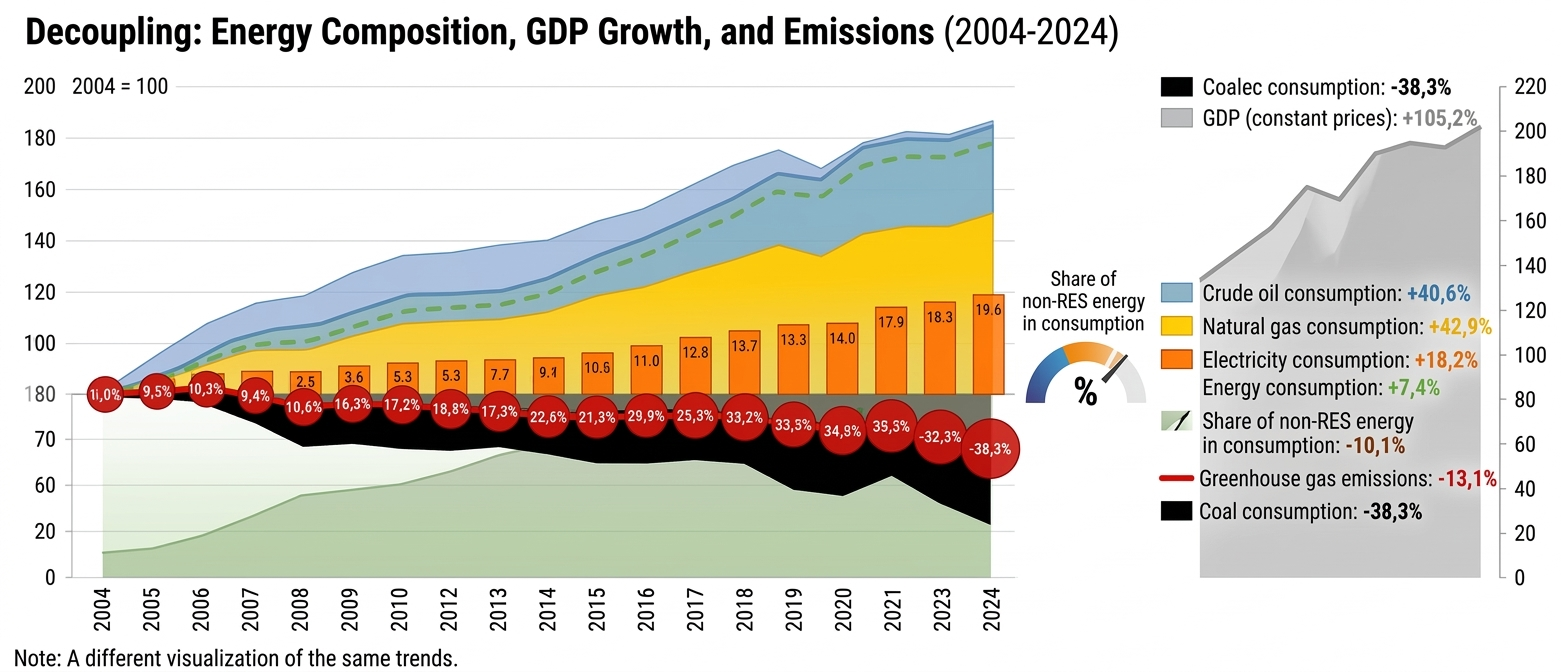
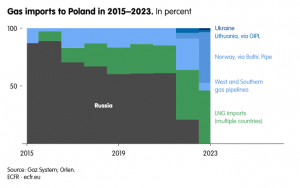
Poland has achieved full independence from Russian coal and gas imports. By 2024, the share of Russian raw materials in Poland’s energy supply had been reduced to zero, compared to 52% for gas and 7% for coal in 2015.9 The less Polish rely on other countries its energy the more power it harnesses. Poland has developed a coherent national energy strategy sometimes at odds with the EU.
Credits: Kacper Kwidziński, Marcin Dusiło and AI Gemini
Conclusion: Poland: A Regional Power Reborn
Will Poland’s move to cutting benefits for the 3.5 million Ukrainians impact Poland’s economy negatively? And in doing so will the weakened Polish economy also diminish their leadership? Yes, Poland’s ending of services for Ukrainian refugees and adding more steps for their continued employment will likely negatively impact Poland’s economy. President Nawrocki has a political motive where they no longer prioritize helping as a humanitarian imperative but are using this issue for personal political gains.
Poland is no longer just a border state but the geopolitical center of gravity for the European defense of Ukraine. Poland’s geography gave it a very important edge in the securing Europe’s fight against Russia. Poland welcomed Ukrainians which helped rebuild and grow its own economy. Now, might Russia decide to invade Poland? On the one hand, Russia has been struggling to invade Ukraine and has still not finished the job. Vast areas of Ukrainian territory have remained free of Russian control if not free from Russia strikes. On the other hand, Russia has failed to meet its early military objective of colonizing Ukraine. Would Russia decide to attack Poland to prevent Ukrainians and Poles from keeping the life line of support for Ukraine’s resistance in place? Would Russia only be able to overwhelm Ukraine by cutting off its border to Poland as well?
How or who can stop Russia? NATO’s emerging “East Shield” architecture signifies a strategic shift toward a layered, multi-domain defense posture aimed at deterring, disrupting, and slowing potential Russian aggression along the Alliance’s northeastern border.14 According to the International Institute for Strategic Studies, Poland’s fortification efforts—integrated with the Baltic Defence Line and Finland’s enhanced border defenses—do not present an impenetrable barrier but instead provide operational friction for Russian forces through obstacles, surveillance networks, and integrated air defense systems. These measures seek to delay an initial attack sufficiently for NATO’s forward-deployed units and rapid reinforcement plans to mobilize, while also addressing Russia’s increasing use of grey-zone tactics such as UAV incursions, sabotage, and electronic and cyber warfare. 14 The military cooperation, East Shield, coordinates and organizes the protective operations, bolsters defensive posturing, and guarantees that any attempt by Russian to invade on another front would face both clear prompt opposition with a rapid escalation with NATO’s involvement, even if the US might not join.
- Maciej Duszczyk and Paweł Kaczmarczyk. “The War in Ukraine and Migration to Poland: Outlook and Challenges.” Intereconomics, 2022. ↵
- Maciej Duszczyk and Paweł Kaczmarczyk, “The War in Ukraine and Migration to Poland: Outlook and Challenges,” Intereconomics, 2022. ↵
- Center for European Cooperation, Cedefop, European Union, 2026. This is a decentralized agency of the EU by “Regulation (EU) 2019/128 of the European Parliament and of the Council of 16 January 2019 establishing a European Centre for the Development of Vocational Training (Cedefop)” and repealing Council Regulation (EEC) No 337/75. ↵
- Marek Skawiński and Michał Kulbacki. “4% GDP growth. Inflation on target. Forecasts for Poland’s economy in 2026.”XYZ, 03.01.2026. ↵
- President Karol Nawrocki quoted inside of AFP, “Poland phases out aid for Ukrainian refugees” Reuters, March 5, 2026. ↵
- Karen Hargrave, Kseniya Homel, and Lenka Dražanová, 2023, “History of migration in Poland.” In Public narratives and attitudes towards refugees and other migrants: Poland country profile. ↵
- RFI. “Ukraine Crisis – Ukrainian Refugees Face Uncertain Future as Poland Scraps Special Status.” Radio France Internationale, March 5, 2026. ↵
- Klaus Witold and Monika Szulecka, “Departing or Being Deported? Poland’s Approach towards Humanitarian Migrants,” Journal of Refugee Studies 36, no. 3 (2023): 467–88, https://doi.org/10.1093/jrs/feac063. ↵
- Kacper Kwidziński and Marcin Dusiło. “Energy Transition in Poland. Edition 2025.”Forum Energii, 30 July 2025. ↵
- European Council on Foreign Relations, 12/23/2024, “Empowering Poland, the Role of International Partnerships,” https://ecfr.eu/publication/empowering-poland-the-role-of-international-partnerships/. ↵
- Szymon Kardaś, (2023), From Coal to Consensus: Poland’s Energy Transition and its European Future, European Council on Foreign Relations. ↵
- European Council on Foreign Relations, 12/23/2024, “Empowering Poland, the Role of International Partnerships,” https://ecfr.eu/publication/empowering-poland-the-role-of-international-partnerships/. ↵
- European Council on Foreign Relations, 12/23/2024, “Empowering Poland, the Role of International Partnerships,” https://ecfr.eu/publication/empowering-poland-the-role-of-international-partnerships/. ↵
- International Institute for Strategic Studies. “Fortifying NATO’s Eastern Flank.” The Military Balance 2026. Accessed April 10, 2026. https://www.iiss.org/publications/the-military-balance/2026/the-military-balance-2026/fortifying-natos-eastern-flank/. ↵
- International Institute for Strategic Studies. “Fortifying NATO’s Eastern Flank.” The Military Balance 2026. Accessed April 10, 2026. https://www.iiss.org/publications/the-military-balance/2026/the-military-balance-2026/fortifying-natos-eastern-flank/. ↵

16 comments
Valentín García
Elizabeth, you did a mighty fine job at illustrating the the double-edge of Poland’s regional role: real achievements in decoupling from Russian energy and supporting Ukraine, but also the domestic political and economic trade-offs that come with it. Your piece reveals a balance that has been struck by Poland’s leaders, as they wrestle with so many new developments, under economic constrains, infrastructural pressures, and existential duress; one is left to wonder at such a point having read about such spartan adaptability — who else, who better than Poland to rise to the occasion? Truly a marvelous country, and your work here did it right justice!
This balanced tension between national priorities and broader solidarity relates, in a way, to the Taino experience as I describe in my work; how groups navigate survival and identity when larger powers and shifting circumstances keep testing their resolve, and capacity to endure.
Marvelous work, Elizabeth.
Mía Perez
I like this article because it clearly shows how Poland’s role in Europe has changed since the Ukraine war. I really enjoyed how you pointed out the connection between refugees, energy independence, and national security. It helped me understand how one event can reshape a country’s economy and politics at the same time. The discussion on shifting public opinion also stood out to me as especially interesting and relevant.
Rosa Inocencio
Hi Elizabeth, I did not know anything about Poland, so I found this article very interesting. I liked that Poland became a refugee for Ukrainians, but I did not like the changes that were then made for them. Although it can be understanding due to the fact that the people from Poland were not getting the great treatment as the Ukrainians, I feel as if there could have been a better way to address it. Great Article!
Kamilah Rodriguez
Hello Elizabeth, your article presents a compelling look at how Poland’s push for regional leadership comes with real financial and political trade‑offs. The discussion of Poland’s humanitarian response added important nuance, showing that its leadership isn’t just military but also moral. Your article highlights how Poland’s ambitions are reshaping both its domestic priorities and its role in Europe.
Christian Molina
Hi, Elizabeth! The impact of Ukrainian refugees on the Polish economy is not something I had considered before. It make sense, all things considered. Although, to my knowledge, European countries tend to be hesitant when it comes to accepting large amounts of immigrants and/or refugees. Additionally, the measures that Poland took to account for this immigrants surprised me. Good work!
Layla Rangel
Hi Elizabeth, well done on your article! You did a good job showing how Poland went from not in headlines to being a strong regional power. With three and a half million people entering the nation in such a short time, it’s no wonder why Poland faced major economic and social pressure. In Venezuela the issues are on the opposite side with large numbers of people leaving the country so it’s interesting to read about what happens in a nation that is receiving refugees rather than losing its population. Both cases show how migration flows can reshape a country, even though they are opposite examples.
Tina
Wow! Hi, Elizabeth! Amazing article, this really does show the relationship between Ukraine and Poland, a relationship that I didn’t realize had such a familiarity associated. I like the inclusion of the information that Poland did not have an integration system for refugees, it really brought me back to my own article about what proactive action can do in reassuring that citizens feel secure in their own nations.
Maurissio Gonzalez
Hi Elizabeth! Is it so unfortunate that Poland has decided to cut benefits and add more obstacles for them to continue being employed, this is certainly going to have an economic effect on Poland, and I agree that it will most likely be a negative one. I did research on Tunisia, and the Tunisian economy is also not doing great, it is improving but very slowly.
Emilio Orona
Hey Elizabeth, this article is unique because it’s the first one, I read that regards reshaping their role in the international system due to external factors instead of domestic issues. The Russia Ukraine war forced nations like Poland to admit refugees. This restructured their national security identity within NATO. I also found quite extravagant that Poland has more Catholics than any other place in the world including Italy. While these shifts strengthened Poland’s geopolitical importance, they also created internal tensions around migration policy, welfare, and political ideology. This connects to my article Bosnia and Herzegovina in the aspect that an external intervention (Srebrenica massacre) created a state structure that is stable in appearance but internally fragmented.
Yuta Satake
Your article was very informative because I did not know that Russian invasion of Ukraine had impact on changing Poland’s role in national security in Europe. I found it interesting that early phase of accepting refugees had a positive impact on Poland economy but then it also sparked protest from Poland civilians because my article focused on economic development in India where it has a large diversity within country.