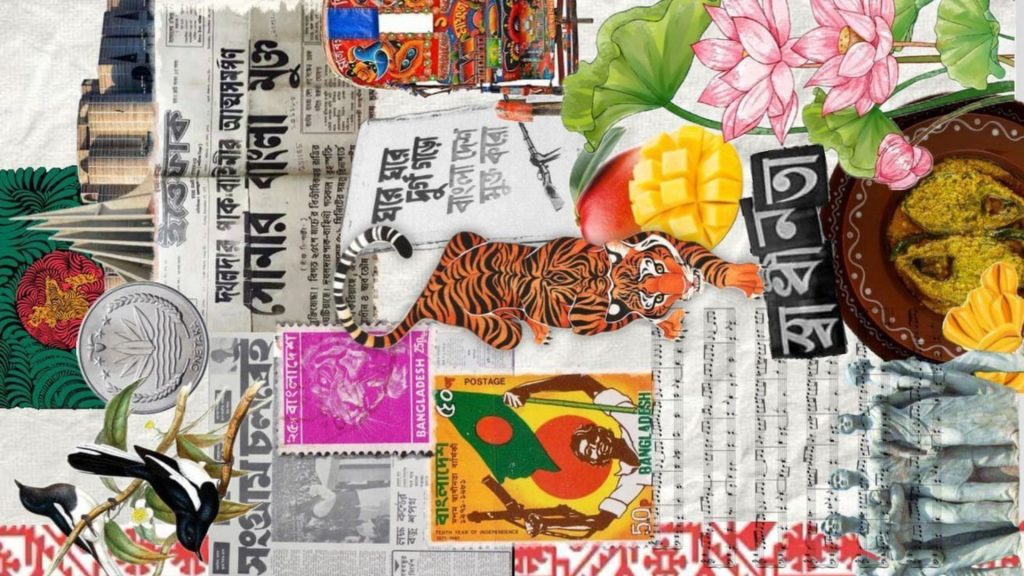

Bangladesh is often celebrated as one of the most notable development stories of the twenty-first century. Over the past two decades, the country has experienced significant economic growth, substantial poverty reduction, and rapid integration into global markets. The ready-made garment industry specifically has transformed Bangladesh into one of the world’s leading apparel exporters, making it a critical player in global supply chains. The enrollment in universities has expanded, urban centers have grown, and a new generation of young Bangladeshis has been raised with the promise that education would provide stability and mobility. Yet for many educated young people, that promise is uncertain. 1
Along with the narrative of growth lies a market marked by underemployment, low wages, and limited worker protections. 2 The economic expansion of Bangladesh has created jobs, but it has not guaranteed security. As global competitions and structural inequalities reshape the economies, the educated youth find themselves employed but unprotected. Working with a system that delivers growth without a set stability. This paper examines how Bangladesh’s economic growth, which is driven by the garment industry, has failed to translate into stable opportunities for educated youth. This highlights the structural tensions between development and labor security.
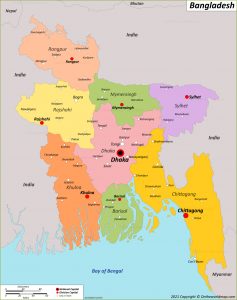
Since the early 2000s, Bangladesh has maintained an impressive GDP growth rate that continues to increase, often exceeding that of many comparable developing countries. Export-driven development, especially through the garment industry, has made this expansion grow. The Ready Made Garment sector accounts for more than 80 percent of Bangladesh’s export earnings and employs millions of workers.3This model has helped to lift millions out of extreme poverty and has positioned Bangladesh as a key manufacturing hub in South Asia. Simultaneously, economic growth has brought rapid urbanization and democratic shifts. Bangladesh has a large population of young people, and each year, thousands of young people enter the labor market. 4 Educational attainment has improved significantly, with growing numbers of students who are completing secondary education and being enrolled in universities. In the long scheme of things, these developments suggest that Bangladesh is moving steadily toward a middle-income status. However, the transformation that a system goes through is rarely smooth. The recent economic pressures, like inflation and declining foreign reserves, have strained the Bangladeshi labor market. This is making stable employment more difficult. 5 While the economy has grown, the creation of jobs has not always kept at the same pace with the expectations of a growing educated generation. The strain between educational expansion and the authority lies at the root of Bangladesh’s current transition.
For many young Bangladeshis, education represents more than a personal achievement. It symbolises a potential escape from poverty and entry into the middle class. Family events and an extreme amount of money, effort, and time in their children’s schooling. This sometimes means making financial sacrifices with the expectation that degrees will lead to a secure form of employment. Government policy has similarly highlighted education as a driver of development. As enrollment in universities increases, so do expectations. Young graduates anticipate formal employment, professional careers, and a stable income. Yet the labor market remains dominated by informal work arrangements and low-wage sectors. Even within the formal economy, labor protections can be enforced weakly, which leaves workers vulnerable to exploitation and economic shocks. This gap between aspiration and opportunity is a defining feature of Bangladesh transitions. Education has expanded faster than the creation of quality jobs, thus resulting in underemployment and extreme frustration among people who hold degrees.6 This mismatch reflects a structural issue in development policy, where education expansion is not matched by job creation in sectors that require a higher level of skills.7 Many graduates accept positions that are unrelated to their fields of study, or enter forms of employment in order to remain in an economically active situation. 8The garment industry provides the best example of the Bangladesh economic puzzle. As the foundation of the country’s export economy, the Ready Made Garment Industry sector has been praised for creating employment opportunities, specifically for women. 9 Yet the sector also holds many persistent parts that are vulnerable. 10 Despite the enormous export growth, wages in the garment industry have constantly remained low relative to living costs.11Inimu wage changes have followed in waves of protest, which shows the ongoing dissatisfaction among workers. Frequent reports emphasize long working hours, workplace safety concerns, and inconsistent enforcement of labor regulations.12For the educated youth entering the workforce, the garment industry represents both an opportunity and a limitation. While it offers employment in a growing industry, it doesn’t necessarily provide the long-term security associated with professional careers. Advancements in technology further complicate the dynamic. As factories become modern in order to remain competitive in global markets, roles may shrink, and new technical positions may not bt be enough to withstand the growing number of educated job seekers. Consequently, the garment industry embodies a contradiction; it has driven national development, yet it has not resolved the ingrained issues of job quality. Employment exists, but protection and stability remain uneven. This directly shapes the lived experiences of the educated youth in Bangladesh. While the garment industry drives economic growth, it reinforces a market that is centered on low wages and low-security employment. These limit opportunities for upward mobility even among those who have higher education.
Besides the garment industry, Bangladesh’s labor market is characterized by high levels of informality. A significant portion of the workforce works outside of formal contracts, social protections, and stable wages. 13 This type of employment may provide income, but offers little to no security in times of crisis. This also limits the access to benefits such as healthcare, pensions, and legal protections, further deepening insecurity that is long term. Educated youth are not immune to this reality. 14 Some graduates enter informal ways of gaining income, such as tutoring. Others remain underemployed, working fewer hours than they wish to or accepting positions below their qualifications. 15 In extreme cases, prolonged unemployment and pressure to be successful have been linked to serious mental health consequences, including rising suicide rates among graduates. [9Jarin Tasnim Tasfi and Shafi Md. Mostofa, “Understanding Complex Causes of Suicidal Behaviour among Graduates in Bangladesh,” BMC Public Health 24, no. 560 (2024).] In these instances, education does not function as a shield against being vulnerable. Global pressures intensify these challenges. Bangladesh’s economy is deeply intertwined in international supply chains, making it sensitive to shifts in global demand, trade, and changes in technology.16 Automation threatens to reduce reliance on low-cost labor, while international buyers often demand competitive pricing that constrains wage growth. This has historically been the foundation of Bangladesh’s competitive advantage in the global market. Young workers, especially those who are entering the labor market, bear the strain of these changes.
The consequences of youth economic insecurity extended beyond the labor market into social and political stability.1718Frustations can manifest in protest, increased migration aspirations, or political disengagement. These outcomes reflect a deeper structural tension where economic growth has not been evenly distributed across generations.19
Bangladesh’s transition is by default not solely economic; it is social and generational. A large population of the youth with rising expectations represents opportunity and a risk. If integrated properly and successfully into stable employment, young people have the ability to drive innovation and sustained growth. If left in an unstable condition theres a possibility that they may experience a prolonged economic stagnation that undermines broader goals for development. The tension between national success narratives and individual insecurity highlights the uneven nature of transition. Bangladesh is not in an economic decline, but it is navigating a complex shift from low-income manufacturing toward a more diversified and technologically advanced economy. The challenge lies in ensuring that this shift includes protections, not just gains in productivity.

Addressing youth labor precarity required multidimensional reform. Strengthening labor law enforcement, expanding social protection systems, and aligning higher education with market demands are critical steps. Investment in skill development, particularly in technology and higher-value industries, could help absorb educated workers into more stable roles.20 At the same time, development strategies must move beyond simple export growth. Economic policy that priortizes job quality alongside job quantity would signal a deeper commitment to an inclusive transition. 21
International factors like multinational corporations also play a role in supporting fair labor standards in the global supply chains. Bangladesh’s future depends on whether its economic transformations can evolve from growth that is centered on protection and development. The country has demonstrated remarkable resilience and the ability to adapt in the past. The next stage of its transition will test whether that adaptability can extend to labor justice and generational equity.
Bangladesh stands at a critical juncture. Its rapid economic growth and its expanding education system reflect undeniable progress. Yet the progress alone does not guarantee protection. For many young graduates, employment remains precarious, wages stay constrained, and stability remains elusive. 22
The idea of educated but unprotected capturees the contradiction at the heart of Bangladesh’s transition. The country has successfully integrated into the global economy, but it must now ensure that its youth are not navigating that economy without safeguards. A true development will not be measured solely by export figures or growth from GDP, but by whether education leads to stability and meaningful opportunity. Bangladesh’s story is not one of allure, but it is one that is unfinished in transition. The question is whether the next phase of growth will finally align aspiration with protection. Addressing this gap is not only an economic necessity but a social imperative for long-term stability. Without structural reform, Bangladesh risks sustaining a generation of educated individuals who remain economically vulnerable despite national growth. 23
- Fahmida Khatun and Syed Yusuf Saadat, The Ignored Generation: Exploring the Dynamics of Youth Employment in Bangladesh (Dhaka: Centre for Policy Dialogue and Citizen’s Platform for SDGs, 2018). ↵
- Fahmida Khatun et al., Skills Gap and Youth Employment in Bangladesh: An Exploratory Analysis (Dhaka: Centre for Policy Dialogue and Friedrich-Ebert-Stiftung, 2022). ↵
- Bangladesh Garment Manufacturers and Exporters Association (BGMEA). “About Garments Industry.” https://www.bgmea.com.bd/page/AboutGarmentsIndustry ↵
- Fahmida Khatun and Syed Yusuf Saadat, The Ignored Generation: Exploring the Dynamics of Youth Employment in Bangladesh (Dhaka: Centre for Policy Dialogue and Citizens’ Platform for SDGs, 2018). ↵
- International Crisis Group, Beyond the Election: Overcoming Bangladesh’s Political Deadlock, Asia Report No. 336 (2024). ↵
- International Labour Organization (ILO). “Bangladesh Labour Force Survey 2023 (LFS 2023): Data Dictionary.” https://webapps.ilo.org/surveyLib/index.php/catalog/8802/data-dictionary/FA_BGD_LFS_2023_FULL?file_name=BGD_LFS_2023_FULL ↵
- Fahmida Khatun et al., Skills Gap and Youth Employment in Bangladesh: An Exploratory Analysis (Dhaka: Centre for Policy Dialogue and Friedrich-Ebert-Stiftung, 2022). ↵
- Fahmida Khatun et al., Skills Gap and Youth Employment in Bangladesh: An Exploratory Analysis (Dhaka: Centre for Policy Dialogue and Friedrich-Ebert-Stiftung, 2022). ↵
- Schultze, Emilie. “Exploitation or Emancipation? Women Workers in the Garment Industry.” Fashion Revolution, April 2015. https://www.fashionrevolution.org/exploitation-or- emancipation-women-workers-in-the-garment-industry/. ↵
- Fahmida Khatun and Syed Yusuf Saadat, The Ignored Generation: Exploring the Dynamics of Youth Employment in Bangladesh (Dhaka: Centre for Policy Dialogue and Citizen’s Platform for SDGs, 2018). ↵
- International Labour Organization (ILO). “Bangladesh Labour Force Survey 2016–17.” https://webapps.ilo.org/surveyLib/index.php/catalog/8538 ↵
- International Labour Organization (ILO). “Bangladesh Labour Force Survey 2022–23.” https://webapps.ilo.org/surveyLib/index.php/catalog/8889 ↵
- Institute for Human Rights and Business. “Achieving a Living Wage for Garment Workers Needs Price Squeezing to Stop.” https://www.ihrb.org/latest/achieving-a-living-wage-for-garment-workers-needs-price-squeezing-to-stop ↵
- Fahmida Khatun and Syed Yusuf Saadat, The Ignored Generation: Exploring the Dynamics of Youth Employment in Bangladesh (Dhaka: Centre for Policy Dialogue and Citizen’s Platform for SDGs, 2018). ↵
- Jarin Tasnim Tasfi and Shafi Md. Mostofa, “Understanding Complex Causes of Suicidal Behaviour among Graduates in Bangladesh,” BMC Public Health 24, no. 560 (2024). ↵
- International Crisis Group, Beyond the Election: Overcoming Bangladesh’s Political Deadlock, Asia Report No. 336 (2024). ↵
- International Crisis Group, Beyond the Election: Overcoming Bangladesh’s Political Deadlock, Asia Report No. 336 (2024). ↵
- United States International Trade Commission. Bangladesh: Economic and Trade Summary. Washington, DC, 2024. https://www.usitc.gov/publications/332/pub5543.pd ↵
- Fahmida Khatun and Syed Yusuf Saadat, The Ignored Generation: Exploring the Dynamics of Youth Employment in Bangladesh (Dhaka: Centre for Policy Dialogue and Citizen’s Platform for SDGs, 2018). ↵
- Fahmida Khatun et al., Skills Gap and Youth Employment in Bangladesh: An Exploratory Analysis (Dhaka: Centre for Policy Dialogue and Friedrich-Ebert-Stiftung, 2022). ↵
- Fahmida Khatun and Syed Yusuf Saadat, The Ignored Generation: Exploring the Dynamics of Youth Employment in Bangladesh (Dhaka: Centre for Policy Dialogue and Citizen’s Platform for SDGs, 2018). ↵
- Fahmida Khatun and Syed Yusuf Saadat, The Ignored Generation: Exploring the Dynamics of Youth Employment in Bangladesh (Dhaka: Centre for Policy Dialogue and Citizen’s Platform for SDGs, 2018). ↵
- Fahmida Khatun et al., Skills Gap and Youth Employment in Bangladesh: An Exploratory Analysis (Dhaka: Centre for Policy Dialogue and Friedrich-Ebert-Stiftung, 2022). ↵

1 comment
Rosa Inocencio
Hi Silvia, I really enjoyed reading your infographic, it was very informative. I liked that it gave a clear explanation of rapid economic growth and the challenges of Bangladesh. It was interesting how you connected education with expectations, and how you addressed the fact that graduates deal with insecurity and struggle to find employment after graduation. Great Article!