


Acknowledgements:
We would like to extend our thanks to Dr. Shackleford for the patience, and guidance throughout this research project. We would also like to thank RSC tutor Franchesca Tinacba for her thoughts and creative ideas into helping put our ideas and research out as well as giving thoughtful feedback into our research project. Dr. Shackleford’s input and eye in design helped guide our project to be able to achieve confident results as well as Franchesca Tinacba’s support and tutoring.


3 comments
Abiageal Riley
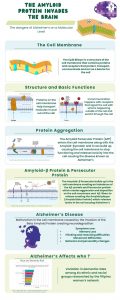
Understanding Alzheimer’s disease on a molecular level is vital to finding the path to success by finding successful treatments that can save the lives of patients suffering from the condition and help their families by reducing the long-term financial, emotional, and time strain that goes into caregiving. I like the way the infographic displayed many aspects of the disease by highlighting the biological aspect, symptoms of the disease, and placing emphasis on the implications it has on not only the patients, but the family members as well. I found the biological process illustrated to be well explained on how amyloid-beta proteins play a pivotal role in the development of Alzheimer’s, and I hope that more research will be conducted in the future to prevent the buildup of this protein, consequently, stopping toxins from being released into the cell, thus causing Alzheimer’s.
Byron Marinelarena
I was very interested in psychology at one point and had learned that nicotine is beneficial to Alzheimer’s and can stop it entirely. However, the forms we ingest it in such as vaping and cigarettes is carcinogenic, meaning it can cause cancer. Great infographic.
Alyssa
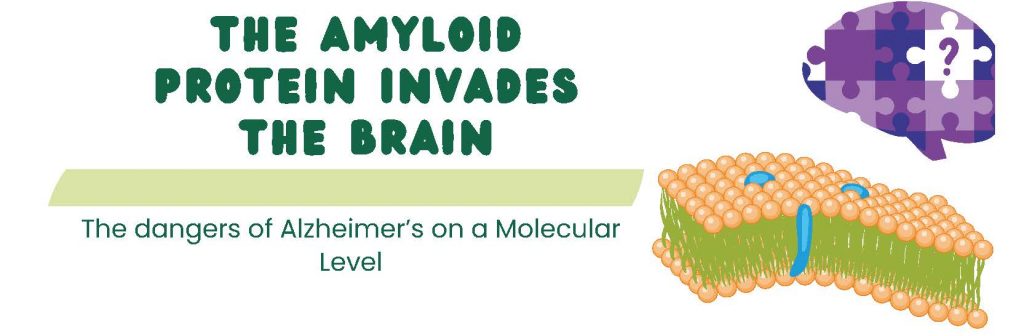
Hello! I like how this infographic goes into a deeper explanation on how Alzheimer’s disease affects the brain on a molecular level. It shows how the amyloid-beta protein disrupts the cell membrane, leading to cell death and brain damage. I like the message because it raises awareness about the complex science behind Alzheimer’s and how it affects the brain. The use of clear images and simple language makes it easy to understand.