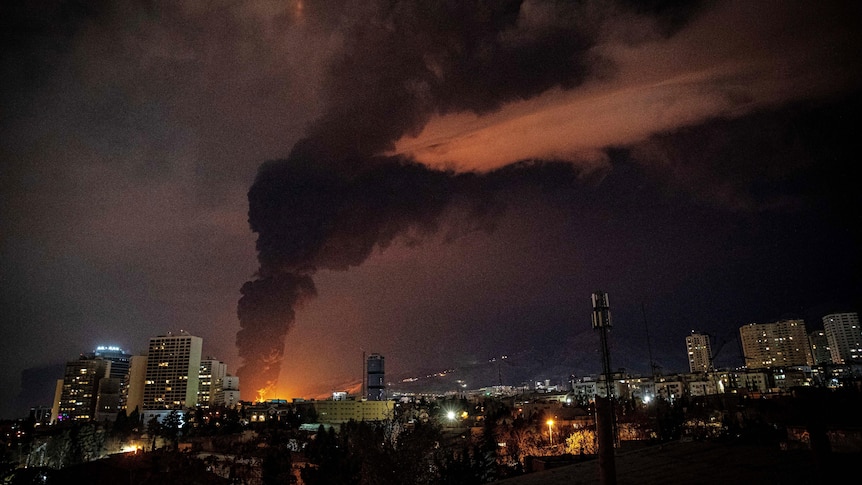

Disclaimer: This paper and its accompanying podcast discuss, in part, the ongoing conflict in the Middle East. Due to the rapidly-changing nature of events, the situation is likely to change from what I have described by the time you read or listen to this.
Accompanying Podcast:
Executive Summary
The Iran War, currently observing a fragile ceasefire, can be seen as a sort of culmination of decades of U.S. foreign policy in the Middle East. Prior to the outbreak of war with Iran, American policies had been successful at advancing a few narrowly-defined interests: The security of regional allies (particularly Israel and Saudi Arabia), and the free flow of the region’s oil (Cook 2024, 4). But outside of these issues, as important as they are, it is difficult to view American Middle East policy as anything other than a series of misguided, disastrous, and self-defeating pursuits.
These failures have two major issues at their root: Our close alliance with local powers and the related pattern of American attempts to reshape regional politics. Resolving the current war is the immediate priority, but this will not resolve our deeper issues. This brief recommends a fundamental re-orientation of our approach to the Middle East: A policy of defensive non-alignment. In practice, this aims to place the United States in a role of a non-aligned mediator and security guarantor for regional disputes. It also recognizes that the U.S. lacks the capability and political will to embark on transformative political projects. Such an approach will not be simple, nor is it a panacea. The alternative, however, of continuing with a status quo which led to our current moment and could potentially escalate beyond anyone’s control.
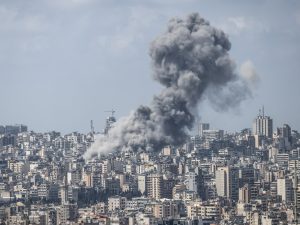
Credit – Al-Jazeera
Background and Context
American Middle East policy has varied dramatically, but there have been two relatively consistent patterns throughout the post-Cold War era. The first are our close alliances with regional powers (mainly Israel and Saudi Arabia) whose alignment with U.S. interests is inconsistent at best and questionable at worst. The second related issue is the varying ways American presidents have attempted to change the region’s politics to a more favorable status for U.S. interests.
Our alliances with Israel and Saudi Arabia originated from a Cold War-era goal of preventing the Soviet Union from becoming a dominant regional player. Here, Iran provides a valuable case study of the perils behind this. The 1953 coup that replaced Iran’s democratically-elected leadership with the Shah was supported by the U.S. Decades of his despotic rule led to his 1979 overthrow at the hands of a populace strongly hostile to a U.S. perceived as supporting their oppression. The revolution established Iran’s current regime and has fueled decades of mutual hostility (Cook 2024, 26). In spite of such blowback, regional alliances made sense from a purely realist view. After the Cold War, however, their utility has been brought into question and has contributed to the American tendency of trying to remake Middle Eastern politics. A comprehensive analysis of specific policies over the past few decades is outside this brief’s scope, but it is valuable to look at a few examples.
Clinton and Bush’s efforts to resolve the Israeli-Palestinian conflict attempted to take a neutral appearance, but were criticized for pushing Palestinian leadership to accept terms more favorable to Israel (Simon 2023, 210). The attacks of 9/11 were themselves a form of blowback for our policies in the region and, if bin Laden is taken at face value, partially a response to the Saudi monarchy’s alliance with us (Ashford 2018, 135). Their aftermath, with major wars in Afghanistan and Iraq, destabilized the region and actively harmed both allied and American interests. The Iraq War in particular, saw the Saudis and Israelis’ major rival, Iran, emerging with a vastly more influential position on Iraqi domestic and foreign politics (Ashford 2018, 136).
Barack Obama, Joe Biden, and Donald Trump all hoped initially to reduce our regional military presence, but this proved easier said than done, partially due to our commitments. For Obama, a surge in Afghanistan, civil war in Libya, and renewed involvement in Iraq against the Islamic State hampered his hope at achieving regional peace. His signature foreign policy, an Iranian nuclear deal, was decried and undermined by the Israelis, Saudis, and domestic political opponents. Trump’s decision to tear up the Iran nuclear deal–which was met with tacit support from the Saudis and Israelis (Cook 2024, 116)–did not lead to a better treaty or a satisfactory assurance that Iran was ending its nuclear pursuits.
Joe Biden was unable to avoid regional disasters, such as the 2021 collapse of the Afghan government and the war in Gaza following Hamas’s October 7th attacks. Biden and Trump’s response, which unquestioningly provided Israel with weapons and military support during that war led to credible accusations of genocide against Israel, hurting America’s moral standing and reducing our credibility as an honest, impartial actor. The examples provided have all fit the two major patterns. Close alignment with Israeli, Saudi, and other regional states’ security have indirectly led to American attempts at reshaping regional politics to serve those interests.
This has led to our current war of choice with Israel against Iran, with the tacit support of the Saudi and Gulf monarchies. This war has quickly spread across the Middle East, causing widespread physical and economic damage. As of this writing, the U.S. and Iran are currently observing a fragile ceasefire. It is far from guaranteed this will hold, much less lead to a peace treaty. Hostilities may resume at any time, the Strait of Hormuz remains closed, and Israel continues military operations in Lebanon (Federman 2026).

Policy Recommendations
1. While this paper’s focus is on long-term, fundamental change in American Middle East strategy, this point is moot if the current crisis escalates out of control. The clear short-term priorities for U.S. policymakers lay in ending hostilities with Iran, reopening Hormuz, and compelling Israeli withdrawal from Lebanon. It is an open question what conditions Iran will agree to that will be accepted by all sides, even as this paper recommends potential starting points. One is to offer security guarantees for Iran against American first strikes on the condition Iran offers proof it is reducing its support for various regional proxies. In isolation, this will be perceived as asking Iran for unilateral disarmament, and must be paired with a demand for Israeli withdrawal from Lebanon.
Any such effort must carry assurance that Israeli refusal or engagement in unilateral strikes against Iran will lead to a cessation in American military support. The US should offer to pause mobilizations of US forces–especially ground troops–currently en route to the region and withdraw some forces already present as a show of good faith. While Iran must pause its missile, drone, and proxy attacks and reopen the Strait of Hormuz, the Lebanon question cannot be emphasized strongly enough: It is unlikely Iran will accept a negotiated end to the war that does not stop Israeli incursions inside Lebanese territory (Federman, 2026). However, while ending the current war is essential, longer-term changes in US strategy must take place to avoid the risk of future US entanglements.
2. The U.S. must begin moving away from its close military alignment with regional states and towards a posture of non-alignment. This does not mean ending diplomatic relations with our allies, nor does it mean downgrading them to something less than allies. Rather, it entails pulling back from diplomatic commitments that effectively compel us to take sides with these nations during military operations, irrespective of U.S. interests. While a stable and secure flow of Middle Eastern oil is in American and global interests, but it does not logically follow that we must take sides in regional rivalries. Such a shift would allow the U.S. to have a more consistent strategy in the region (Ashford 2018, 143).
To this end, we should be willing to give security guarantees for states against outside aggression, should it be needed or requested. These should be offered across the board, and limited to situations of deterrence or self-defense. They cannot be a blank check for offensive actions. Support for response to aggression cannot be unconditional, either. It is one thing to assist Israel in the immediate aftermath of October 7th, for instance. It is another to continue this support when their response has killed tens of thousands of civilians, intentionally reduces most of Gaza to ruins, and surpasses reasonable standards of justifiable military action, as in Gaza.
3. The last fundamental change is recognizing that the United States should cease transformative projects which attempt to shape Middle East politics in our favor. This aspect goes both ways: American assets should not support internal repression by regional states. In the other hand, overt democracy promotion, however well-intentioned, should be avoided. A Middle East free from the grip of autocracy would be a laudable ideal, but this change must come from within Middle Eastern societies. The U.S. foreign policy apparatus lacks the collective expertise, capability, and credibility to make a reliable commitment to such movements. Direct U.S. support will inevitably be tarred as imperialistic and self-interested (not entirely without justification), and cause more harm than good (Cook 2024, 88-90).
Risks and Trade-offs
The biggest risk to current diplomacy is Iran refusing any good-faith requests from the U.S. due to mistrust created by this war, resuming its current strategy of making it too costly for the US to continue. Both the so-called “12-day war” of 2025 and the current conflict began without warning while Iran was in the middle of nuclear negotiations (Das 2026). This war launched with strikes that killed Iran’s leadership, including Supreme Leader Khamenei. Diplomats should anticipate Iran viewing American negotiations as a ruse to buy time to prepare a resumption of hostilities, and plan accordingly. Additionally, Israel, faced with a withdrawal in U.S. support, may resume its campaigns in Gaza and continue Lebanese operations, sabotaging any ceasefire.
A US move towards a non-aligned posture risks a hedging reaction from the region’s major players towards overt alignment with Russia or China. However, even with the status quo, this has already occurred. For example, Israel and Russia have engaged in diplomatic overtures, with Netanyahu publicly declaring a friendship with Vladimir Putin. Saudi Arabia, fearing a drop in oil prices and hoping to avoid a break with Russia, was initially hesitant to place sanctions on the Russian state after the invasion of Ukraine (Cook 2024, 113-114). The risks of these nations moving towards alignment with near-peer countries under a US policy of non-alignment is plausible, but it is also true that our current alliances have not provided a clear guarantee against such alignment.

Credit – MarineTraffic
Final Recommendation
The Middle East’s problems defy easy, clear-cut solutions, as the failures of successive U.S. administrations to solve them has demonstrated. The U.S.’s involvement has not led to lasting peace, stability, or improvement. Quite the contrary. This paper’s recommendations do not purport to be a panacea or guarantee that following them will automatically lead to a stable, neatly-balanced geopolitical environment. It does call for accepting that the U.S. has lacked a coherent strategy, is driven by misguided alliances which have not consistently served American interests or regional stability, and lacks the ability or the will to reshape the region to its own preferences.
There is no easy, clear “good” option for ending the war with Iran, beginning as a war of choice on the US and Israel’s part. But the potential for a catastrophic escalation that drags the U.S. into another major ground war and occupation in the middle east are unacceptable options that must be avoided at virtually all costs. The aftermath of the war must be met with a fundamental rethinking of the U.S. role in the region. The time to attempt a de-escalation and prepare for a major change in U.S. posture to the region is now, even if Iran might be understandably hesitant to trust any American actions. A move towards a defensive non-alignment must be attempted, as the status quo, unsustainable even before the war, has only worsened.
Note: AI was not used for this assignment
Sources:
- Anderson, L. (2023). The Forty-Year War: How America Lost the Middle East. Foreign Affairs, 102(3). https://www.foreignaffairs.com/reviews/middle-east-forty-year-war-china
- Mahbubani, K. (2026). The Dream Palace of the West: A Response to “The West’s Last Chance”.
- Simon, S. (2023). Grand Delusion: The Rise and Fall of American Ambition in the Middle East. Penguin.
- Cook, S. A. (2024). The End of Ambition: America’s Past, Present, and Future in the Middle East. Oxford University Press.
- Ashford, E. (2018). Unbalanced: Rethinking America’s Commitment to the Middle East. Strategic Studies Quarterly, 12(1), 127-157. https://doi.org/10.2307/26333880
- Federman, J. (2026). Failed U.S.-Iran negotiations in Pakistan raise questions about fragile ceasefire. PBS NewsHour https://www.pbs.org/newshour/world/failed-u-s-iran-negotiations-in-pakistan-raise-questions-about-fragile-ceasefire
- Das, D. (2026, March 27). War on Iran during nuclear negotiations undermines the US’s ability to talk peace around the world − and the effects won’t end when Trump leaves office. University of Denver News (republished from The Conversation). https://www.du.edu/news/war-iran-during-nuclear-negotiations-undermines-uss-ability-talk-peace-around-world-and-effects-wont-end-when-trump-leaves-office
1 comment
Elijah Perez
Ruben, excellent podcast and policy brief discussing pressure in the Middle East. Overall, one of the most compelling parts of your brief is the critique of U.S. alignment with regional powers. Your policy brief raised an important consideration: if these Middle Eastern alliances, such as Israel and Saudi Arabia, are actually advancing U.S. interests long-term, or are they limiting our flexibility and pulling us into conflicts that don’t always serve us? In the context of the prominent Iran war, that point unequivocally stands out even more, especially when U.S. support for allies can contribute to escalation while also harming the U.S.’s neutrality.
Your recommendation of moving toward a policy of defensive non-alignment is definitely bold, but also pretty thought-provoking. It makes sense from a realist perspective by recognizing that the U.S. can’t keep trying to manage or reshape the region without serious costs. Shifting toward a more restrained role, where the U.S. acts as a mediator rather than automatically taking sides, could help reduce long-term entanglement and potentially restore some level of credibility. I think your argument about stepping away from transformative projects, such as democracy transitions or regime change, is especially strong and considerable given how those efforts have played out historically. Overall, great episode and policy brief!