I like this article because it highlights how climate vulnerability in the Global South is closely tied to financial systems and sovereign debt. It really made me think about how countries can be trapped between needing to borrow for development and needing funds to adapt to climate change. I also appreciated how it connects economic policy to real environmental consequences instead of treating them separately. The focus on structural inequality in global finance stood out to me as especially important and insightful.
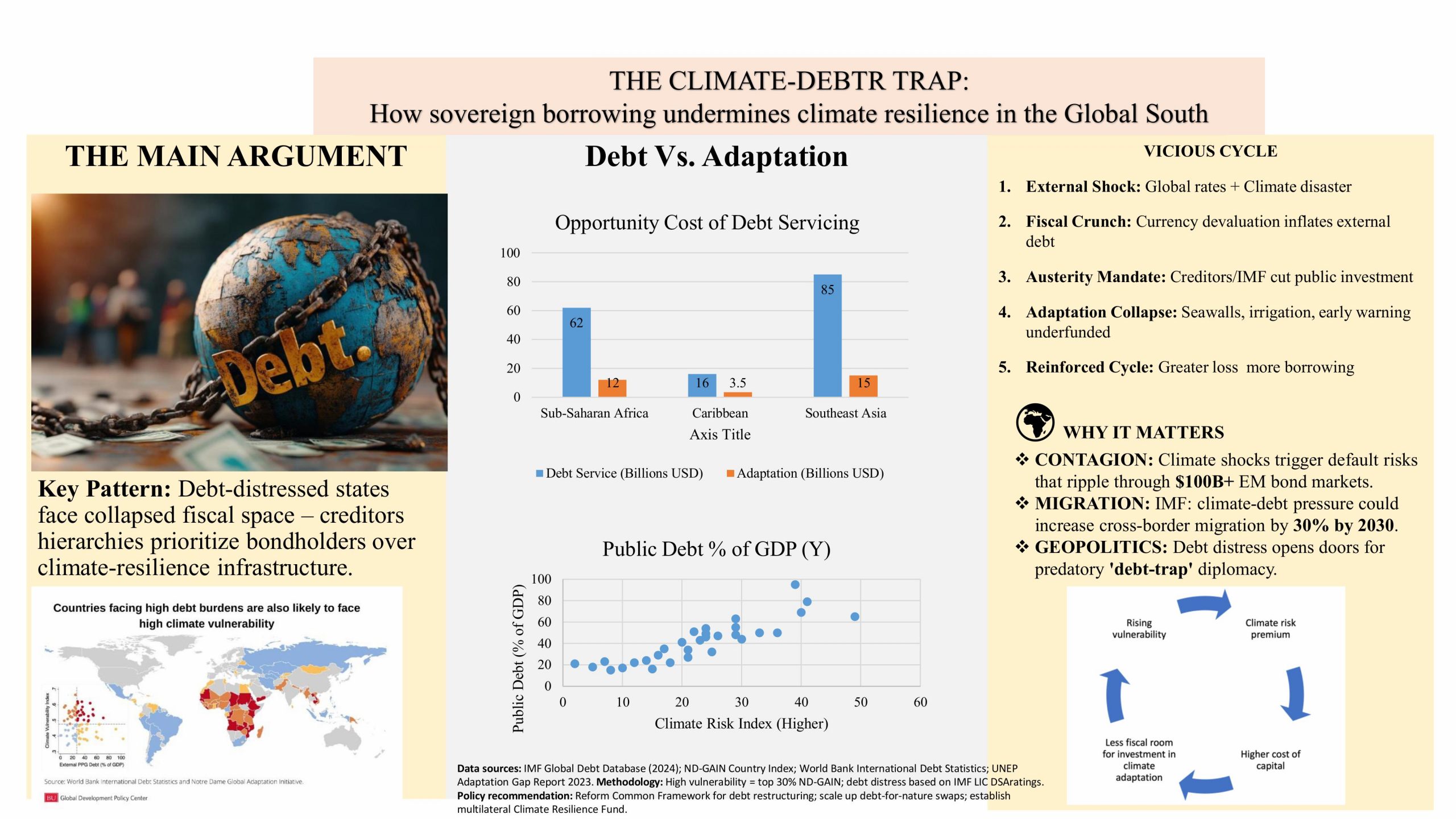
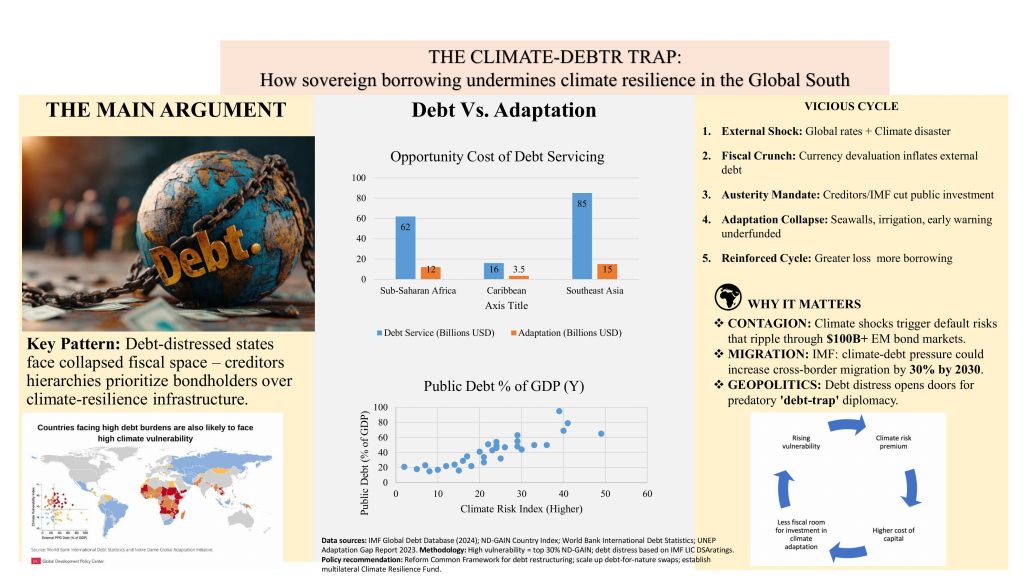
An illuminating and insightful contribution. Speaking from the perspective of one who works for an international investment firm, you’ve keyed in well to one of the more pressing structural questions in development finance. Your argument that sovereign debt repayment obligations systematically crowd out climate adaptation investment renders with real clarity a truth that has made long-term sustainability in much of Africa and Asia a low priority investment. I found the opportunity cost framing particularly effective: by placing debt service and adaptation spending side by side across Sub-Saharan Africa, the Caribbean, and Southeast Asia, there is a visceral visibility to a concept often lost in policy structure of byzantine complexity. The policy recommendations feel appropriately ambitious given the scale of the problem being diagnosed. Overall, this is a well argued and visually cohesive piece of research that makes a meaningful case for structural reform.



2 comments
Mía Perez
I like this article because it highlights how climate vulnerability in the Global South is closely tied to financial systems and sovereign debt. It really made me think about how countries can be trapped between needing to borrow for development and needing funds to adapt to climate change. I also appreciated how it connects economic policy to real environmental consequences instead of treating them separately. The focus on structural inequality in global finance stood out to me as especially important and insightful.
Michael Wiles
An illuminating and insightful contribution. Speaking from the perspective of one who works for an international investment firm, you’ve keyed in well to one of the more pressing structural questions in development finance. Your argument that sovereign debt repayment obligations systematically crowd out climate adaptation investment renders with real clarity a truth that has made long-term sustainability in much of Africa and Asia a low priority investment. I found the opportunity cost framing particularly effective: by placing debt service and adaptation spending side by side across Sub-Saharan Africa, the Caribbean, and Southeast Asia, there is a visceral visibility to a concept often lost in policy structure of byzantine complexity. The policy recommendations feel appropriately ambitious given the scale of the problem being diagnosed. Overall, this is a well argued and visually cohesive piece of research that makes a meaningful case for structural reform.