
A Writer Enters the Stockyards
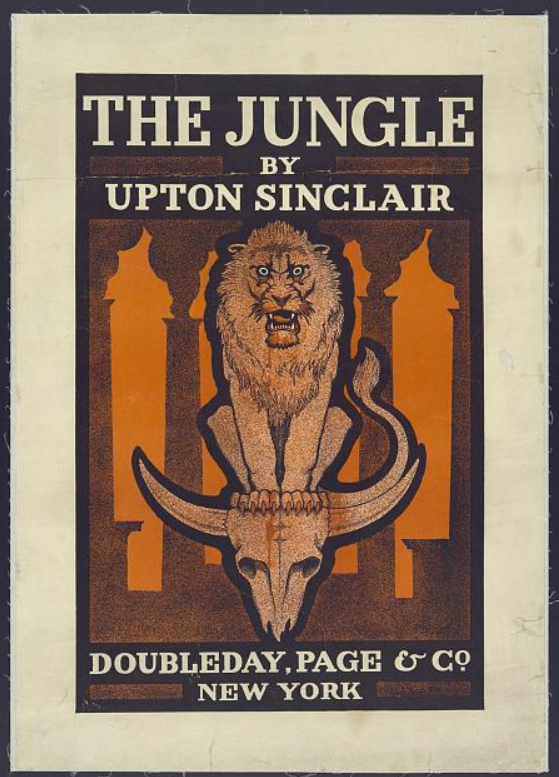
Upton Sinclair did not set out to change the way that Americans thought about their food. His original intention was not to provoke a national panic, inspire federal investigations, or help lay the foundation for what would become the Food and Drug Administration. His ambitions were originally pointed in an entirely different direction, as he had wanted to expose the brutal exploitation of immigrant laborers in Chicago’s stockyards and ignite a wave of socialist reforms. Yet the story of The Jungle is ultimately a narrative about unintended consequences, a story about how a writer carefully aimed a moral message that ricochets off the public’s consciousness and lands somewhere he never intended nor expected. Sinclair’s original message is left out of his control and is taken by the public and eventually to the United States government.1
The Message Slips Out of Control
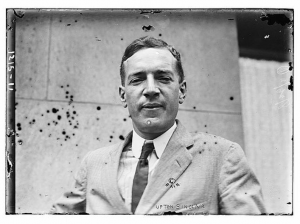
Sinclair had begun his journey towards the novel in the Progressive Era with the belief that literature could function as a political weapon. Born in 1878 and raised in a lower middle-class family, Sinclair had developed an early sensitivity to inequality due to his upbringing, and by the time he was commissioned by the socialist newspaper “Appeal to Reason,” to investigate conditions in Chicago’s meatpacking industry, he had already embraced the belief that capitalism’s injustices could be exposed through a crafted narrative or story. His assignment was to spend several weeks living among the workers of the meatpacking industry, gathering their stories, and revealing the harsh conditions that the workers had to suffer through daily. Sinclair had approached the task under the idea of exposing capitalism and the human cost of industrialization, using methods such as embedding himself in the stockyards, interviewing families, and observing the slaughterhouses firsthand in order to write about the physical and emotional toll of the workers.2
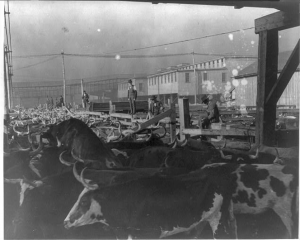
The world that Sinclair entered was dangerous and pervasive, as Chicago’s stockyards were a symbol of American industrial might and power but were also sites of profound human suffering. Workers often lost fingers, limbs, and sometimes their lives to the heavy machinery that was used to power the nation’s meat supply. Immigrant families would live in crowded tenement houses and would be trapped in cycles of debt due to contracts they signed in order to be hired at the meatpacking industries. Sinclair believed if he could capture the suffering of these workers in vivid detail, then the American public would be swayed into demanding systematic change for the workers. Sinclair would create a protagonist for his novel, Jurgis Rudkus, as a representative figure for the workers at the meatpacking industry, mirroring their suffering and experiences through Rudkus’s journey, and ultimately, he hoped to reveal the cruel system that capitalism had placed these workers in, so as to inspire socialist reform.3
However, when The Jungle moved into publication, the audience’s reaction began to expand beyond Sinclair’s original expectations for the novel. Serialized first in the socialist newspaper “Appeal to Reason,” the story had reached an audience that was already sympathetic to Sinclair’s political goals. But once the story was published as a book for the American public, it entered the homes of middle-class Americans across the country, homes that were filled with an audience not concerned with the political movement of socialist ideals, but instead their own daily lives. As the novel circulated nationally, its audience only grew bigger, and with that growth came a new interpretation of the novel’s message.4
The earliest reactions towards The Jungle were the first sign that Sinclair’s original message had begun to slip out of his control. While some readers expressed sympathy for the suffering of the workers, the most intense reaction came from readers who focused on the graphic descriptions of the slaughterhouse conditions. Readers were shocked at the details of rats falling into meat grinders, the spoiled products being repackaged, and diseased livestock being processed for consumption. These descriptions, which were originally just background details written to capture the broader cruelty of the system, became the main point of concern for the audience. The suffering of the workers was overshadowed by the horrific descriptions of contaminated meat being fed to the general public.5
Newspapers and reviewers only amplified this massive shift in focus, as press coverage of the meatpacking industry began to focus on the dangerous practices rather than the suffering of the immigrant employees. The press began framing The Jungle not as a call for labor reform but rather an expose on food and safety violations. Headlines would focus on the filth, diseased animals, and contaminated products while ignoring the novels political message. Sinclair’s original critique of capitalism was being reframed by the media as a story about consumer protection.6
This new take on the novel’s story ignited a wave of public outrage and criticism, but not the kind that Sinclair had hoped for. Middle class Americans were suddenly terrified about what they were feeding their families, and organized their anger towards the government. They started writing letters to newspapers and began petitioning their local representatives to demand that the federal government intervene and protect consumers from these dangerous practices. The fear the public felt was very personal and immediate, overshadowing any concern for the conditions that the workers faced under this harsh industry.7
As public pressure grew, politicians began to respond with congressional debates, newspaper interviews, and presidential briefings about the novel. The political momentum that Sinclair had hoped to start had fallen completely out of his hands, and by the time federal investigators were sent to Chicago, the national conversation had entirely forgotten about the labor exploitation story. Sinclair would watch with growing frustration as despite his novel reaching millions of people, the public had gotten the wrong message from it.8
Reform Ignites
President Theodore Roosevelt, while initially dismissive of Sinclair’s socialist message, was compelled to respond to the American people. Roosevelt had created an image of himself as a reformer who was willing to change and challenge corporate powers in the nation. However, the uproar from The Jungle had left Roosevelt in a unique situation, as if he had ignored the public outcry, he would risk being seen as indifferent to consumer safety, but if he responded too seriously then he would be attacking powerful industrial corporations that feed millions of Americans. Roosevelt chose to send federal investigators to major meatpacking industries in order to confirm the findings from Sinclair, waiting for their information before responding to the crisis.9
When federal investigators, Charles Neil and James Reynolds, returned from their independent investigation, their findings had confirmed many of Sinclair’s descriptions of the horrible conditions. While the findings did not support every detail from the novel, the conclusions were enough to validate the public’s fear of the unsanitary conditions inside of the factories. Meanwhile, Sinclair himself was writing letters towards the government, with one letter specifically addressed towards President Roosevelt, urging him to look beyond the public outrage and focus on the injustices on the immigrant workers in the industry. With Sinclair afraid that if the public’s outrage was not towards the horrible workers conditions, that these workers would never receive the justice they deserve.10
However, the politics of the Progressive Era would keep moving with or without Sinclair’s support, and with the public’s focus on the contaminated meat, Roosevelt chose to side with the American citizens over Sinclair’s original message. Using the findings from the federal investigation, Roosevelt pressured Congress into passing new regulatory legislation. This would result in the Meat Inspection Act and the Pure Food and Drug Act, two major laws that would transform the federal government role in overseeing the nation’s food supply. This moment would mark a major turning point during the Progressive Era as the new laws would establish federal control and authority over industries that had been operating independently with minimal oversight for decades.11
This legislative victory represented the moment that Sinclair’s work had achieve massive national impact, but not in the way that he had intended. Sinclair had the goal of exposing the exploitation of workers and inspiring socialist reform in the nation; however, the public had focused entirely on consumer protection rather than the immigrant workers. Embracing the concept that the novel was exposing a threat to their own personal wellbeing, while ignoring the suffering of those that Sinclair had tried to represent.12
Suffering From Success
The aftermath of the 1906 legislative reforms marked the moment that Sinclair confronted the reality that his greatest public movement was also his most personal disappointment. The Meat Inspection Act and the Pure Food and Drug Act was celebrated across the nation as a victory for consumer protection; however, it only represented a part of Sinclair’s larger goal. The irony of this moment would be quoted by Sinclair with “I aimed at the public’s heart and hit it in the stomach.”13
In the months after the passing of the new 1906 laws, Sinclair would watch as the media would focus only on the topic of food safety and Roosevelt’s swift action to establish the new laws. His novel had been intended as criticism of capitalism’s exploitation of labor, and yet it was used as a way to reveal the unsanitary practices of the meatpacking industry. The workers, whose suffering had inspired the novel had remained trapped within the cycle of debt and poverty, with their lives not improving in any meaningful ways as a result of the new legislation. Not even Sinclair’s frustration, written in the letter to Roosevelt, had changed the president’s mind on the matter as he sided with the public.14
However, while Sinclair had not achieved what he had hoped to, the impact of The Jungle on American history remained undeniable. Sinclair’s investigative strategies of interviewing workers in their own environment and experiencing the same struggles as them would become the model for future muckraking journalists. The novel demonstrated the power that literature can have in society, as massive change and legislation would be created as a response to The Jungle. Even if the reforms did not address every issue that Sinclair had hoped they would, they still created a large shift in the relationship between the government, industry, and consumers.15
A Legacy in Irony
In the decades following the publication of The Jungle, the regulatory powers established by the 1906 laws would continue to grow and evolve. The U.S Food and Drug Administration, which traces its roots to the Pure Food and Drug Act, would expand its authority throughout the century, becoming one of the most influential and powerful agencies in the United States. Sinclair’s novel would mark a new era in federal oversight as now the government is responsible for ensuring the safety and integrity of the nation’s food and drug supply, a transformation that would not have been possible without the public outrage sparked by The Jungle, even if the reforms addressed only a part of what Sinclair had hoped to accomplish. Sinclair’s investigative practices and his willingness to join in the environment that he was reporting on would go on to help shape the future of muckraking journalism. His work was able to demonstrate that a narrative story could serve as a powerful tool or weapon that could reveal the truth, create public sentiment, and challenge already existing areas of power. Even if the public focused on the grimmer aspects of the novel, his method of storytelling and investigation would become a large part of modern journalism today.16
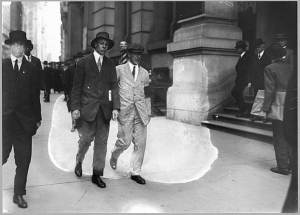
However, despite the major change that Sinclair was able to create, his original goal of socialist change would never end up coming true. As while the suffering of the workers was supposed to be the main focus of the novel, the public’s reaction would take the book’s intention out of Sinclair’s hands. Because of this, workers continued to face dangerous conditions, low wages, and limited protections well into the 20th century. The reforms that emerged from the public’s reaction to The Jungle were shaped by fear rather than worker advocacy, reflecting the priorities of the middle-class public rather than the need for protections for the lower-class workers. An outcome that remains one of the most enduring aspects of Sinclair’s legacy as his original hope was ignored by the American people.17
In the end, despite the unintentional outcome, the legacy of The Jungle and Upton Sinclair is that both were able to reveal the power of a strong narrative. Sinclair had aimed for the publics heart, but had hit its stomach instead, and in doing so had created new laws that reshaped the American governments regulatory policy for generations. His story asserts that literature can influence history in ways that the author never intended, and that the meaning of someone’s work is often not determined by its creator, but rather how society reacts and perceives it. The unintended consequences of The Jungle became its most interesting facts, showing that even when an original narrative leaves an author’s grasp, it can still create change.18
- Gilder Lehrman Institute of American History, “The Jungle and the Progressive Era,” 2008. ↵
- Upton Sinclair, “The Jungle: A Story of Chicago,” Appeal to Reason, serialized 1905–1906, Undercover Reporting, Columbia University, n.d. ↵
- Upton Sinclair, “The Jungle: A Story of Chicago,” Appeal to Reason, serialized 1905–1906, Undercover Reporting, Columbia University, n.d. ↵
- HeinOnline, “The Jungle and Food Safety,” HeinOnline Blog, June 21, 2022. ↵
- HeinOnline, “The Jungle and Food Safety,” HeinOnline Blog, June 21, 2022. ↵
- HeinOnline, “The Jungle and Food Safety,” HeinOnline Blog, June 21, 2022. ↵
- National Archives and Records Administration, Meat‑Packing House Inspections: Letter from Upton Sinclair to President Theodore Roosevelt, 10 March 1906, NARA Exhibit: American Originals, Part II. ↵
- National Archives and Records Administration, Meat‑Packing House Inspections: Letter from Upton Sinclair to President Theodore Roosevelt, 10 March 1906, NARA Exhibit: American Originals, Part II. ↵
- U.S. Food and Drug Administration, “Part I: The 1906 Food and Drugs Act and Its Enforcement,” FDA History, n.d. ↵
- HeinOnline, “The Jungle and Food Safety,” HeinOnline Blog, June 21, 2022. ↵
- U.S. Food and Drug Administration, “Part I: The 1906 Food and Drugs Act and Its Enforcement,” FDA History, n.d. ↵
- National Archives and Records Administration, Meat‑Packing House Inspections: Letter from Upton Sinclair to President Theodore Roosevelt, 10 March 1906, NARA Exhibit: American Originals, Part II. ↵
- National Archives and Records Administration, Meat‑Packing House Inspections: Letter from Upton Sinclair to President Theodore Roosevelt, 10 March 1906, NARA Exhibit: American Originals, Part II ↵
- HeinOnline, “The Jungle and Food Safety,” HeinOnline Blog, June 21, 2022. ↵
- Upton Sinclair, “The Jungle: A Story of Chicago,” Appeal to Reason, serialized 1905–1906, Undercover Reporting, Columbia University, n.d. ↵
- U.S. Food and Drug Administration, “Part I: The 1906 Food and Drugs Act and Its Enforcement,” FDA History, n.d. ↵
- National Archives and Records Administration, Meat‑Packing House Inspections: Letter from Upton Sinclair to President Theodore Roosevelt, 10 March 1906, NARA Exhibit: American Originals, Part II ↵
- Gilder Lehrman Institute of American History, “The Jungle and the Progressive Era,” n.d. ↵